Kataginu
Arimatsu Narumi ShiboriBethan Laura Wood
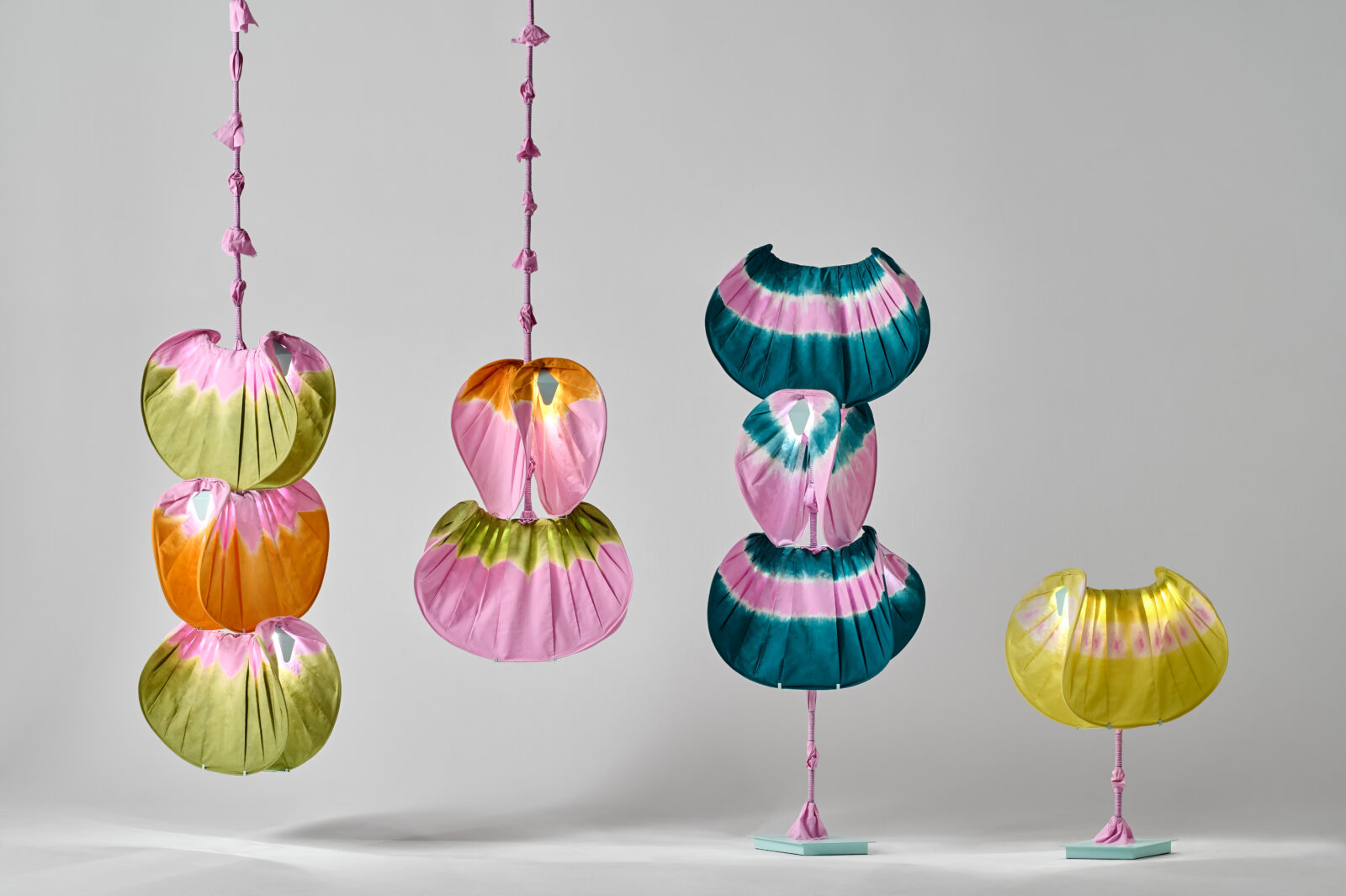
Limited Edition of 6 + 2 AP
2026
Dyed fabric, steel, LED
Single standing light W350 × D350 × H700 mm
Triple standing light W350 × D350 × H1500 mm
Double hanging light W350 × D350 × H1500 mm
Triple hanging light W350 × D350 × H1500 mm
Enquiries: info@craft-x-tech.com
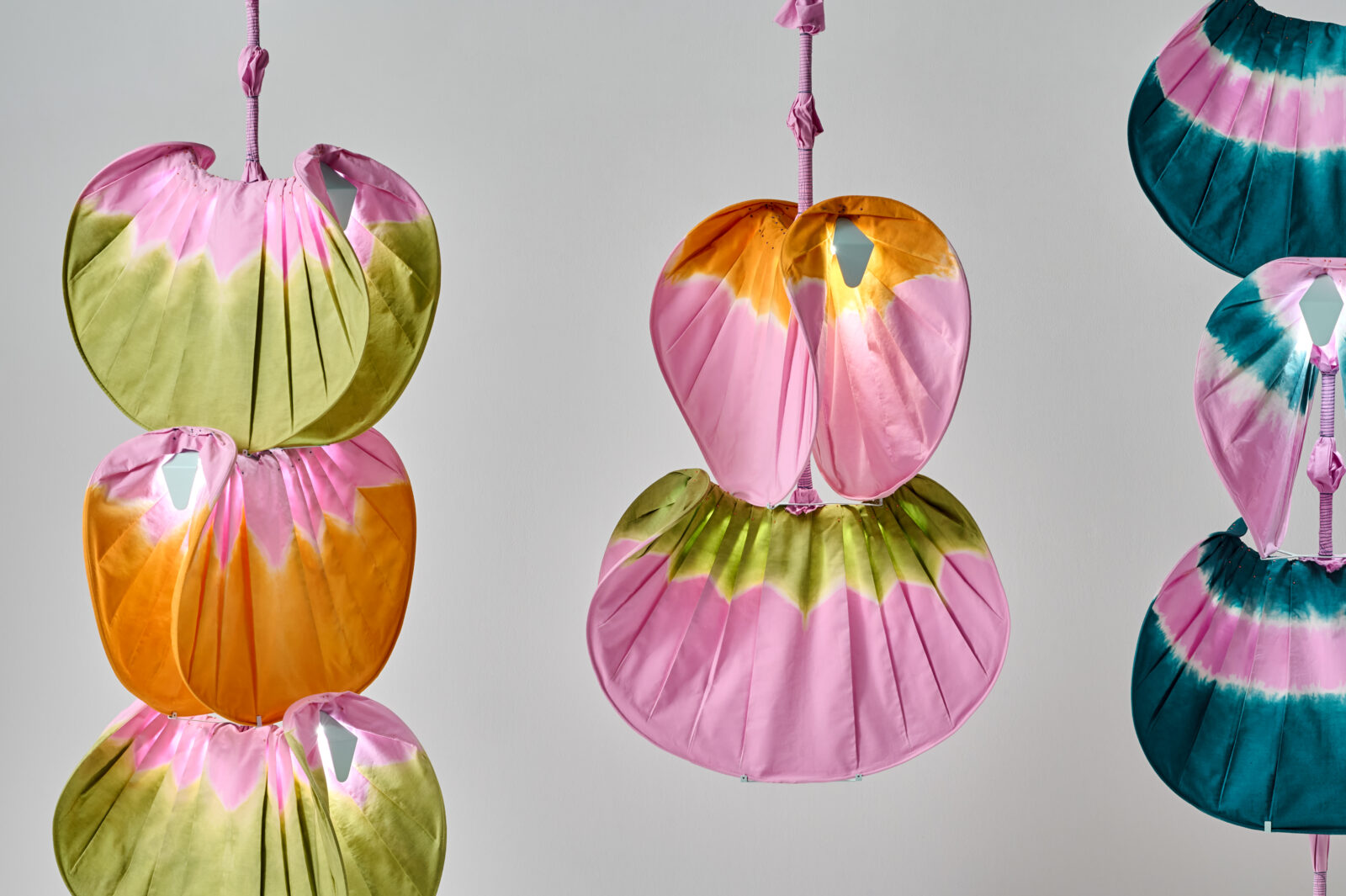
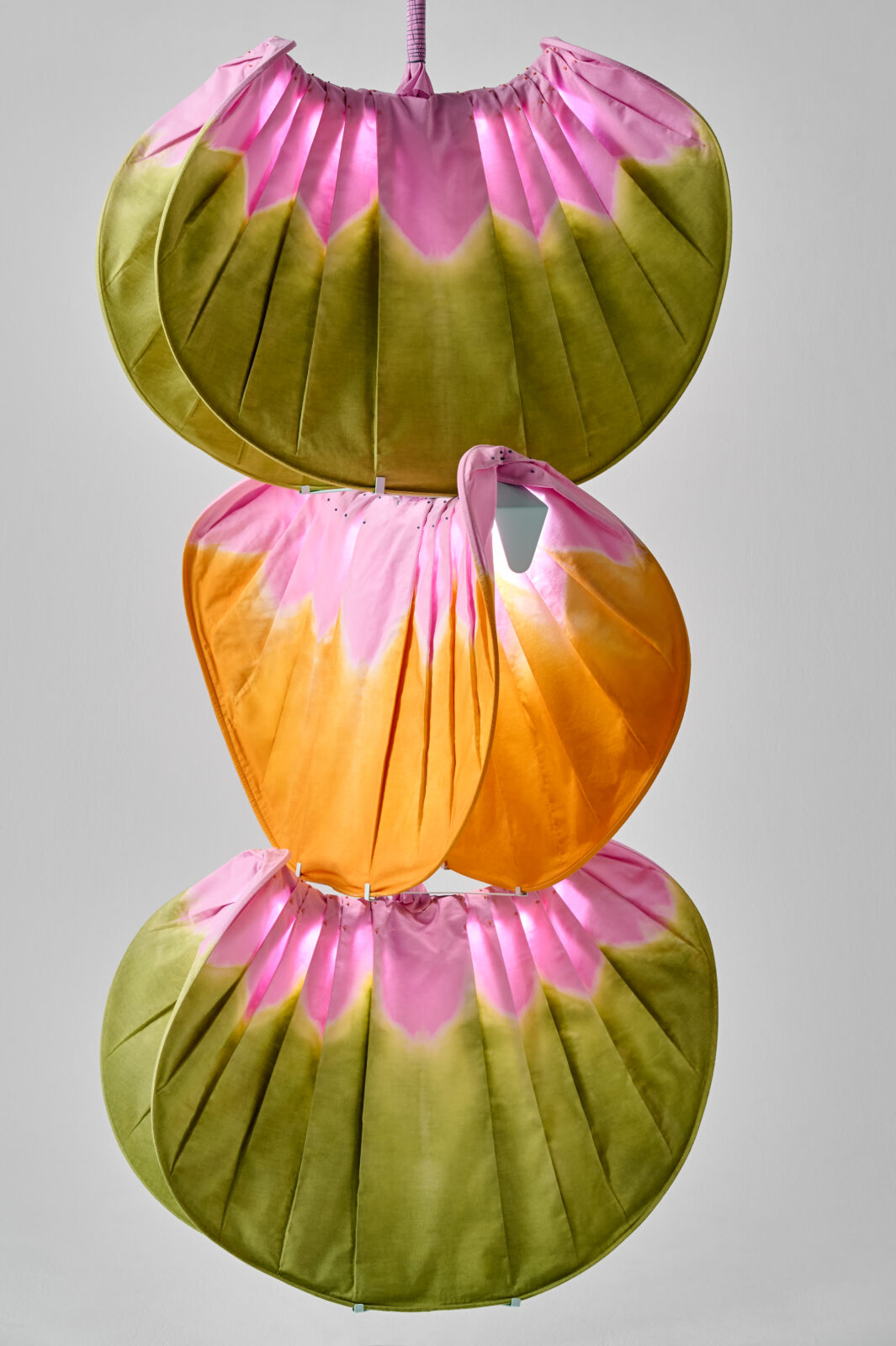
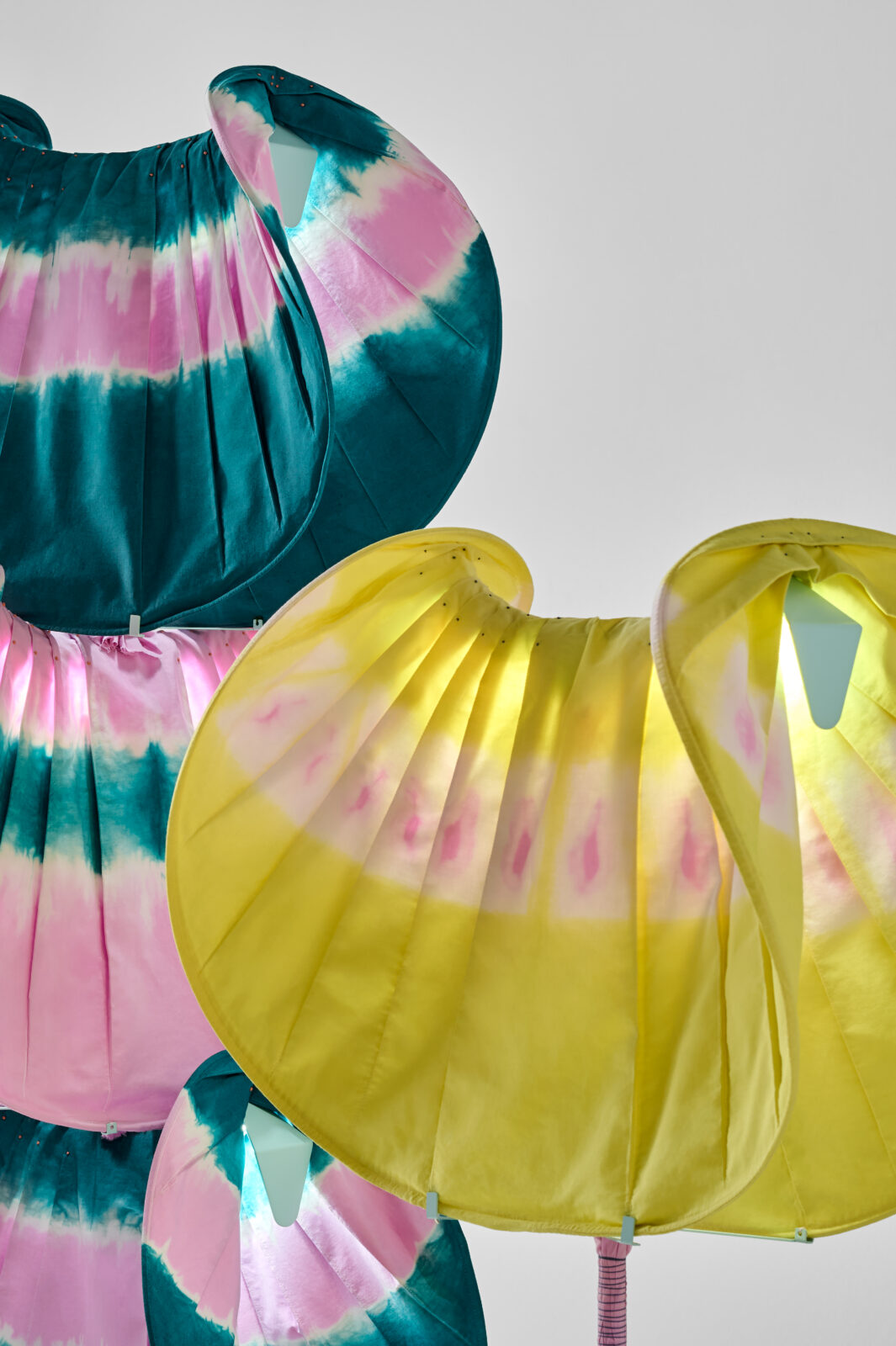
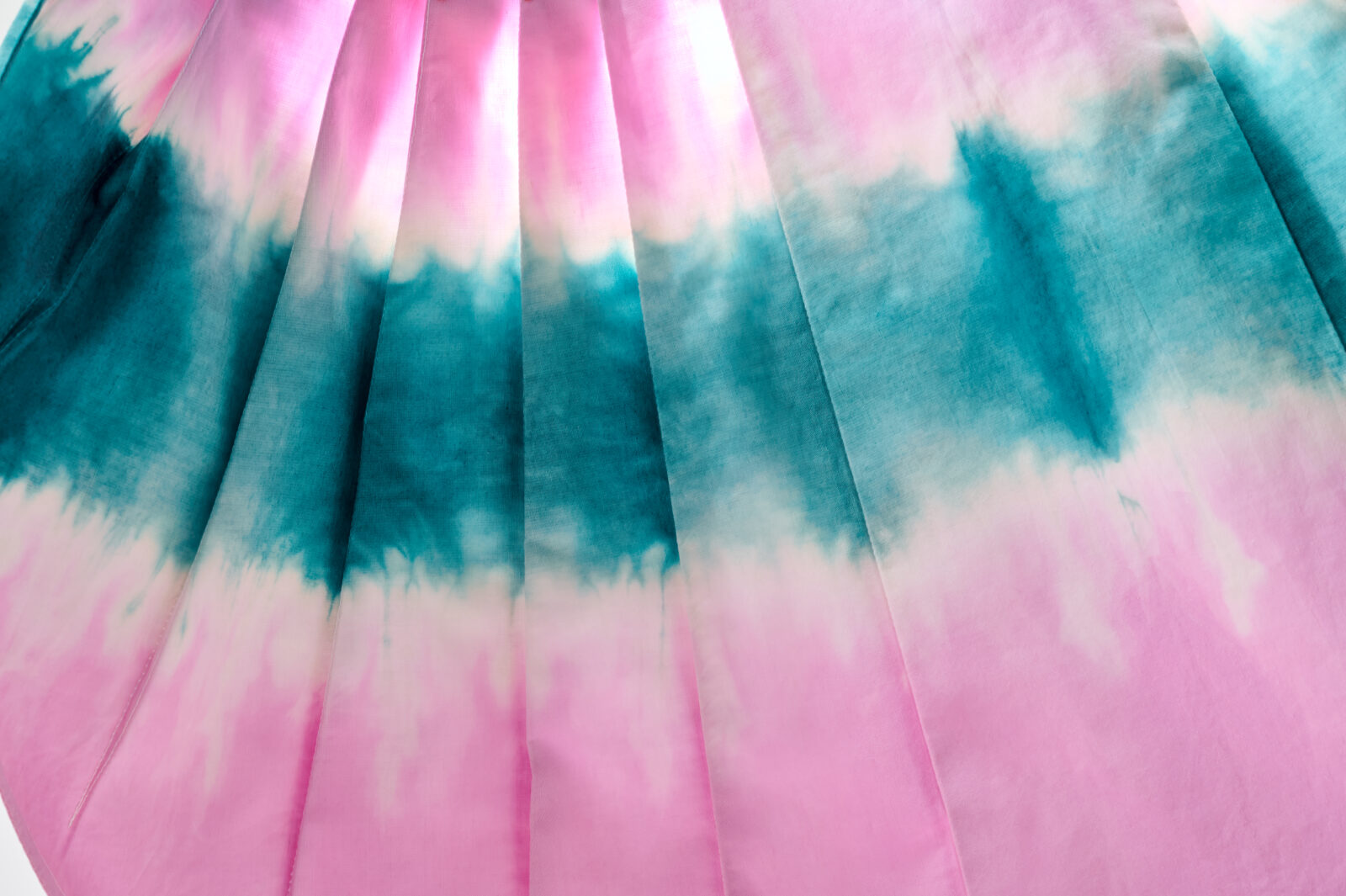
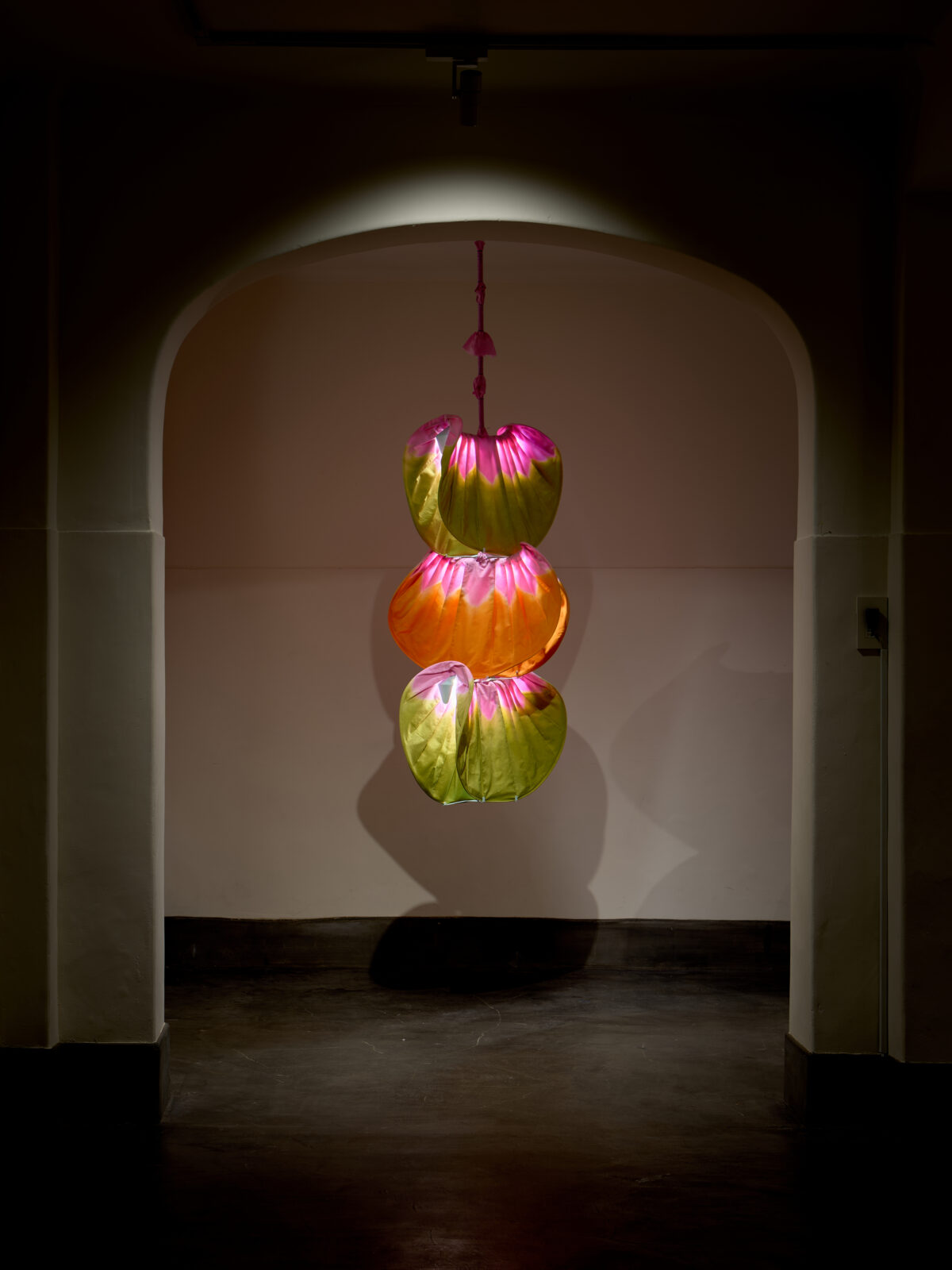
Arimatsu Narumi Shibori, Aichi Prefecture
Arimatsu Narumi Shibori, a traditional tie-dyeing craft from the Arimatsu and Narumi areas (around Midori Ward, Nagoya City, Aichi Prefecture), is considered the heart of Japan's tie-dyeing industry, producing the majority of the nation’s shibori textiles. Known for its unique textures, intricate shading, and elaborate patterns, the craft employs over 100 distinct techniques. Its history spans more than 400 years, dating back to the early Edo period (1603–1868), when shibori textiles were prized souvenirs for travelers along the Tokaido Highway, as depicted in ukiyo-e prints by artists like Hokusai and Hiroshige.
Designer
Bethan Laura Wood
Designer based in London and a Royal College of Art graduate, she has led a multidisciplinary studio since 2009. Her work emphasizes material investigation, layer aesthetic, and vibrant color. She often designs in response to a location, prompted by a residency or artisan collaboration. Notable partnerships include Nilufar Gallery, Perrier-Jouët, and Dior. Her designs are exhibited at institutions including V&A Museum, SFMOMA, NGV and the Design Museum London, and are part of global collections. She also teaches and conducts workshops worldwide.
Artisan
Hiroyuki Murase, Suzusan
CEO of Suzusan Co., Ltd. and Creative Director of suzusan. Fifth-generation heir of a family specializing in Arimatsu Narumi Shibori. After studying art at the University for the Creative Arts in Farnham, Surrey, and Kunstakademie Düsseldorf, he founded his company in Germany in 2008 and launched the brand "suzusan." In 2009, he expanded into lighting and home collections, and in 2015 into fashion. Having served as the coordinating curator for "Creation as DIALOGUE," an initiative by Nagoya City, he is actively engaged in efforts to sustain and revitalize Japan’s traditional crafts.
Limited Edition of 6 + 2 AP
2026
Dyed fabric, steel, LED
Single standing light W350 × D350 × H700 mm
Triple standing light W350 × D350 × H1500 mm
Double hanging light W350 × D350 × H1500 mm
Triple hanging light W350 × D350 × H1500 mm
Enquiries: info@craft-x-tech.com