Tokai
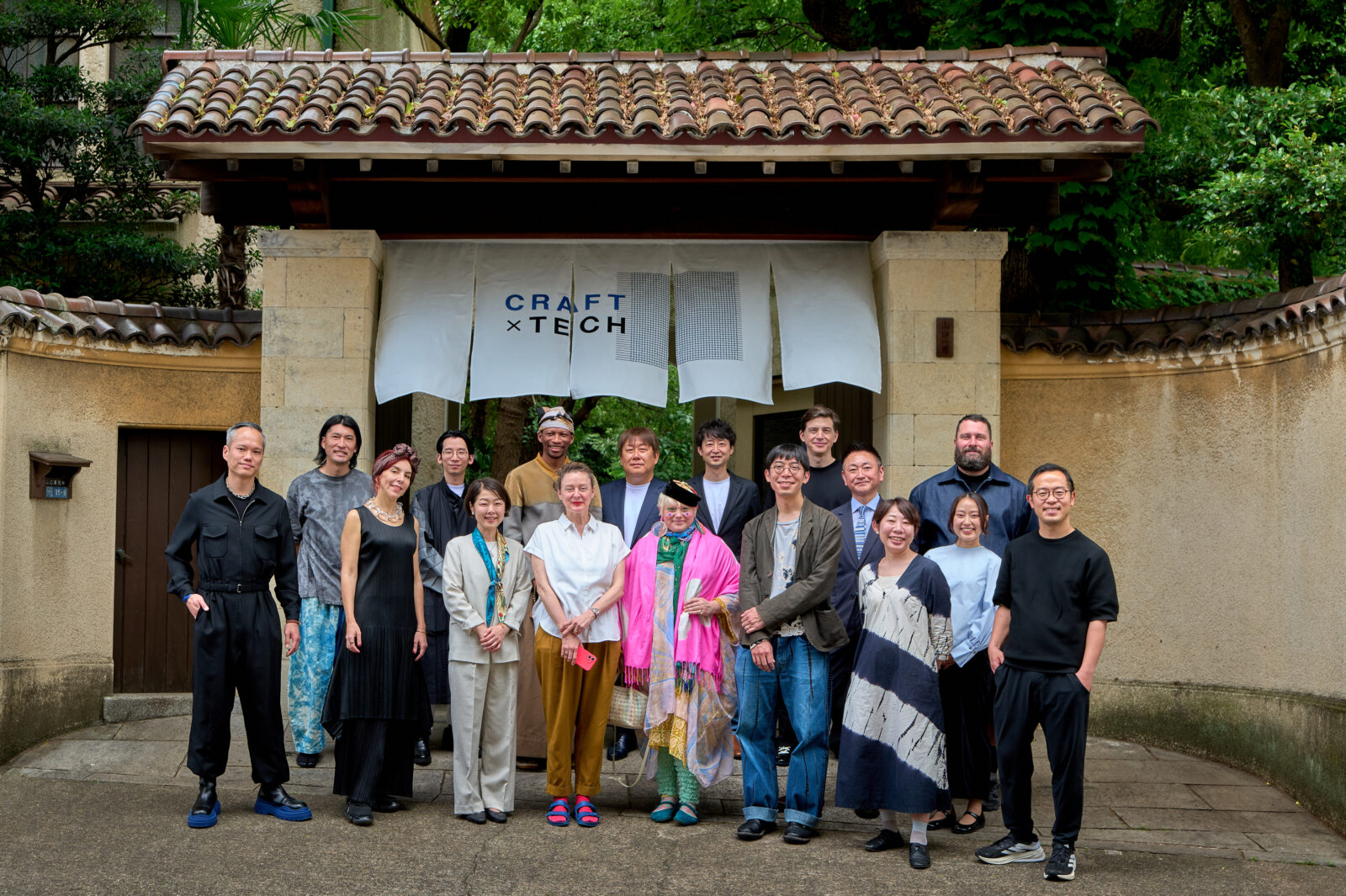
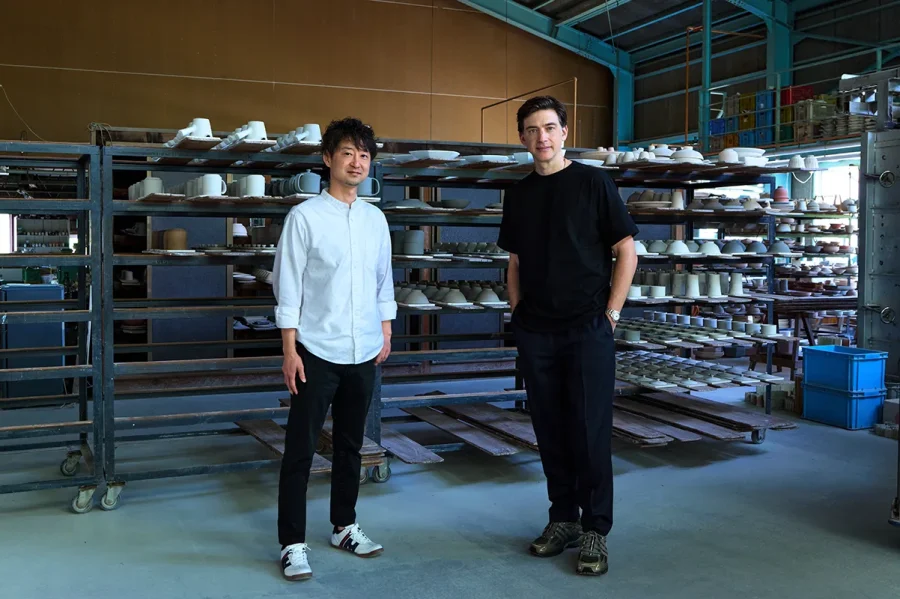
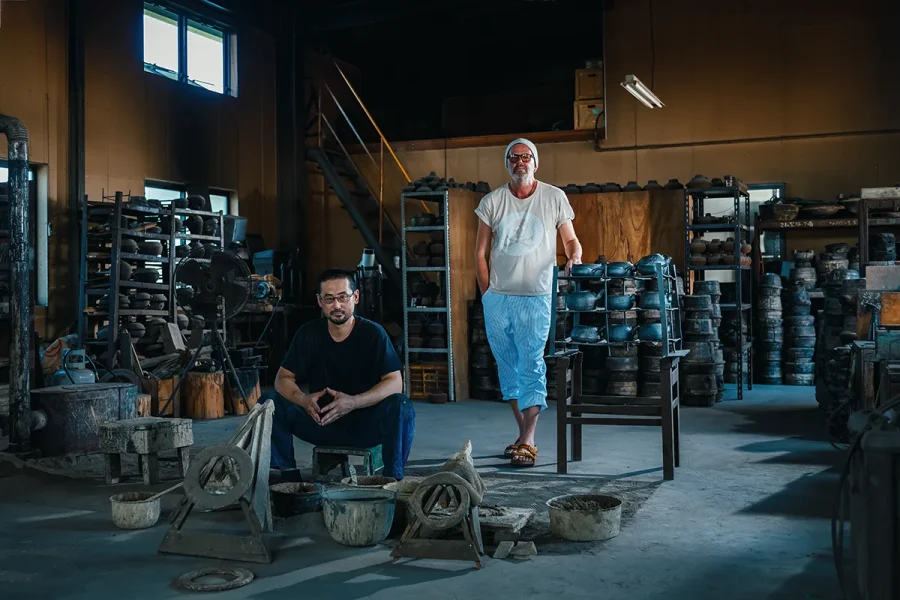
The craft-producing districts for the second edition of Craft x Tech are from the Tokai region of Japan. The participating craftspeople are producers of Mino Yaki (from Gifu prefecture), Mino Washi (from Gifu prefecture), Arimatsu Narumi Shibori (from Aichi prefecture), Owari Shippo (from Aichi prefecture), Seto Sometsuke Yaki (from Aichi prefecture), and Iga Kumihimo (from Mie prefecture).
The designers who are collaborating with these master crafts producers are David Caon, Lanzavecchia + Wai, Bethan Laura Wood, Philippe Malouin, Eugene Kangawa (EUGENE STUDIO), and Atang Tshikare.
Movie
12
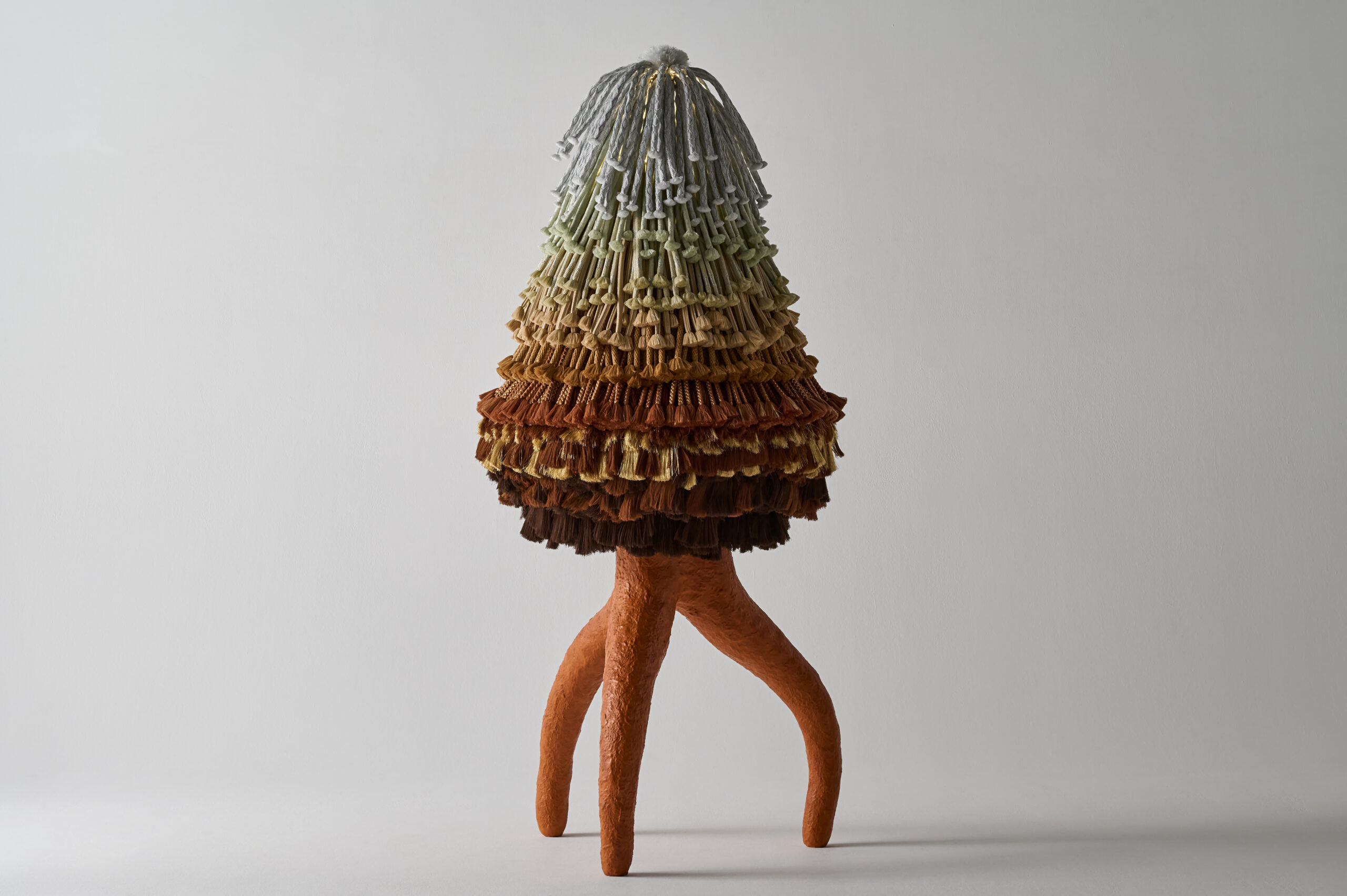
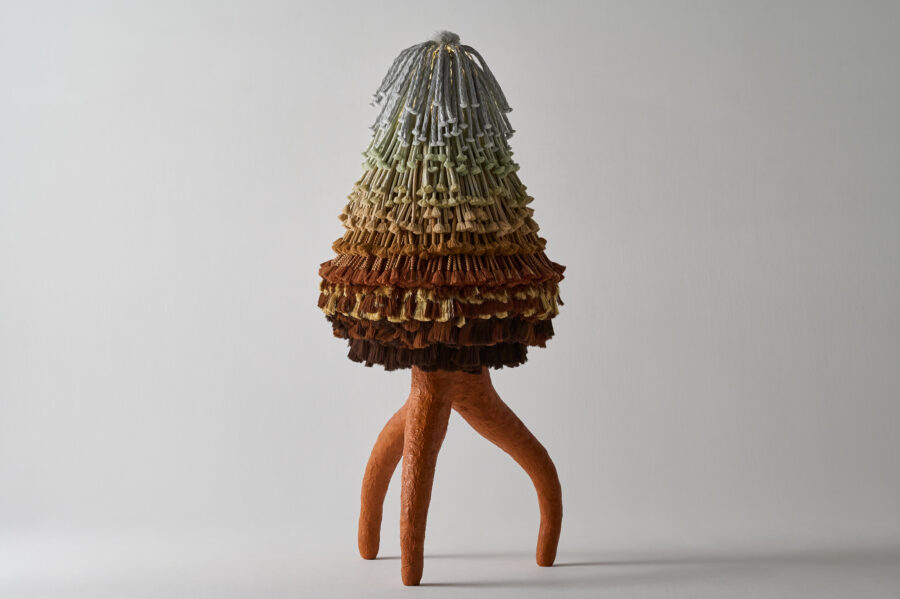
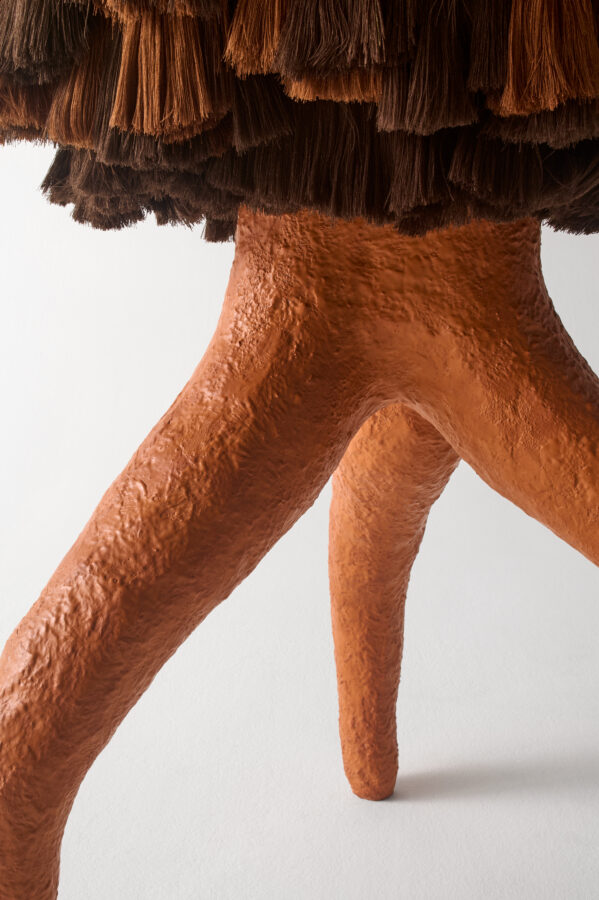
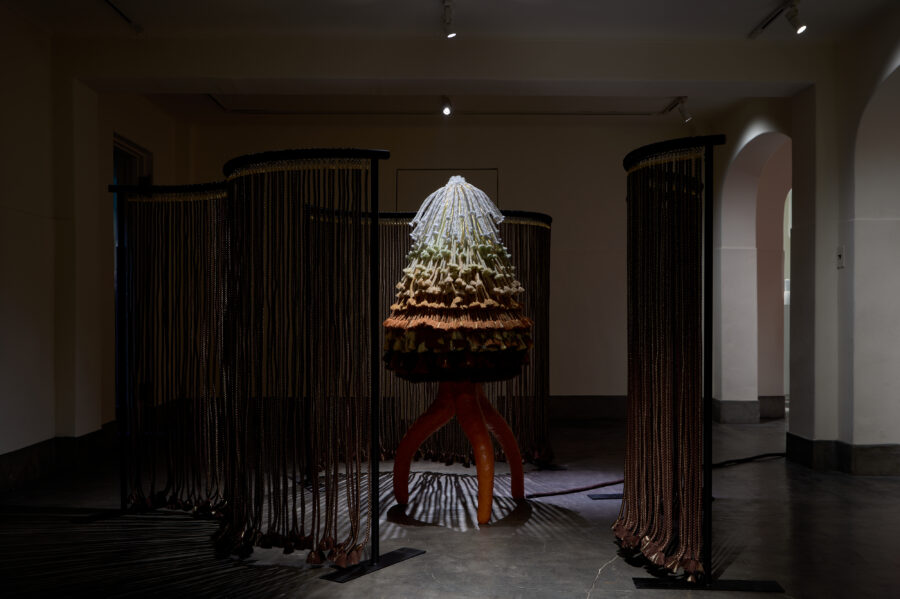
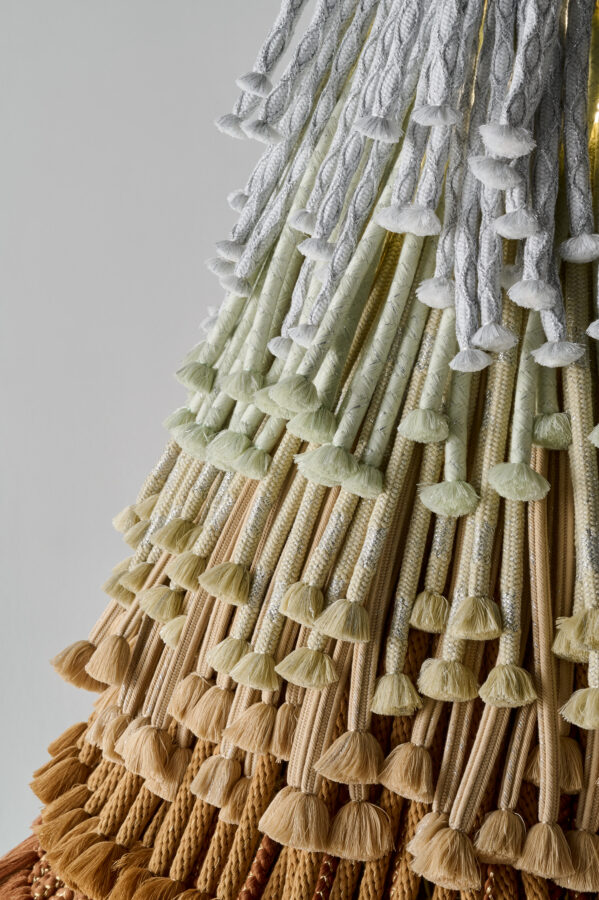
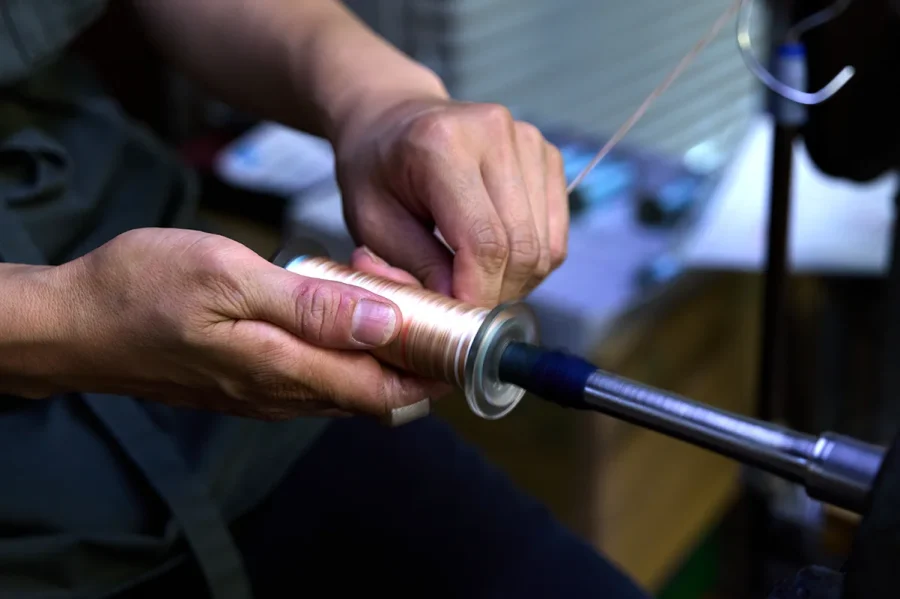
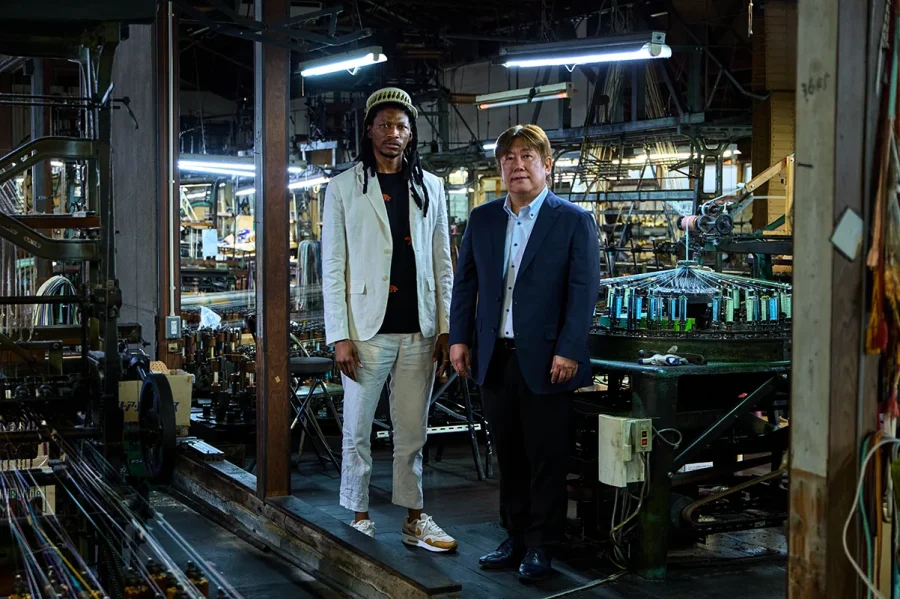
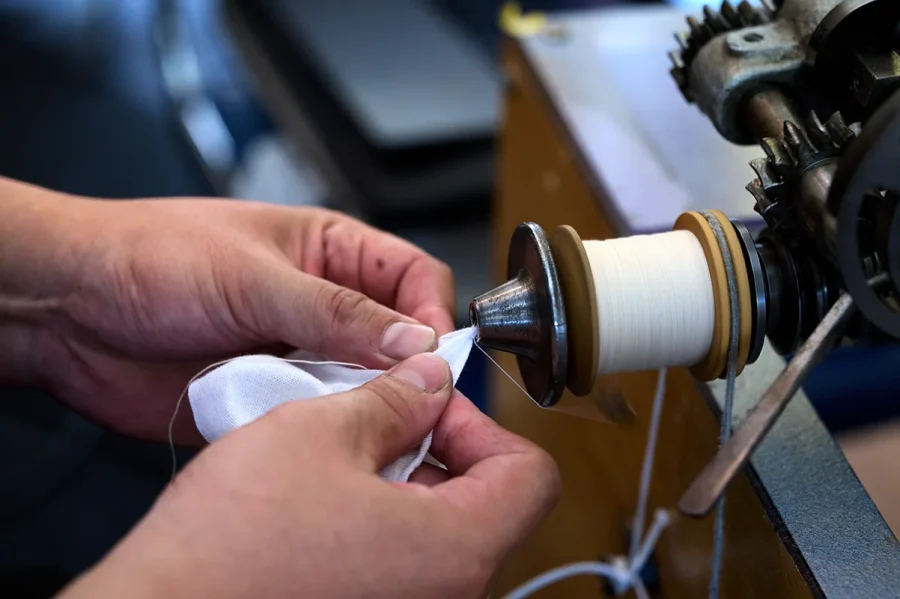
A sculptural lighting work utilising Iga Kumihimo, exploring containment and emergence—a volcano within a mountain, fire within a hearth, spirit within a body. Earth-toned Kumihimo gradients echo landscape and skin as the central form rises, light flaring at the crown before fading into darker hues. Kumihimo is rendered with restrained colour to foreground the intricacy of the weave; exposed threads at the base mark where “fire” begins, and light concentrates at the peak. An enclosing shield, usable as a divider, becomes mountain, hearth, and body, holding both illumination and shadow.
A sculptural lighting work utilising Iga Kumihimo, exploring containment and emergence—a volcano within a mountain, fire within a hearth, spirit within a body. Earth-toned Kumihimo gradients echo landscape and skin as the central form rises, light flaring at the crown before fading into darker hues. Kumihimo is rendered with restrained colour to foreground the intricacy of the weave; exposed threads at the base mark where “fire” begins, and light concentrates at the peak. An enclosing shield, usable as a divider, becomes mountain, hearth, and body, holding both illumination and shadow.
11
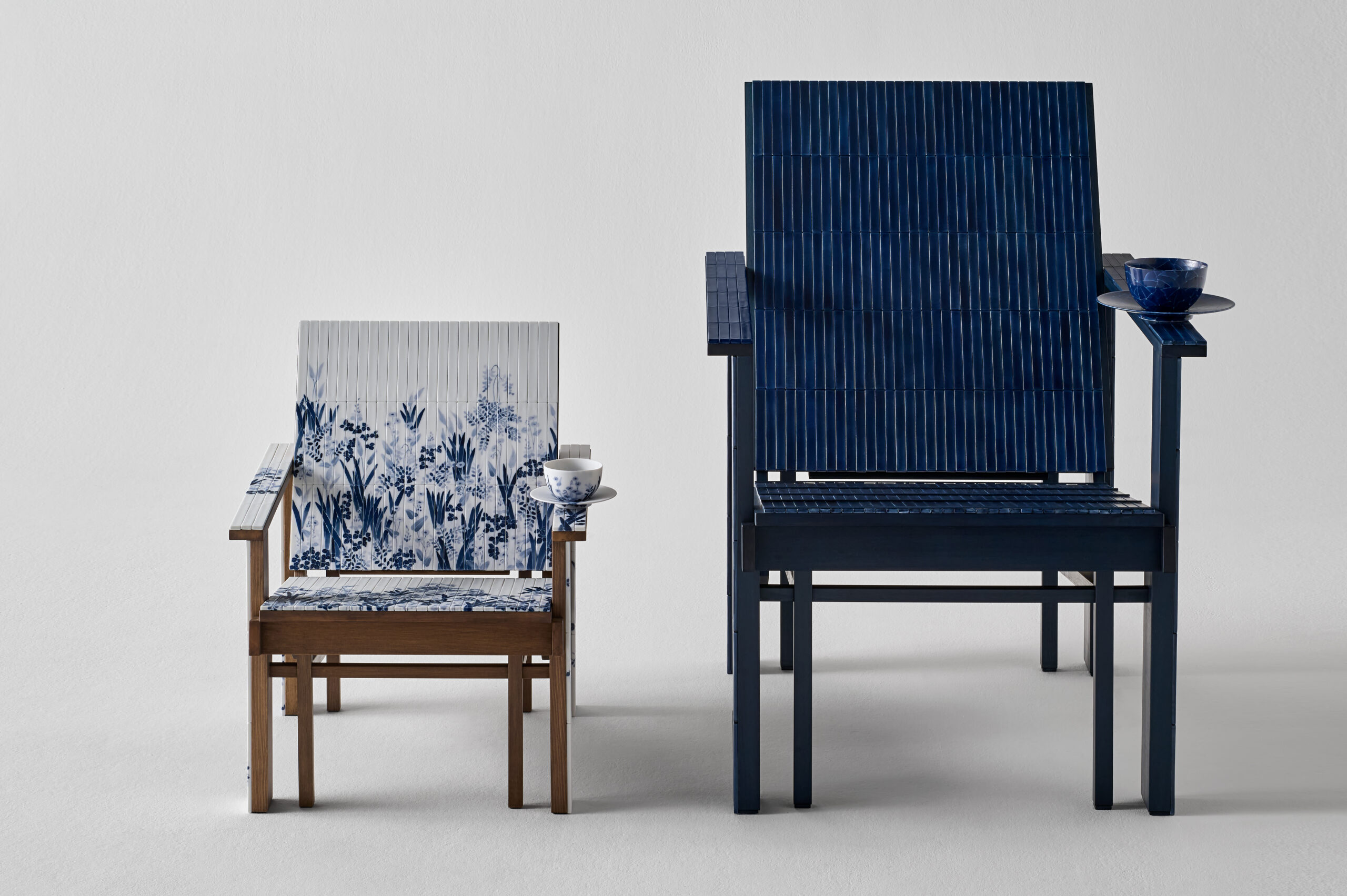
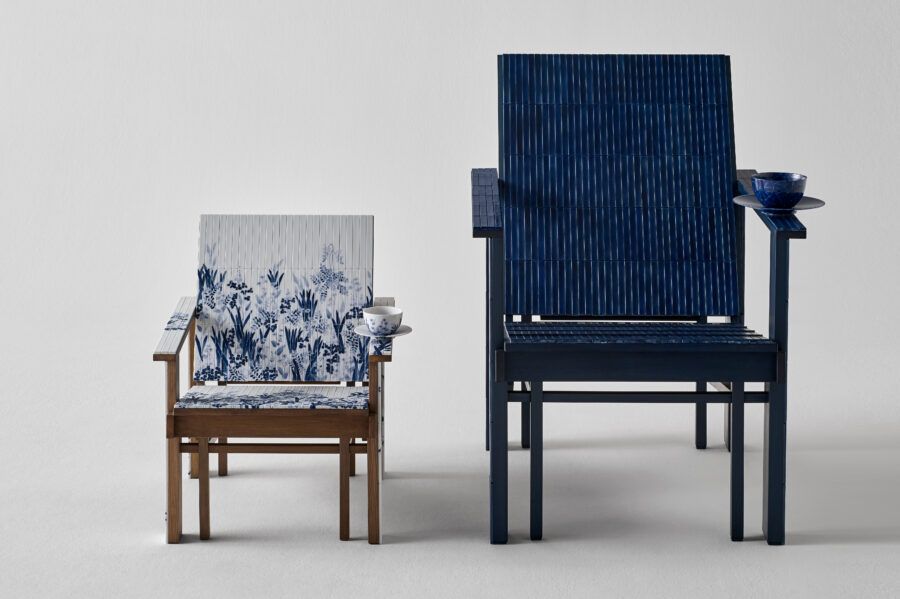
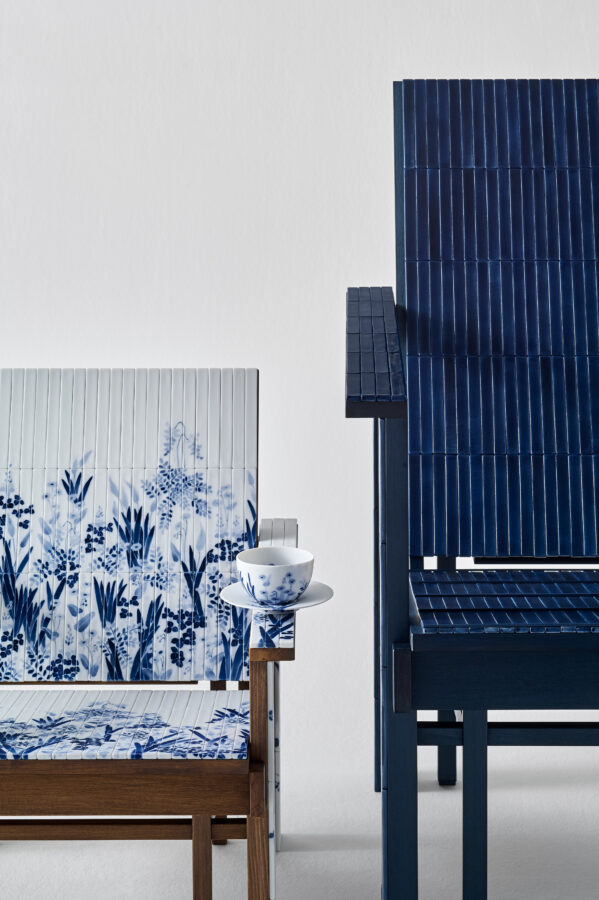
Chair in Japanese Nuki and Dami style, The Everyday at the Atelier (Standard / Child Scale)
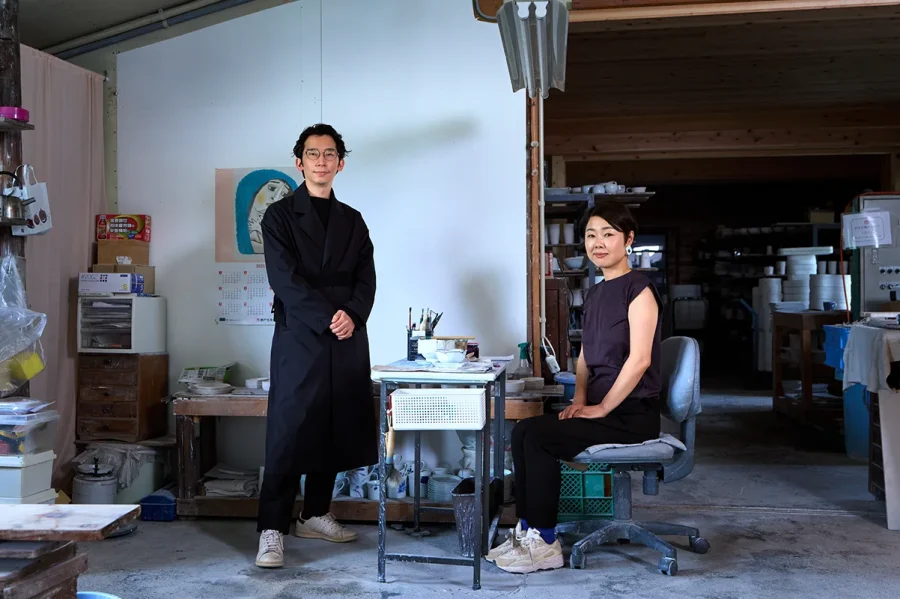
Seto Sometsuke Yaki × Eugene Kangawa, EUGENE STUDIO
(Tokai)
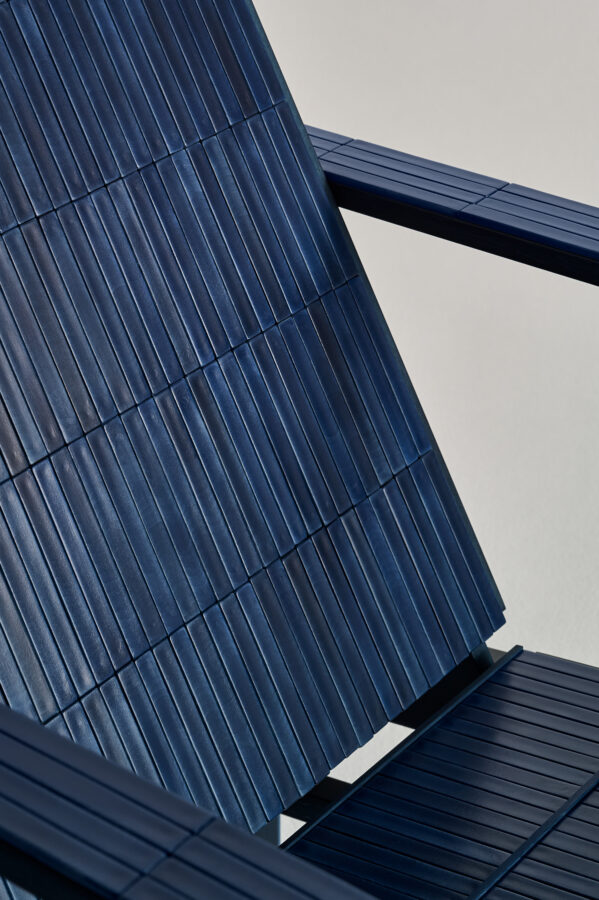
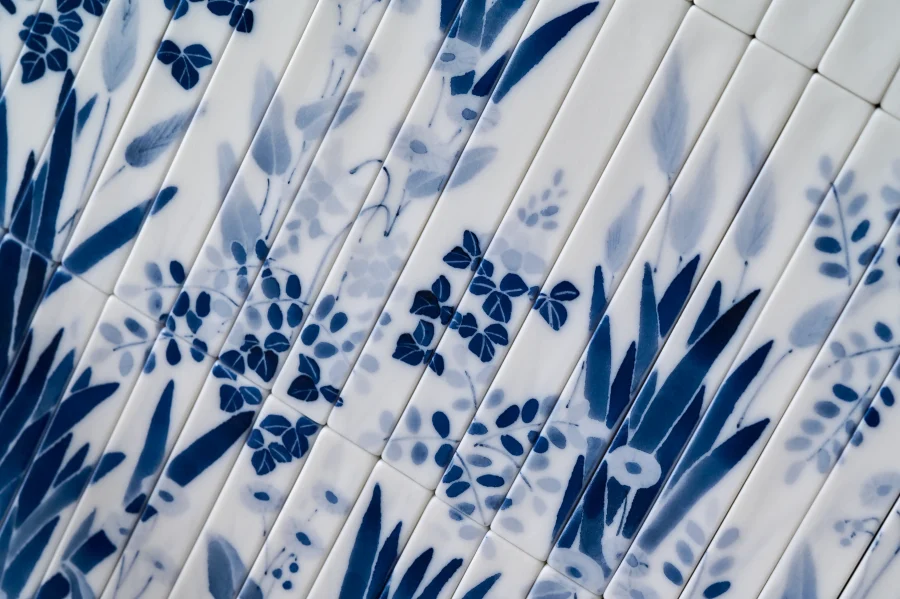
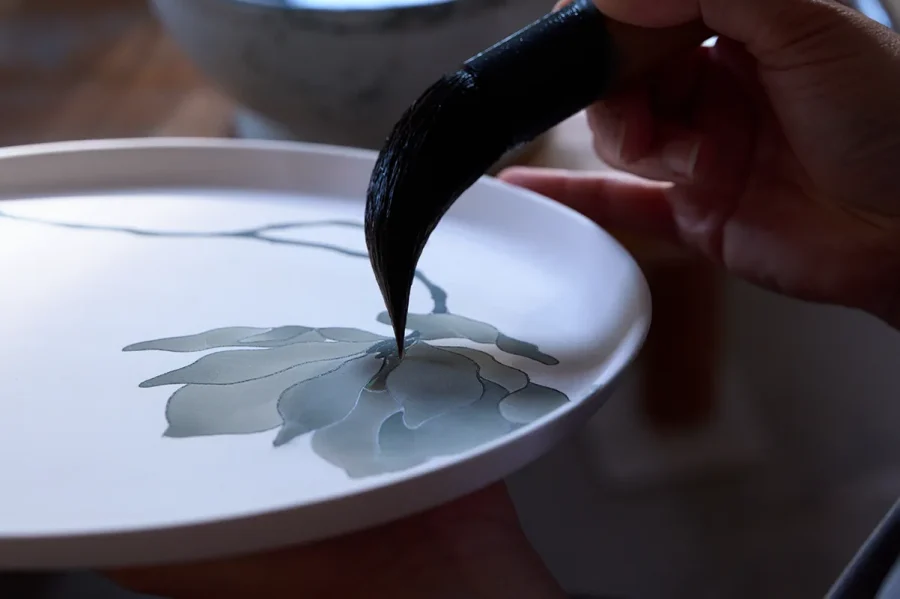
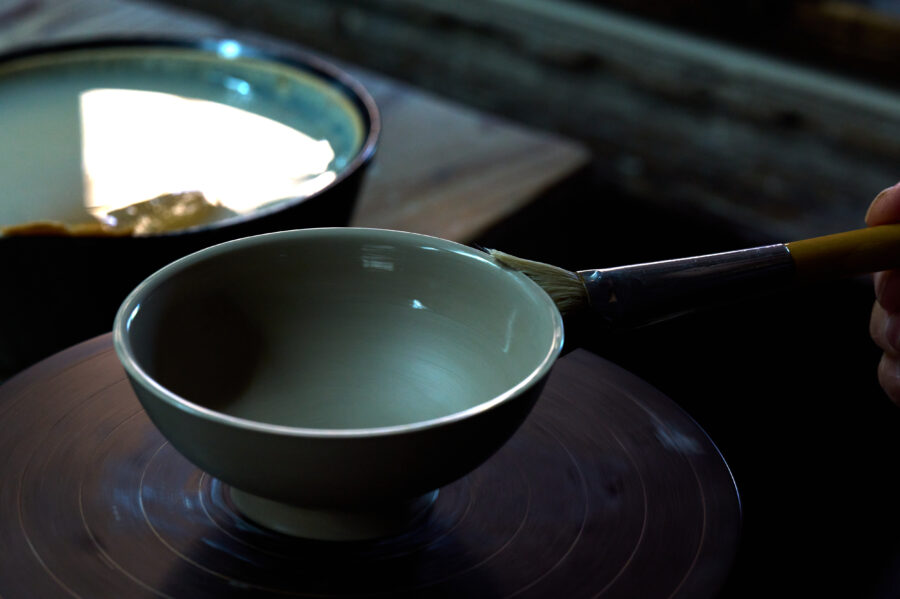
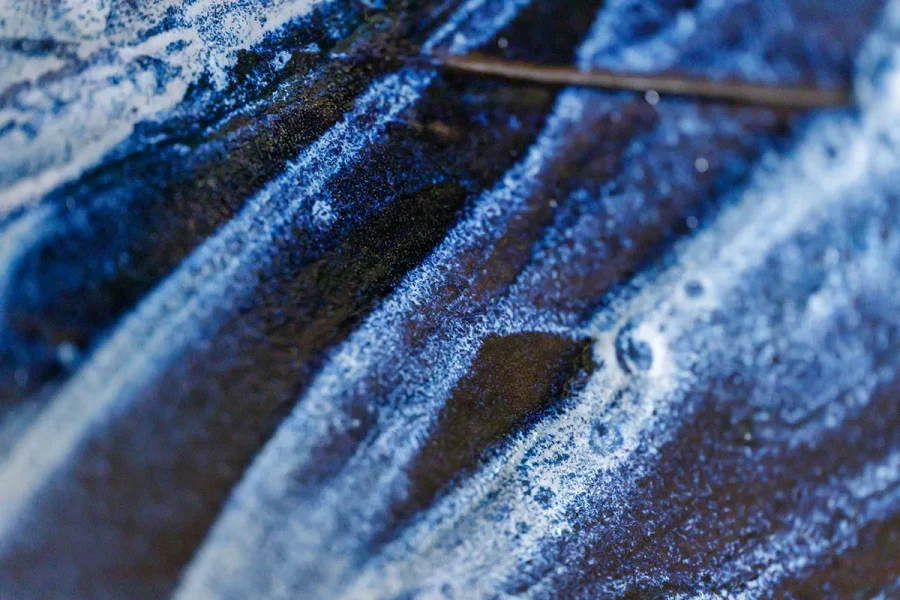
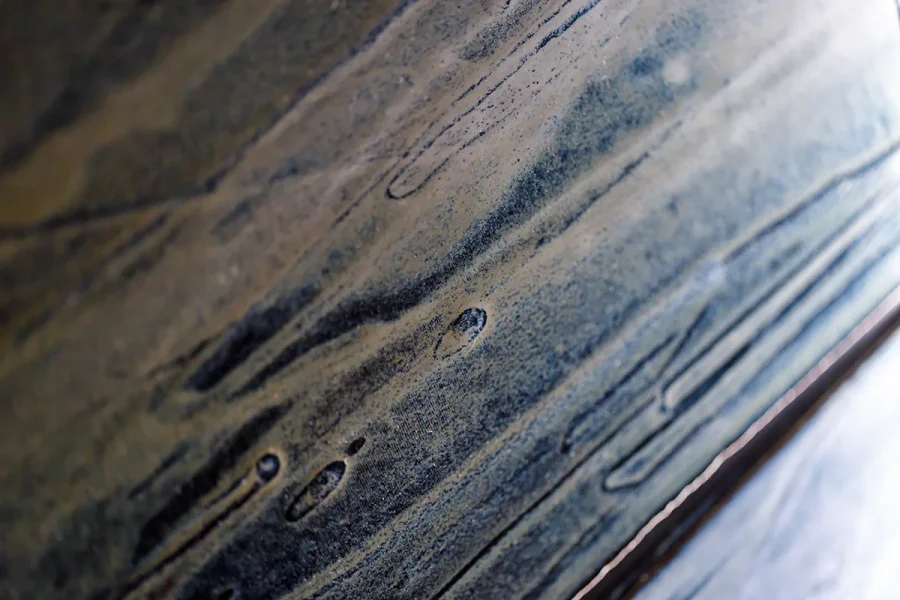
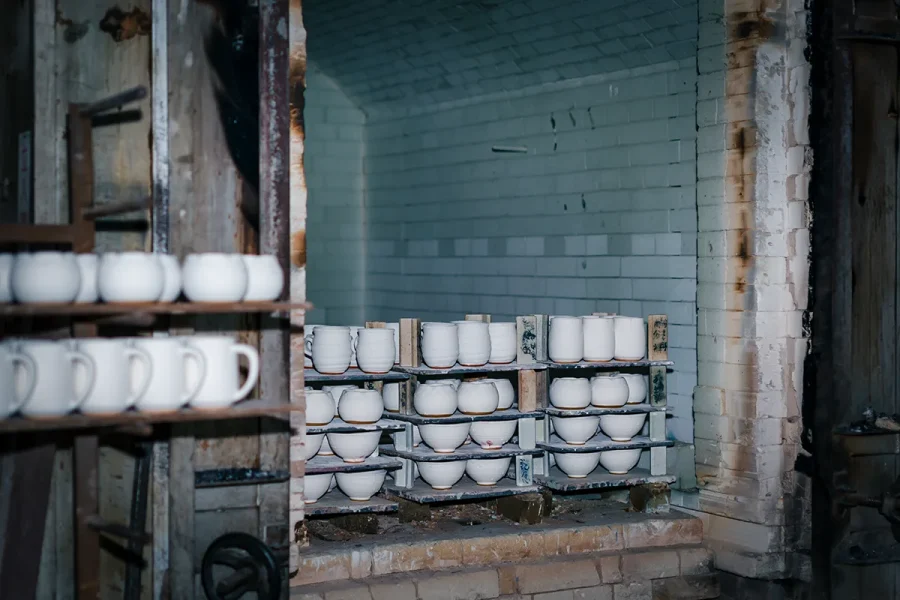
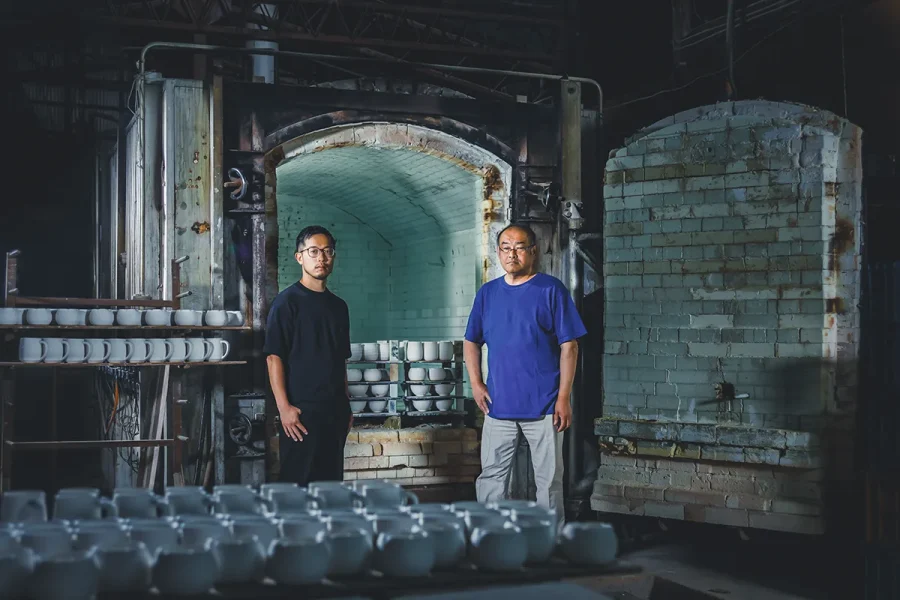
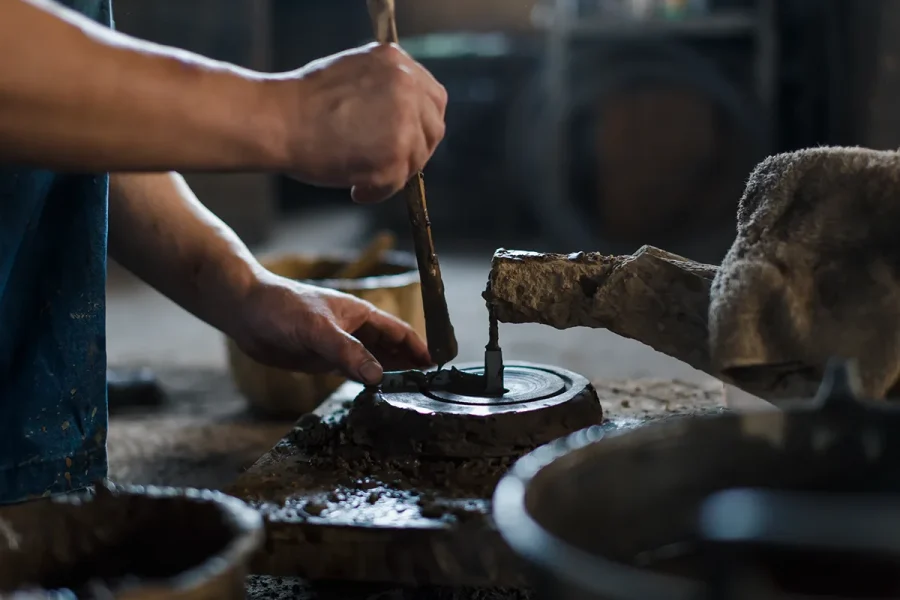
A series of chairs and tea vessels combining Seto Sometsuke Yaki porcelain tiles with traditional mortise-and-tenon joinery. The subtle fluctuations of deep indigo created through the “dami” technique, together with Shingama’s distinctive hand-painting, bring together different brushstrokes, straight lines, and curves, expressing the supple sense of change at the heart of Seto Sometsuke Yaki. Based on chairs used daily in the studio’s atelier and tea vessels long used at the kiln, the works reveal, through both form and technique, how craft emerges from the rhythms of everyday life.
A series of chairs and tea vessels combining Seto Sometsuke Yaki porcelain tiles with traditional mortise-and-tenon joinery. The subtle fluctuations of deep indigo created through the “dami” technique, together with Shingama’s distinctive hand-painting, bring together different brushstrokes, straight lines, and curves, expressing the supple sense of change at the heart of Seto Sometsuke Yaki. Based on chairs used daily in the studio’s atelier and tea vessels long used at the kiln, the works reveal, through both form and technique, how craft emerges from the rhythms of everyday life.
10
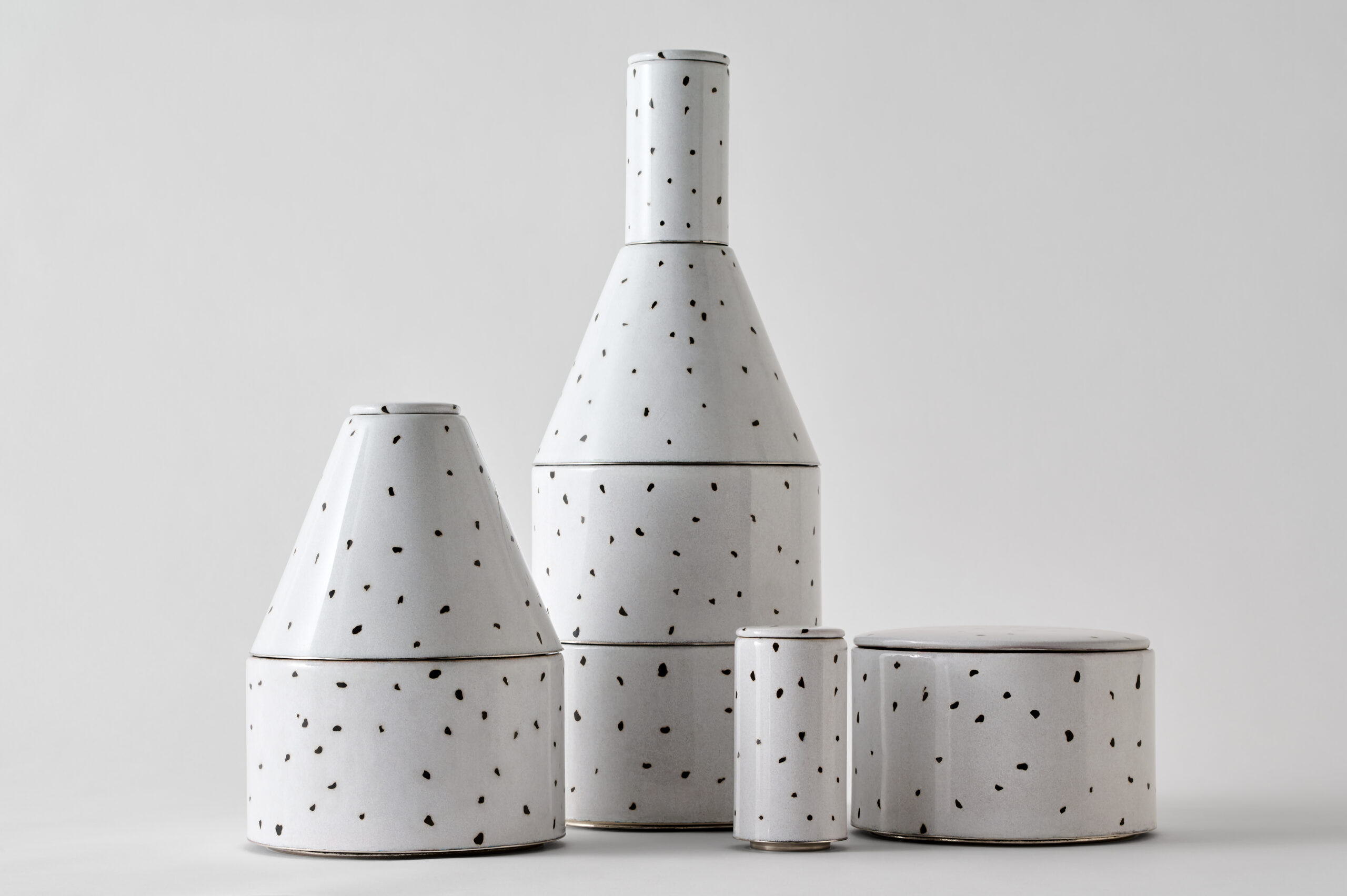
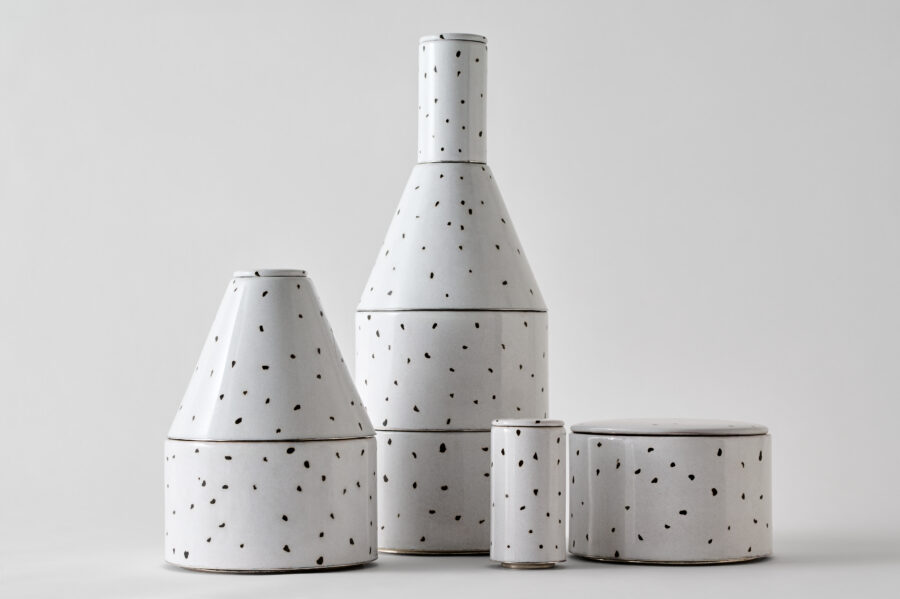
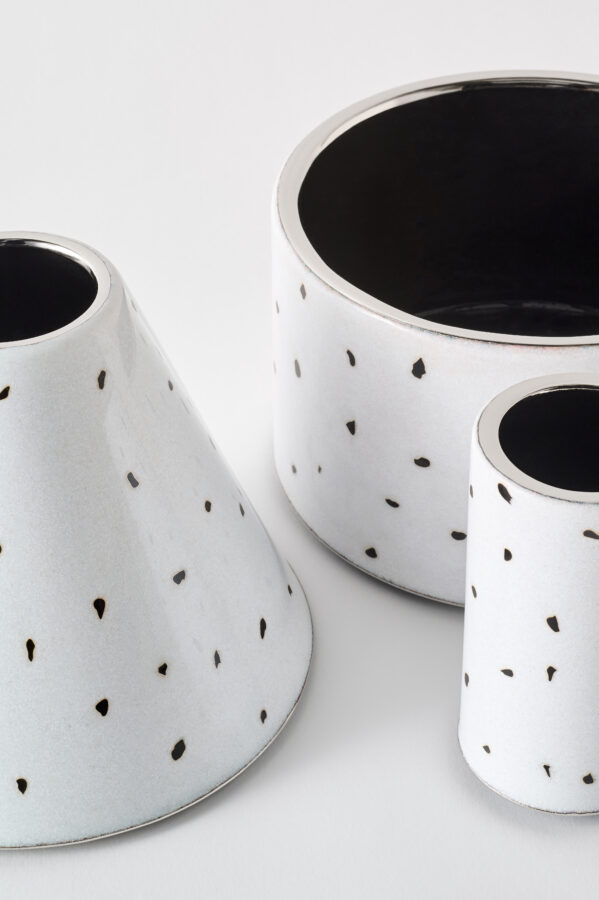
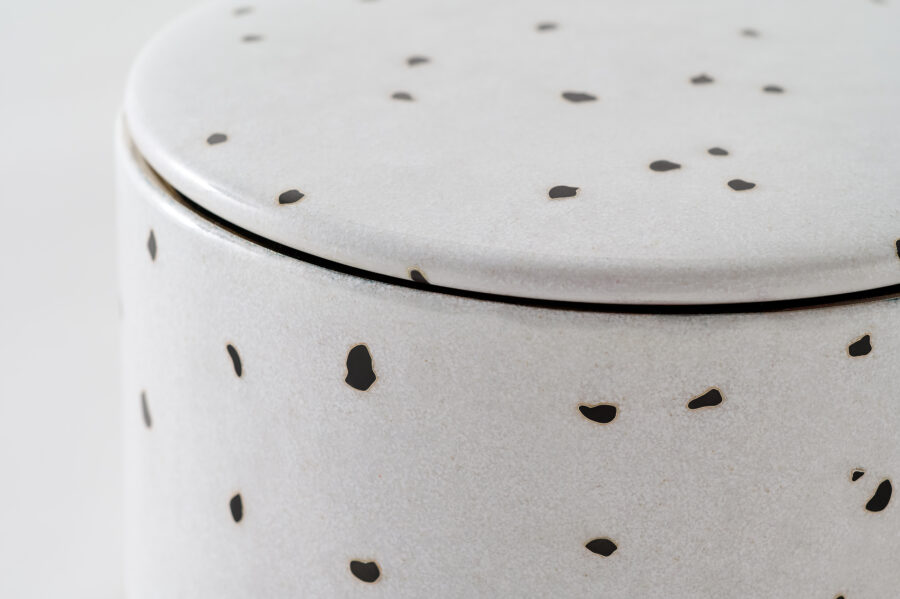
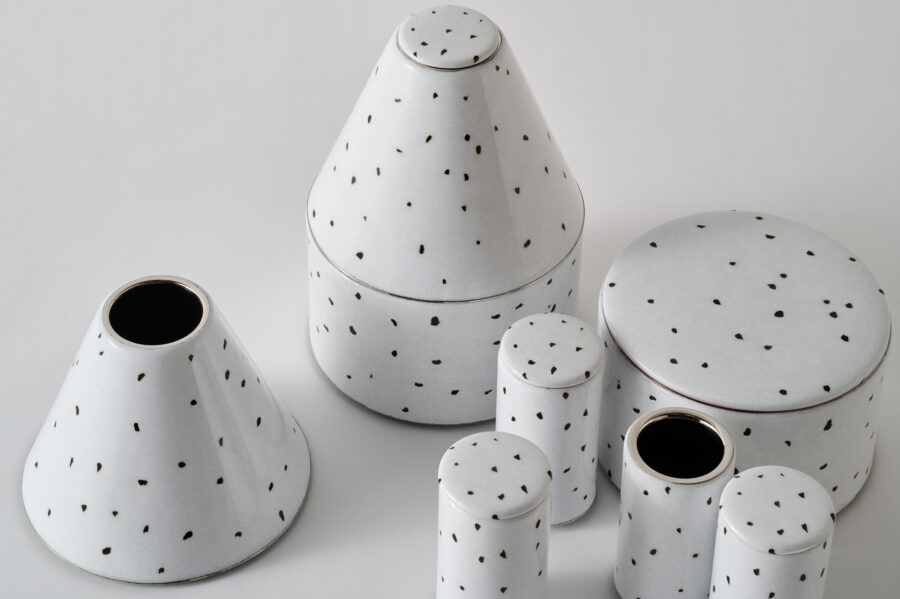
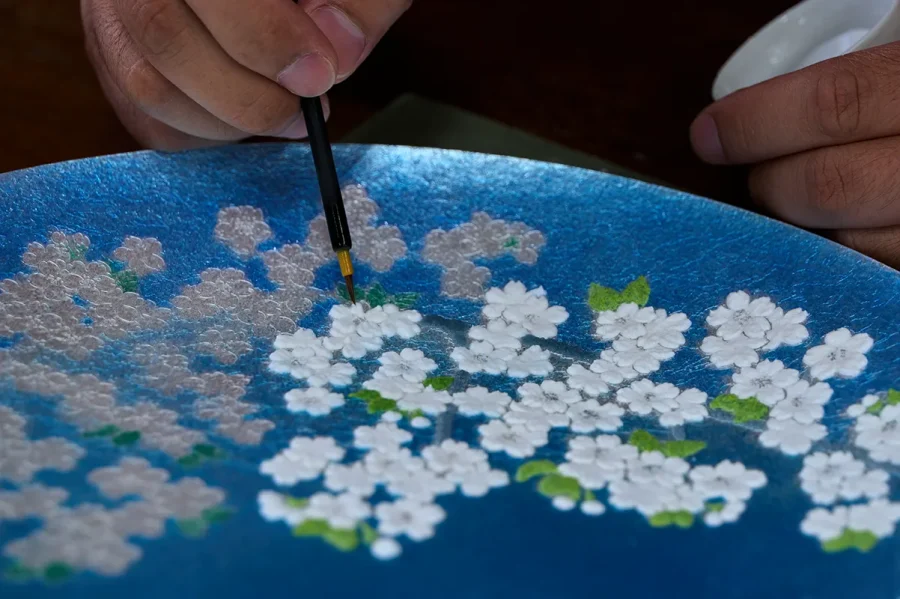
A series of stackable boxes created using the Owari Shippo technique. Inspired by the kogetsudai—the sculpted gravel mound in Kyoto’s Ginkaku-ji gardens—its truncated cone form, quiet and minimal yet deeply symbolic, is reinterpreted through clarity and restraint rather than imitation. Each unit functions alone or combines into layered, architectural stacks. The surface features randomly hand-applied motifs rather than traditional ornament. Yet each mark is realised using a silver-wire technique, where a minimalist design approach coexists with highly precise craftsmanship.
A series of stackable boxes created using the Owari Shippo technique. Inspired by the kogetsudai—the sculpted gravel mound in Kyoto’s Ginkaku-ji gardens—its truncated cone form, quiet and minimal yet deeply symbolic, is reinterpreted through clarity and restraint rather than imitation. Each unit functions alone or combines into layered, architectural stacks. The surface features randomly hand-applied motifs rather than traditional ornament. Yet each mark is realised using a silver-wire technique, where a minimalist design approach coexists with highly precise craftsmanship.

09
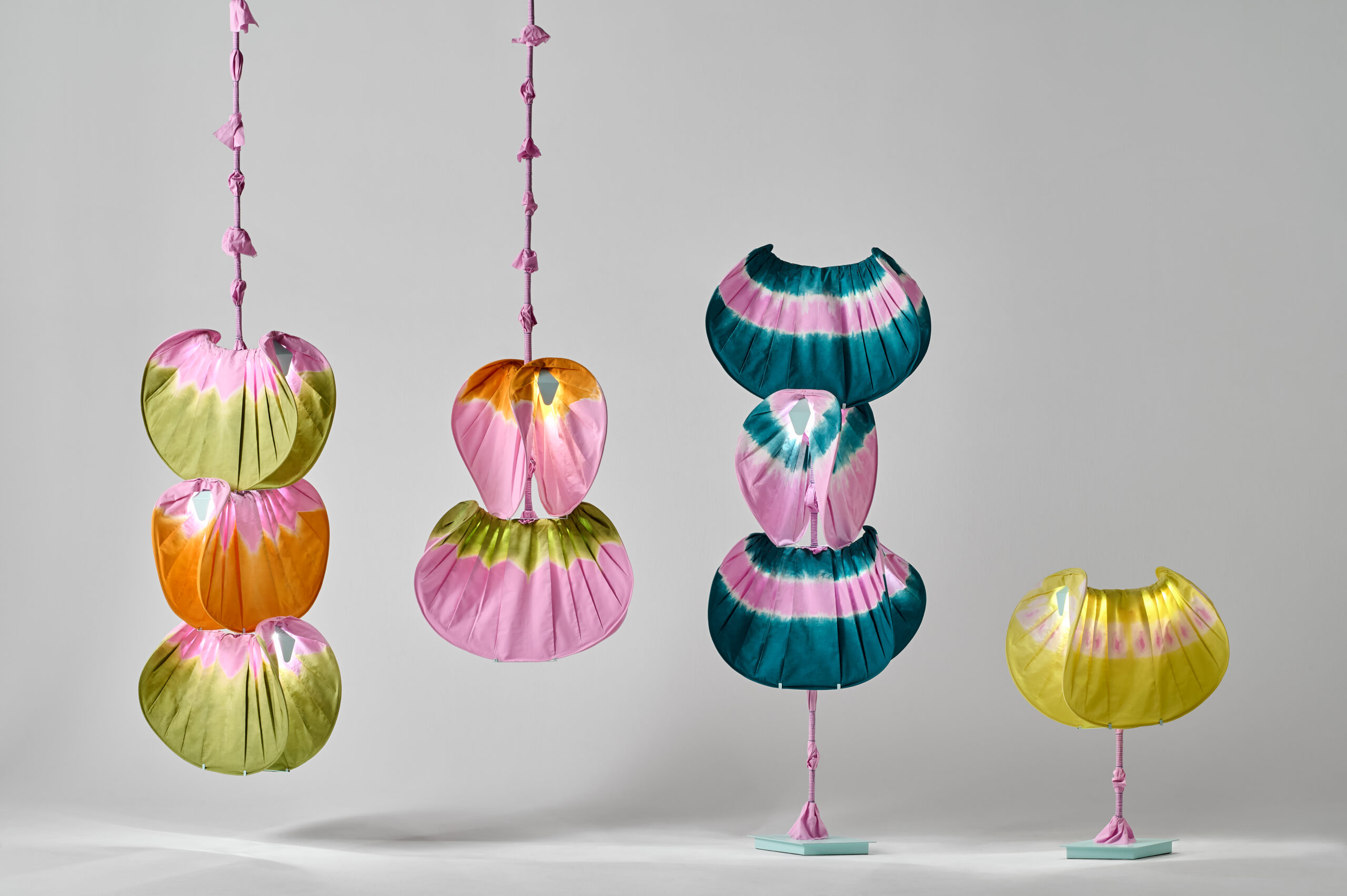
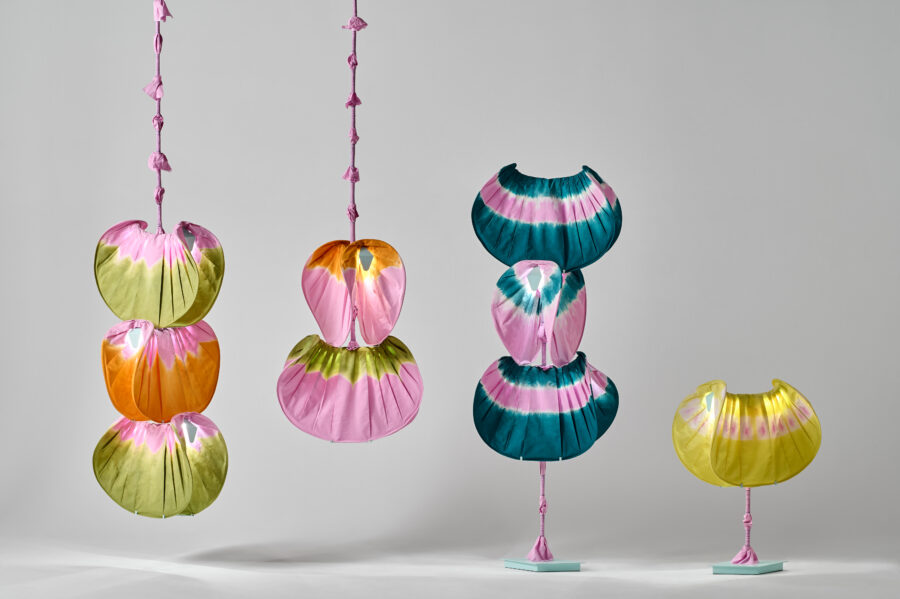
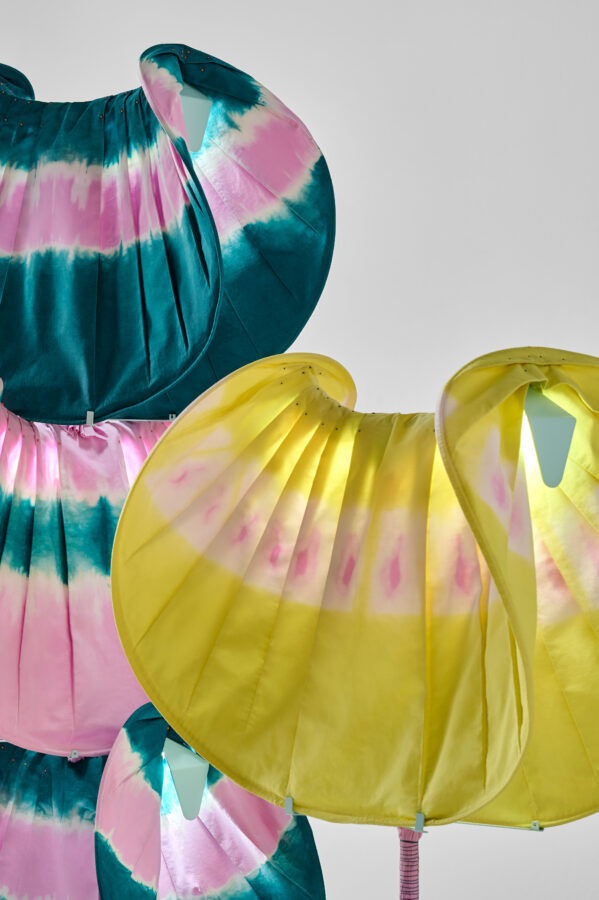
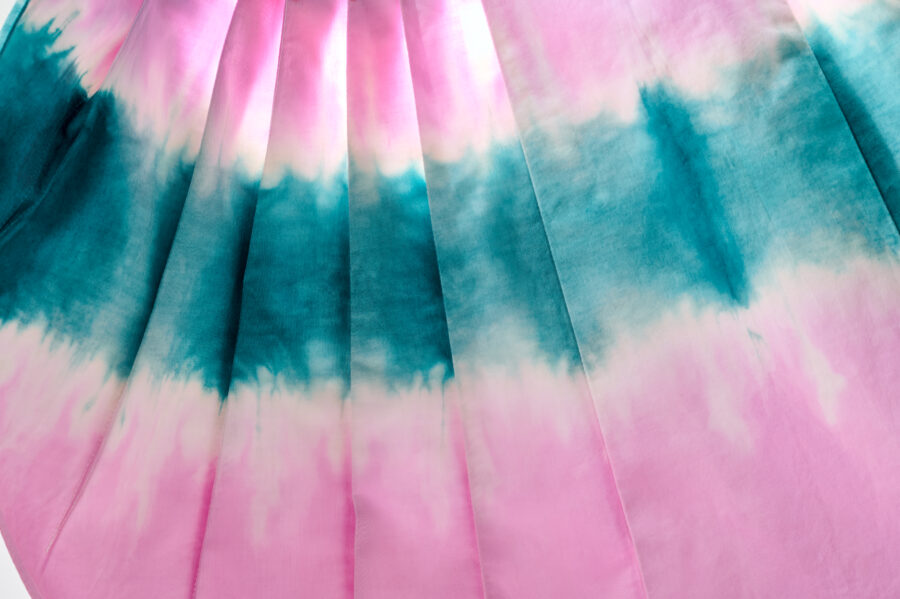
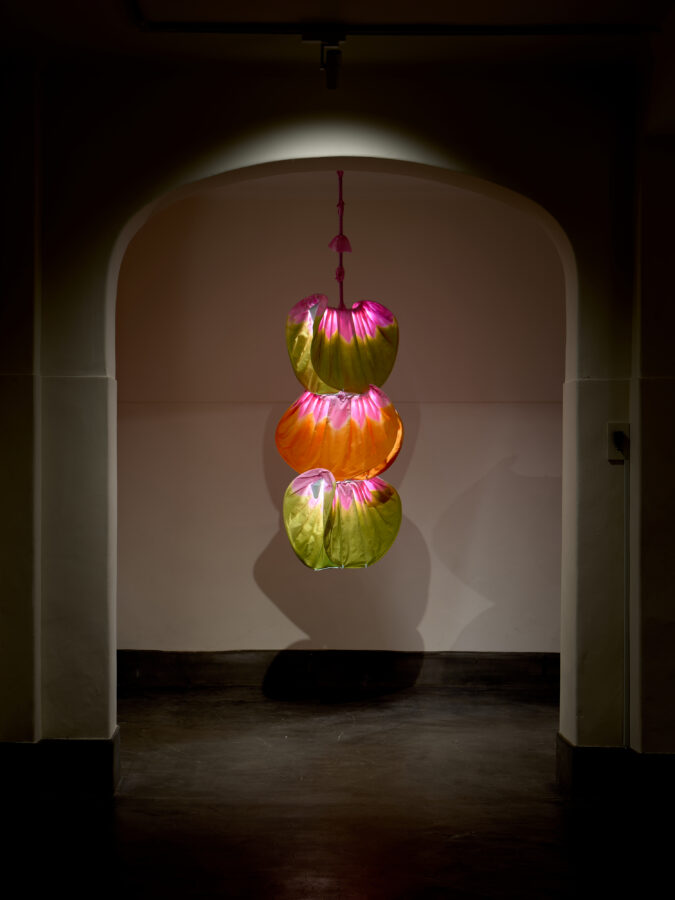
A lighting series exploring Arimatsu Narumi Shibori’s tying and binding. Three-dimensional folding reveals complex textures and shifting patterns, while interacting dyes create blurred transitions that capture the material’s “living” response to placement and manipulation. Traces of stitching and folding remain visible, showing each stage of making. The resulting collection of lights transforms kataginu-inspired volumes (a traditional Japanese sleeveless vest with exaggerated, stiffened shoulders) into luminous objects—extending shibori from garments into the home.
A lighting series exploring Arimatsu Narumi Shibori’s tying and binding. Three-dimensional folding reveals complex textures and shifting patterns, while interacting dyes create blurred transitions that capture the material’s “living” response to placement and manipulation. Traces of stitching and folding remain visible, showing each stage of making. The resulting collection of lights transforms kataginu-inspired volumes (a traditional Japanese sleeveless vest with exaggerated, stiffened shoulders) into luminous objects—extending shibori from garments into the home.
08
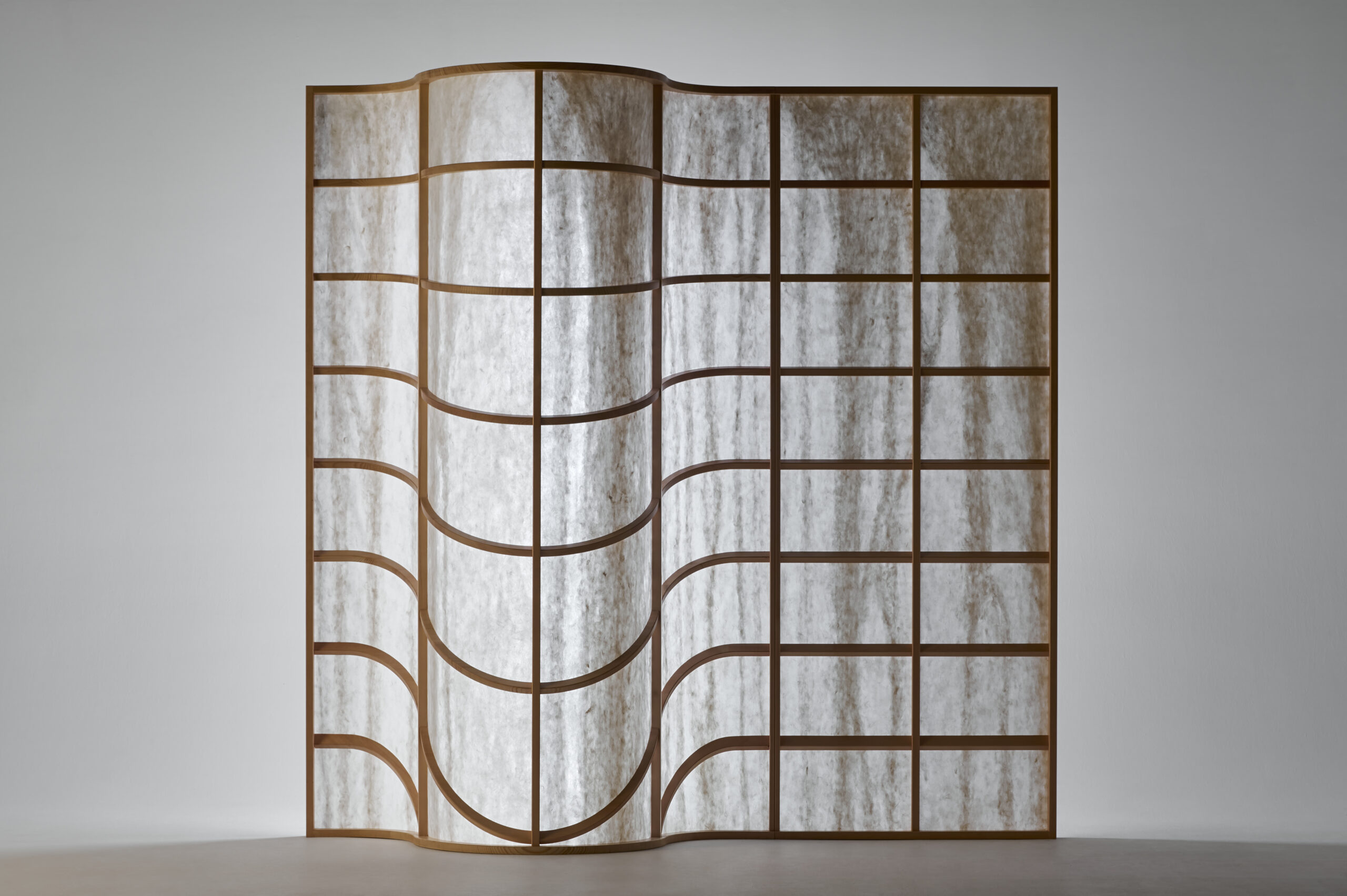
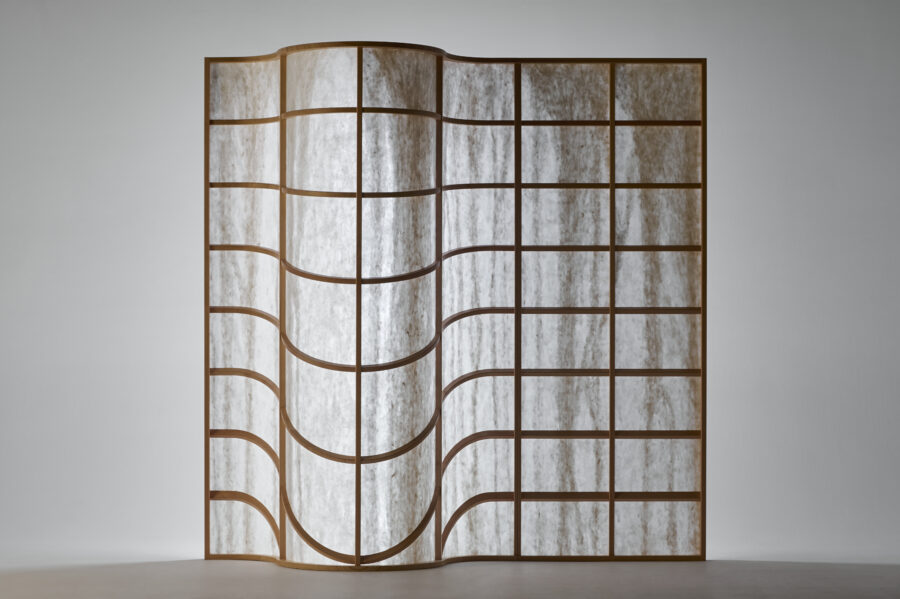
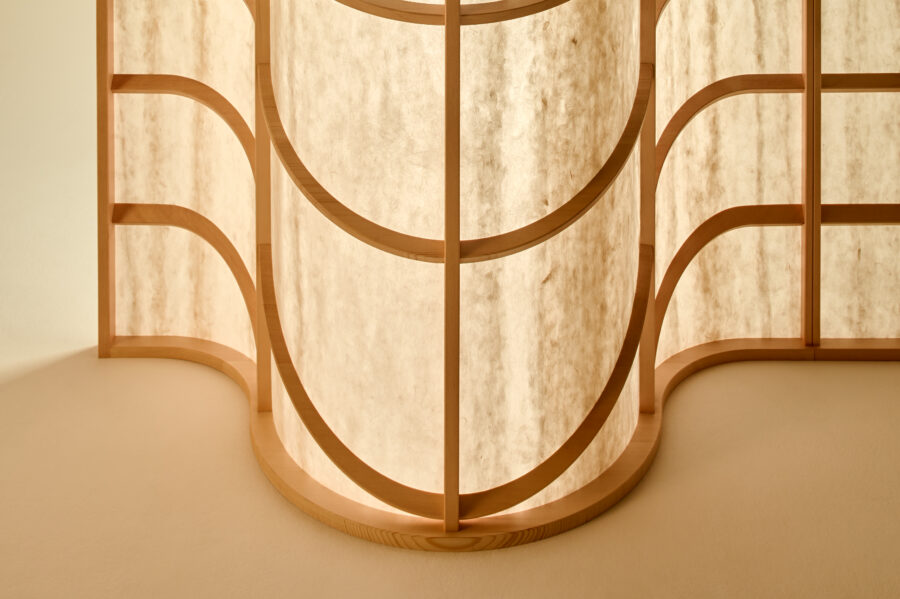
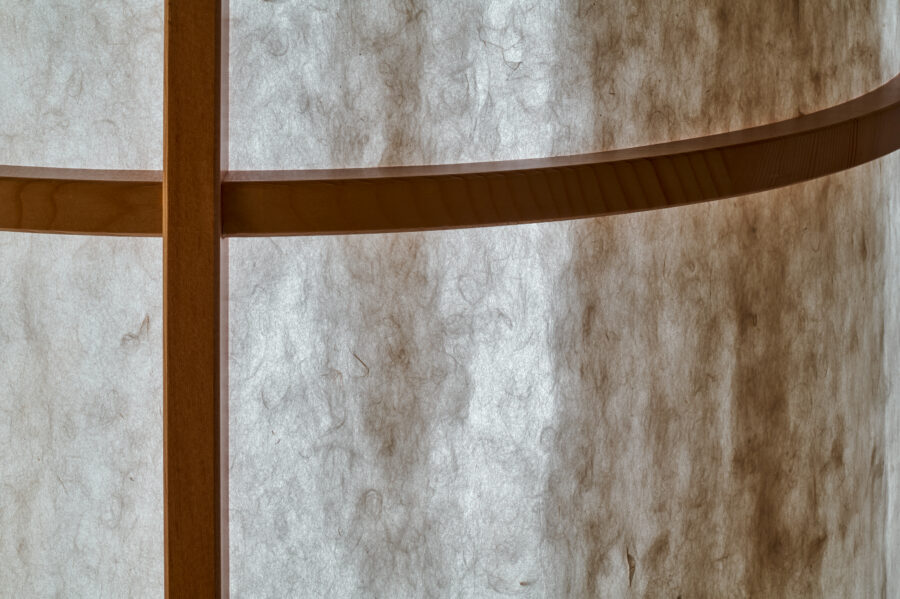
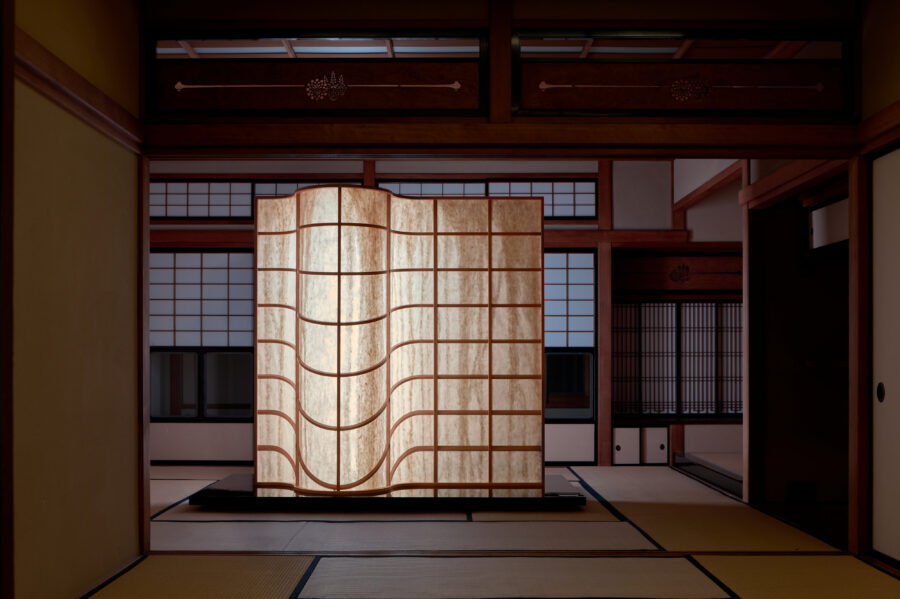
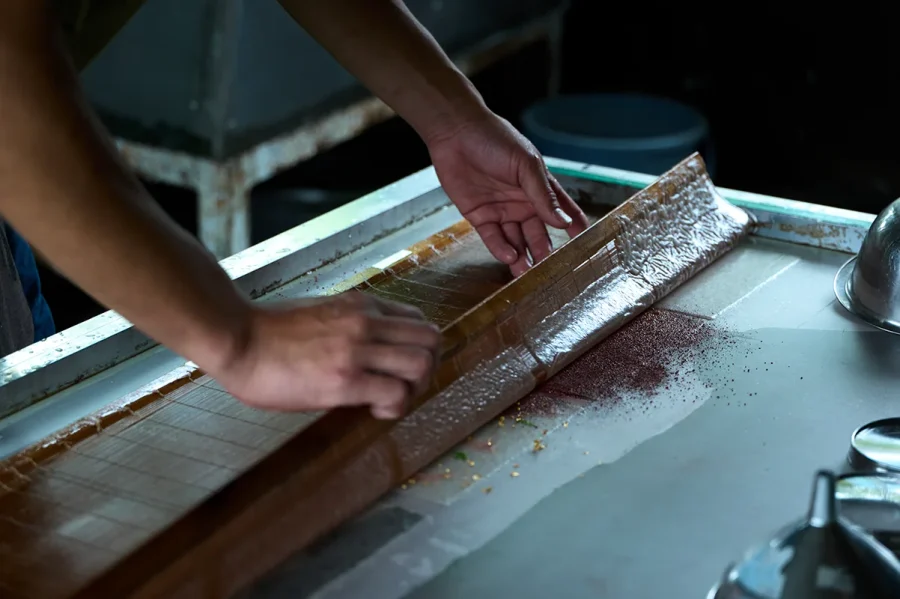
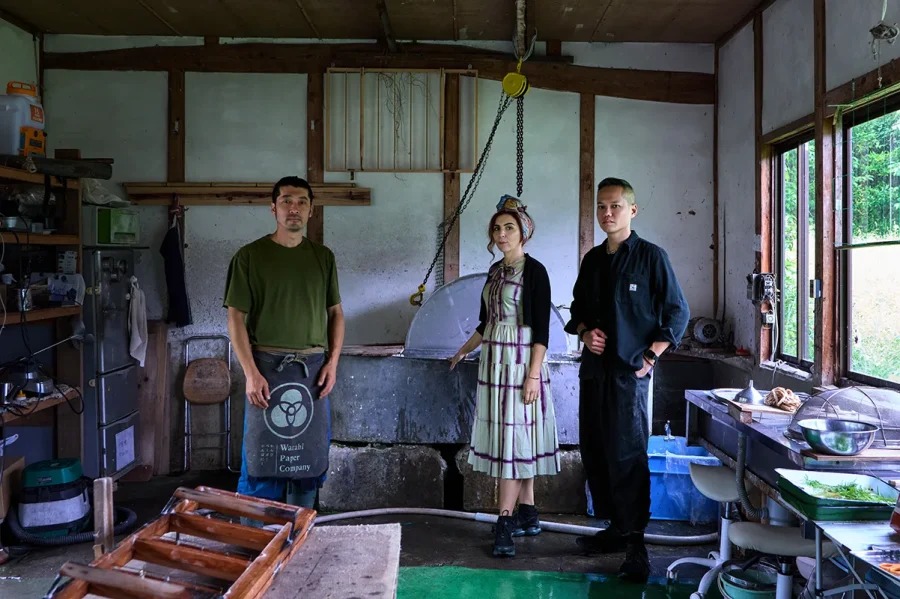
A self-standing screen reinterpreting the traditional shoji archetype through Mino washi, light, and structural transformation. Developed with washi master Takanori Senda, the paper is formed to let fibres flow and accumulate vertically through water and gravity, creating a waterfall-like surface—dense at the top, gradually lighter below. The shoji’s rigid geometry is gently softened into an architectural form, while programmed backlighting reveals fibres, thickness, and internal variations over time. Paper, structure, and light come together as a single quiet spatial presence.
A self-standing screen reinterpreting the traditional shoji archetype through Mino washi, light, and structural transformation. Developed with washi master Takanori Senda, the paper is formed to let fibres flow and accumulate vertically through water and gravity, creating a waterfall-like surface—dense at the top, gradually lighter below. The shoji’s rigid geometry is gently softened into an architectural form, while programmed backlighting reveals fibres, thickness, and internal variations over time. Paper, structure, and light come together as a single quiet spatial presence.
07
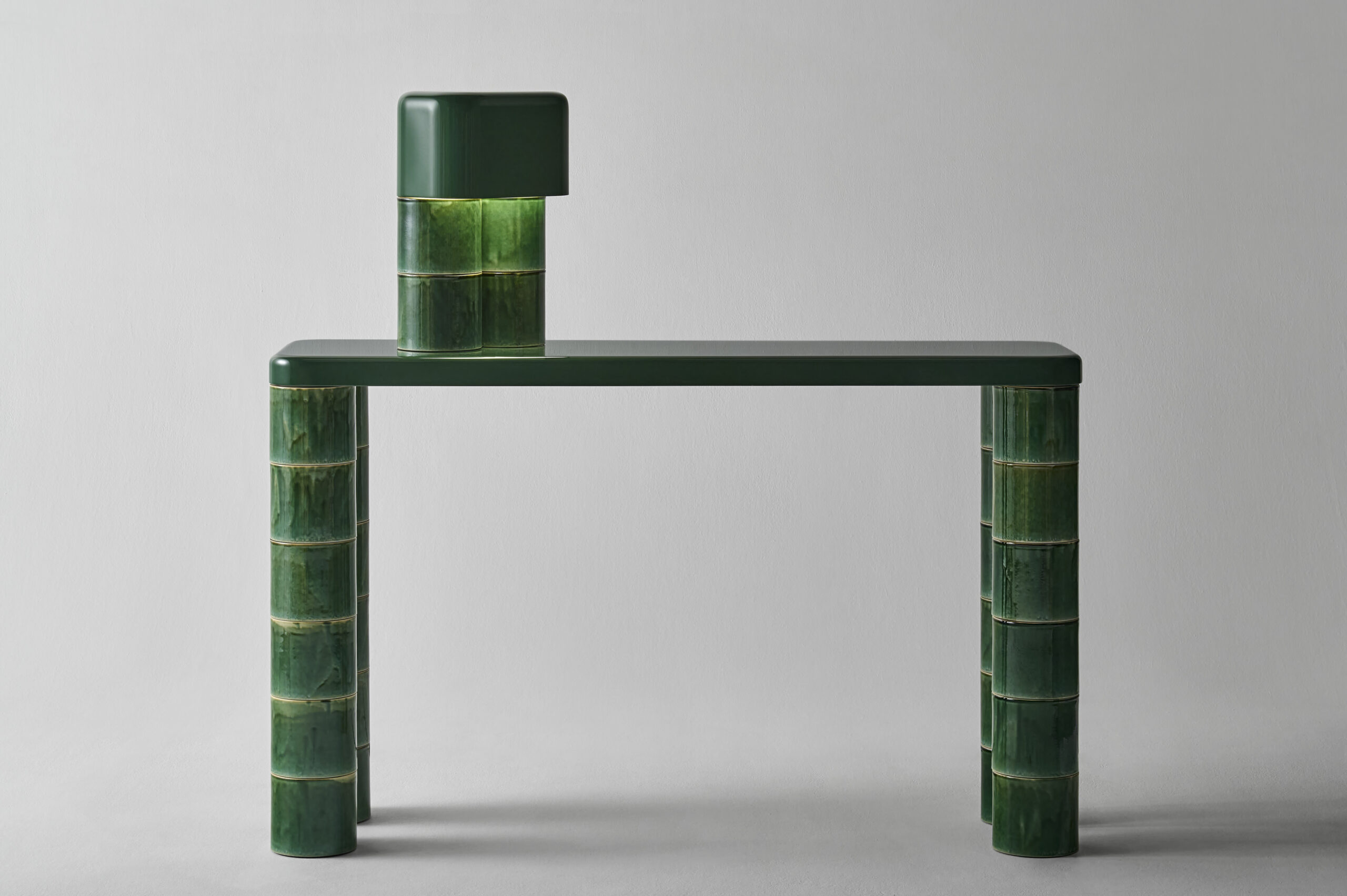
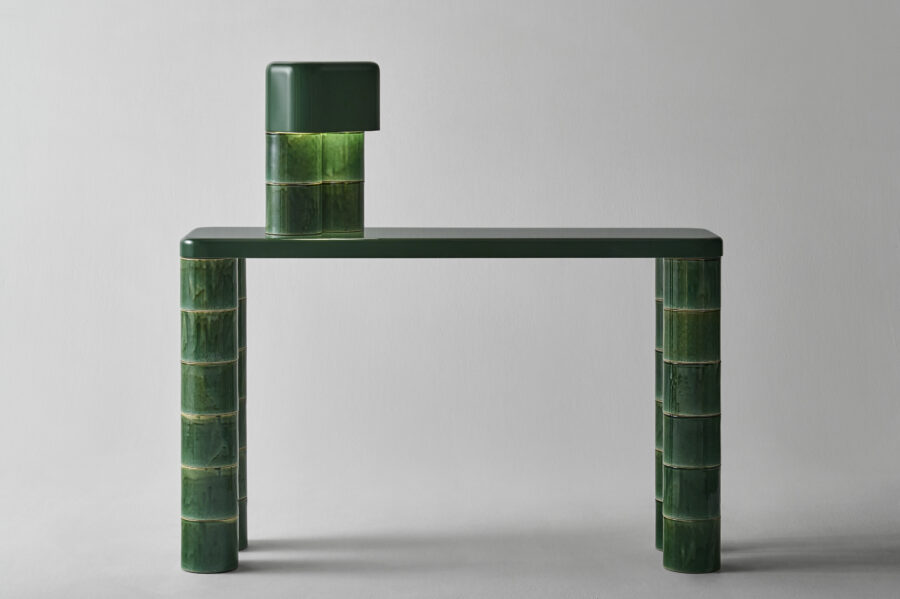
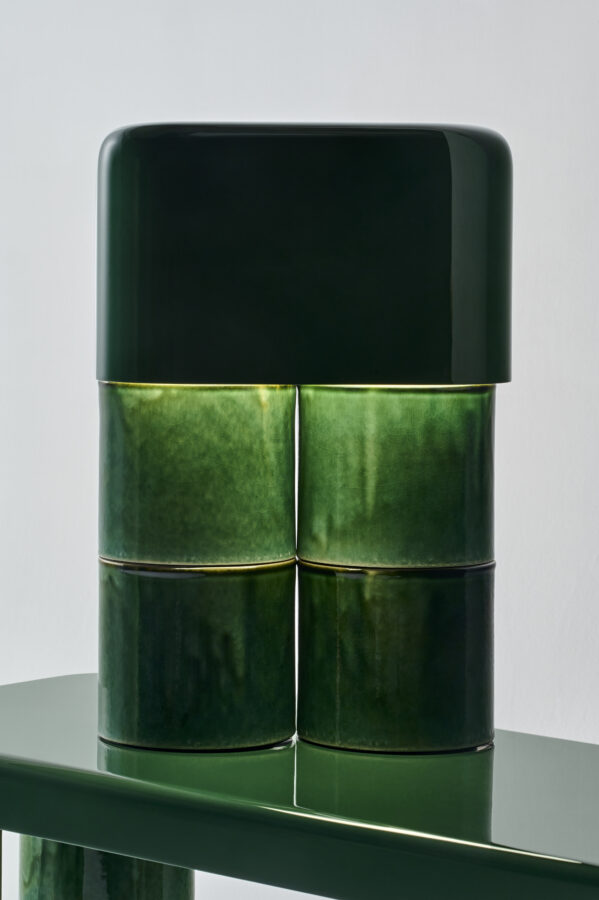
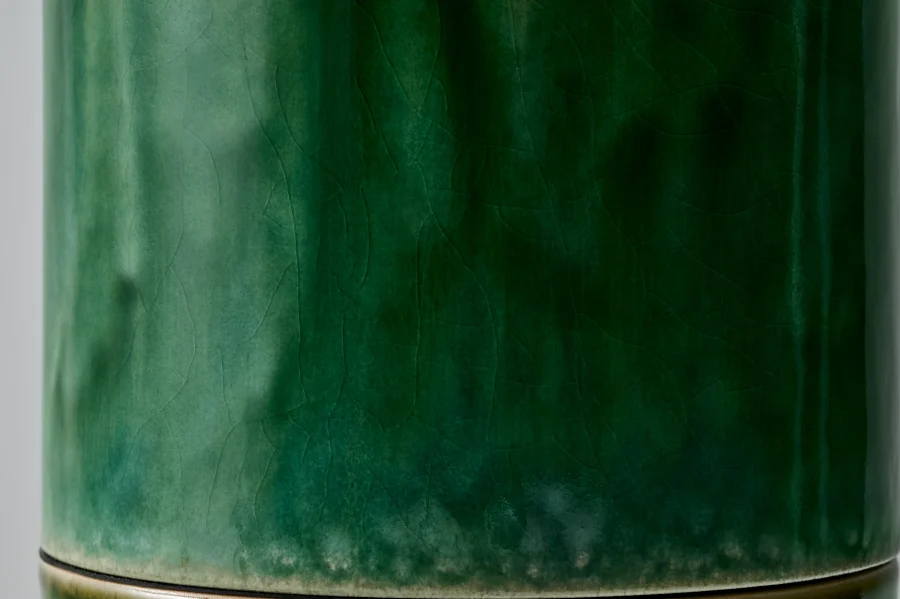
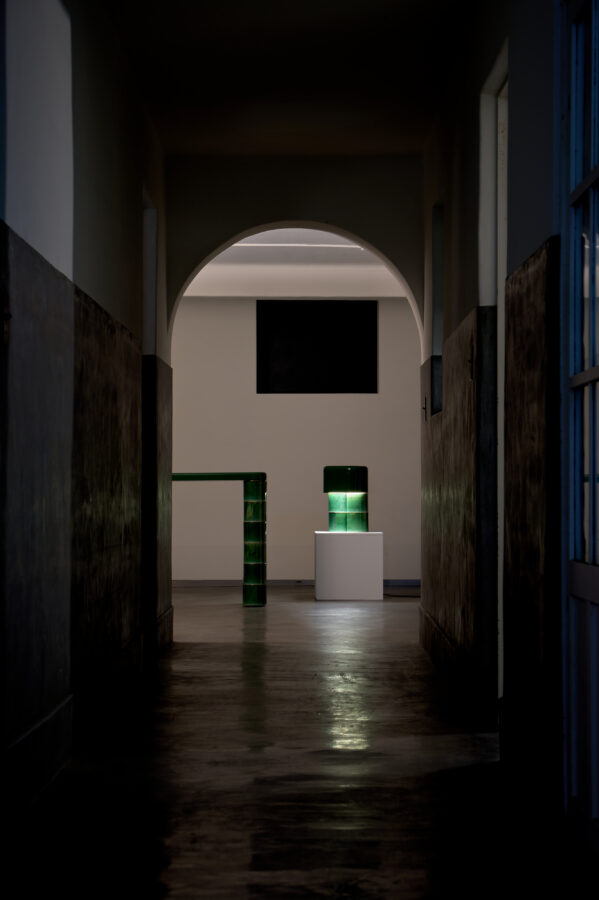
A console and lighting piece built from modular ceramic forms using the Mino Yaki technique. Identical modules are made to precise tolerances and assembled, rather than formed as a single body, extending a tableware tradition into furniture and lighting. Held by an internal armature, the same component yields both works through different configurations, unified by a contrasting material element. Precision meets the ancient. The firing of the wilful Oribe glaze disrupts uniformity, making each surface unique and celebrating the tension between the random and the perfect.
A console and lighting piece built from modular ceramic forms using the Mino Yaki technique. Identical modules are made to precise tolerances and assembled, rather than formed as a single body, extending a tableware tradition into furniture and lighting. Held by an internal armature, the same component yields both works through different configurations, unified by a contrasting material element. Precision meets the ancient. The firing of the wilful Oribe glaze disrupts uniformity, making each surface unique and celebrating the tension between the random and the perfect.
Tohoku
The craft-producing districts for the inaugural edition of Craft x Tech are from the six prefectures of the Tohoku (north-east) region of Japan. The participating craftspeople are producers of Tsugaru-Nuri lacquerware (from Aomori prefecture), Kawatsura-Shikki lacquerware (from Akita prefecture), Nambu-Tekki ironware (from Iwate prefecture), Sendai-Tansu cabinet making (from Miyagi prefecture), Oitama-Tsumugi textile (from Yamagata prefecture) and Aizu-Hongo-Yaki pottery (from Fukushima prefecture).
The designers who are collaborating with these master crafts producers are Sabine Marcelis, Azusa Murakami and Alexander Groves (Studio SWINE), Ini Archibong, Yoichi Ochiai, Hideki Yoshimoto, and Michael Young.

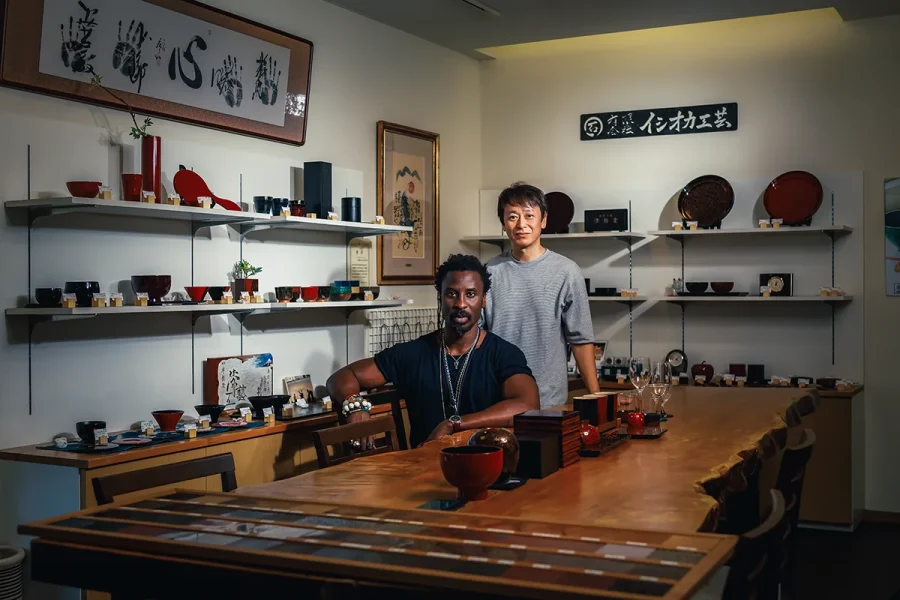
From the left is Gentaro Nitta, Rikiya Yunome, Maria Cristina Didero, Ini Archibong, Yoichi Ochiai, Keita Sato, Michael Young, Kenichi Ishioka, Sabine Marcelis, Kei Sato, Hideki Yoshimoto, Shuji Yumita (* Not pictured: Azusa Murakami and Alexander Groves of Studio SWINE)

06
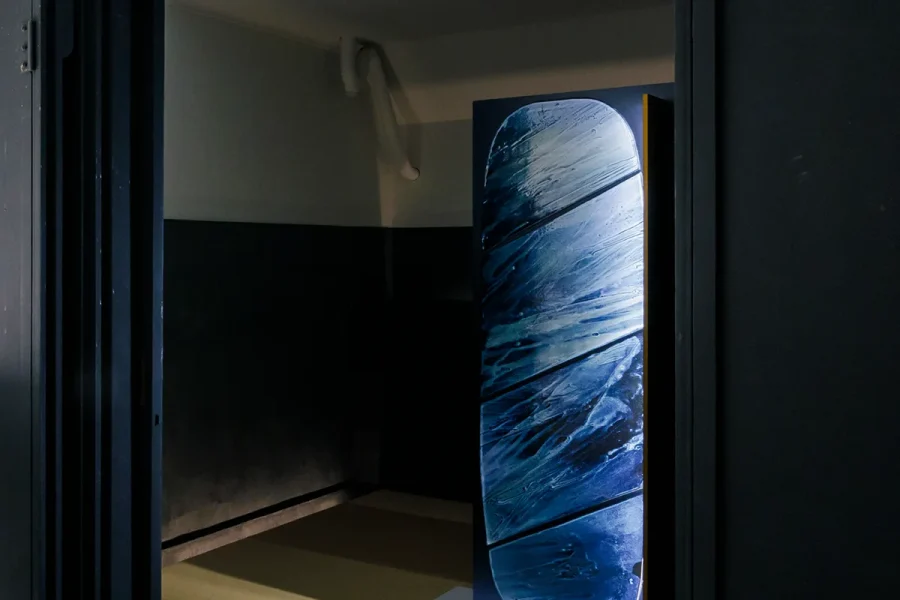
A floor lamp incorporating Aizu-Hongo-Yaki, the oldest pottery in Tohoku, is embedded into a monolithic structure. The large ceramic slate was fired with a unique glaze that evokes the appearance of falling rain. To combine the handmade ceramics, which shrink and warp during firing, with different materials, the fired slate was scanned and converted into digital data. This data was then used to precisely cut resin and metal materials, achieving the final composition.
A floor lamp incorporating Aizu-Hongo-Yaki, the oldest pottery in Tohoku, is embedded into a monolithic structure. The large ceramic slate was fired with a unique glaze that evokes the appearance of falling rain. To combine the handmade ceramics, which shrink and warp during firing, with different materials, the fired slate was scanned and converted into digital data. This data was then used to precisely cut resin and metal materials, achieving the final composition.
05
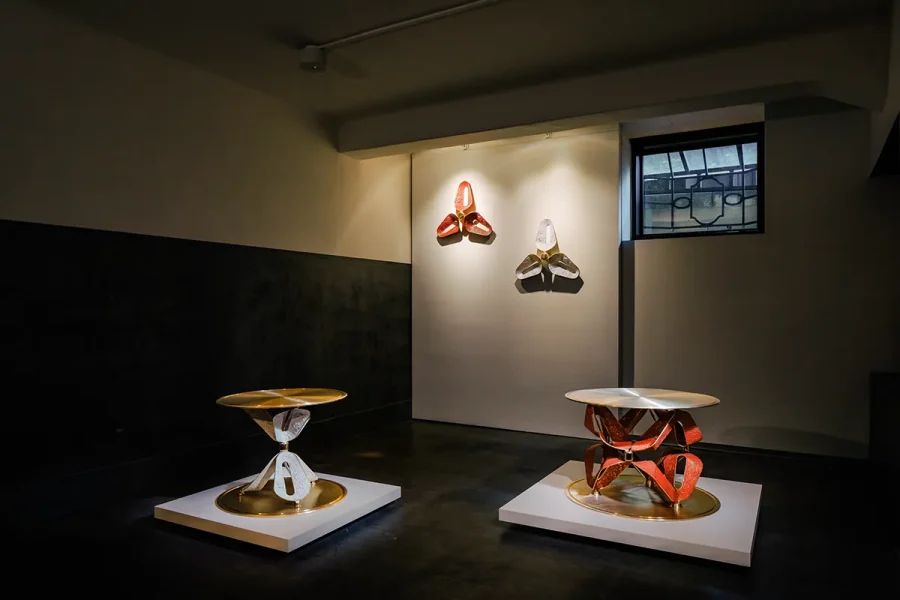
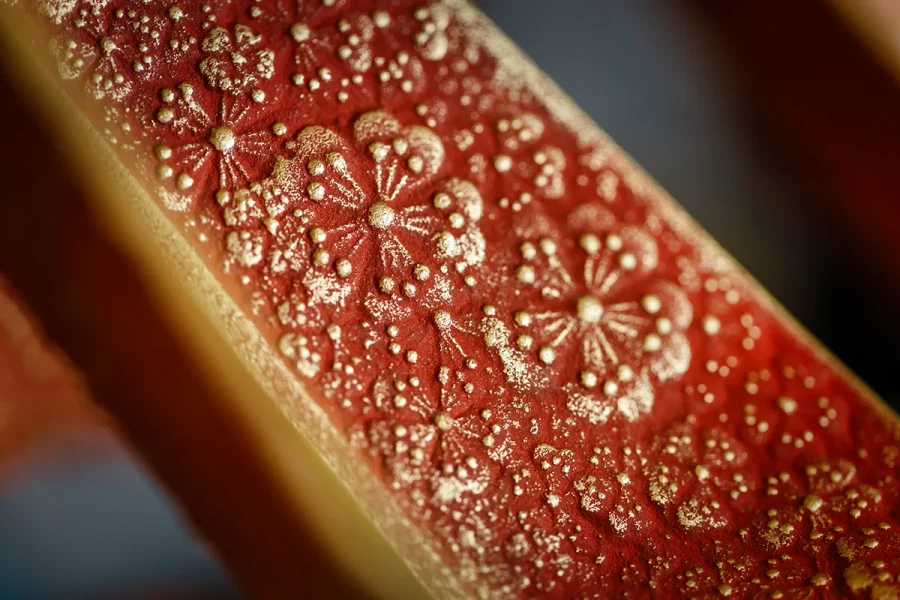
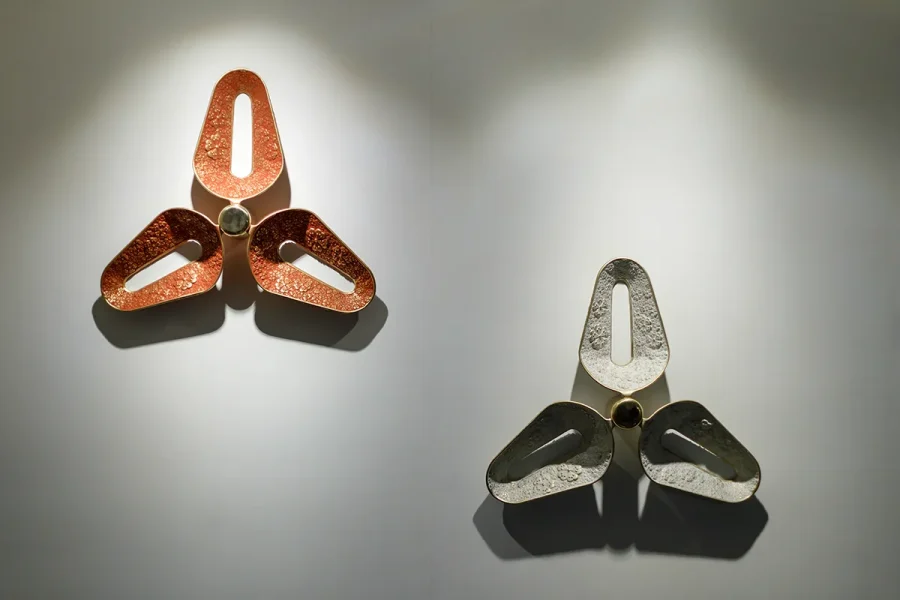
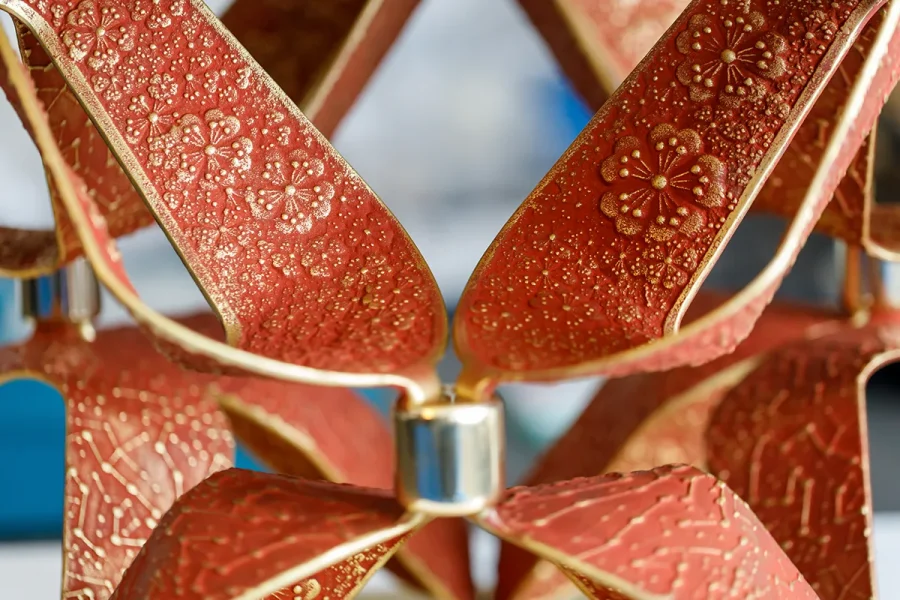
Combining identical iron modules through precise calculations creates tables of various sizes and wall-mounted pieces. Its structural system was developed when the designer revisited modularity studies he conducted decades ago, approaching them with fresh eyes and exploring the functional structure within mathematical limitations. The modules are adorned with traditional cherry blossom and unique geometric patterns, realized with 3D printing technology.
Combining identical iron modules through precise calculations creates tables of various sizes and wall-mounted pieces. Its structural system was developed when the designer revisited modularity studies he conducted decades ago, approaching them with fresh eyes and exploring the functional structure within mathematical limitations. The modules are adorned with traditional cherry blossom and unique geometric patterns, realized with 3D printing technology.

04
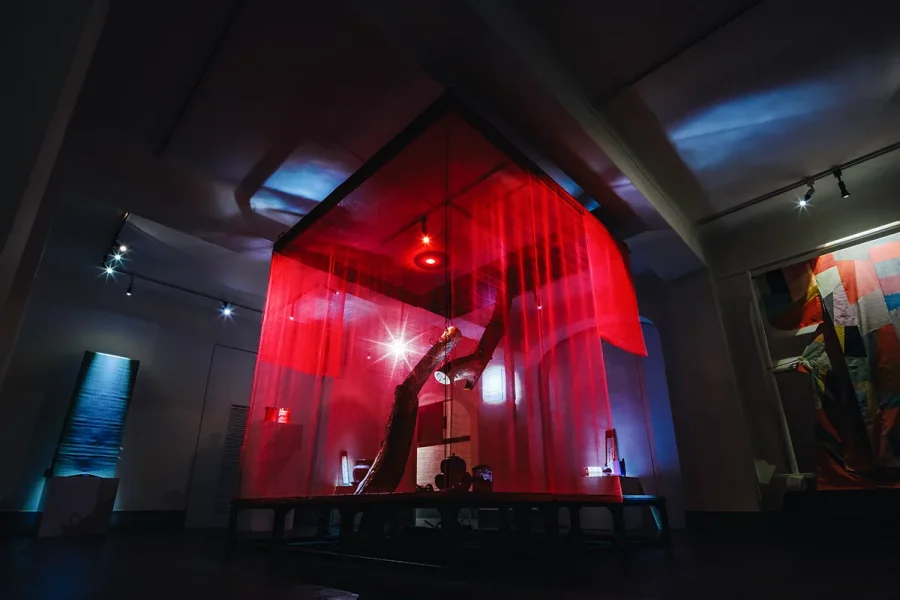
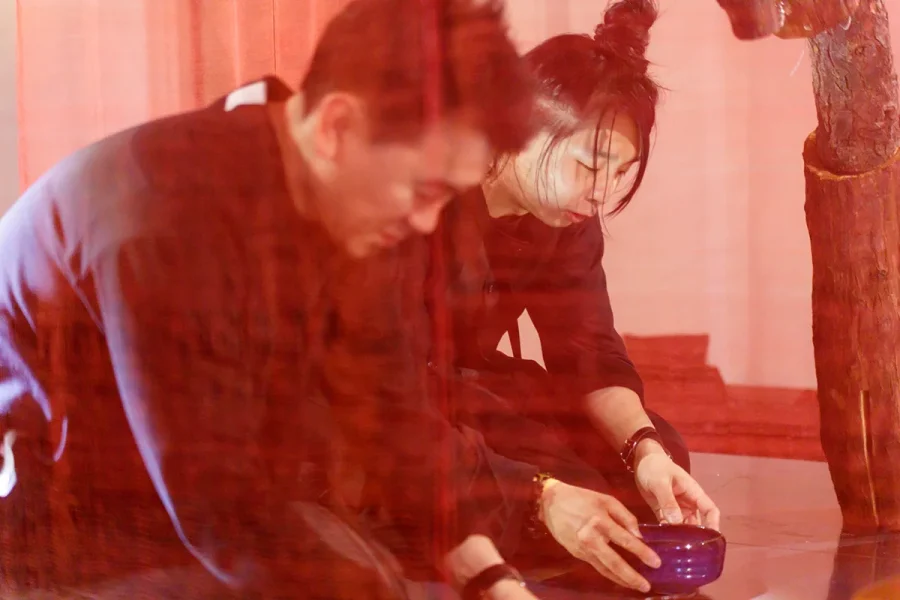
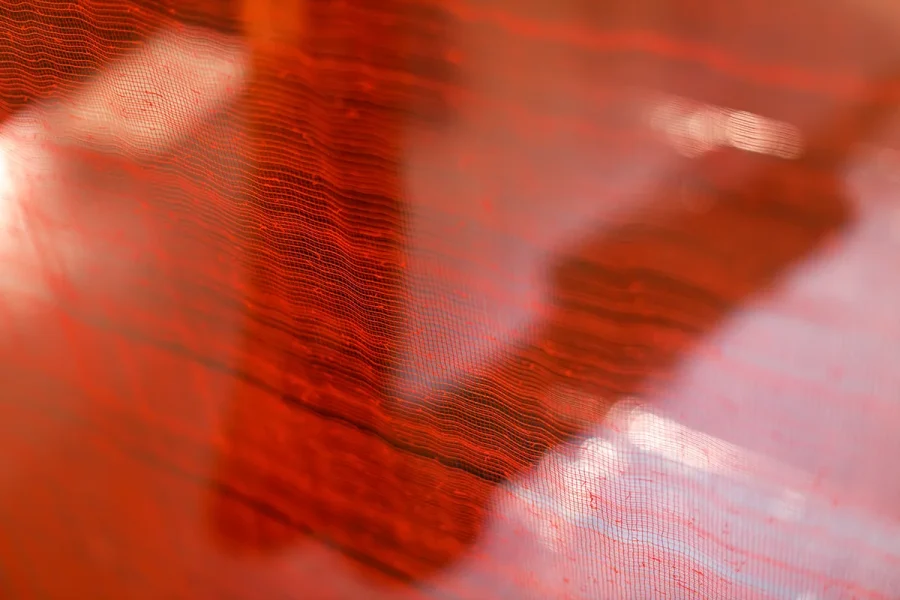
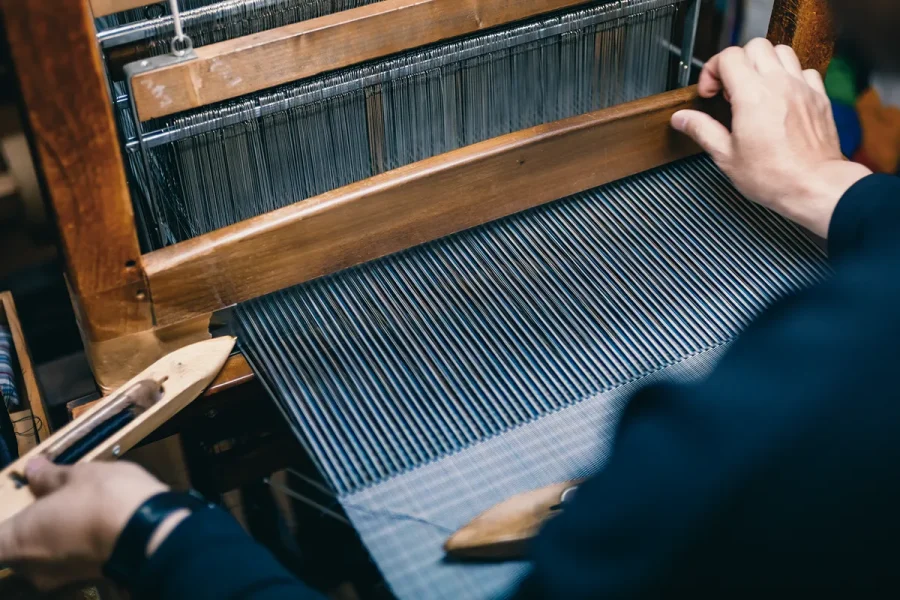
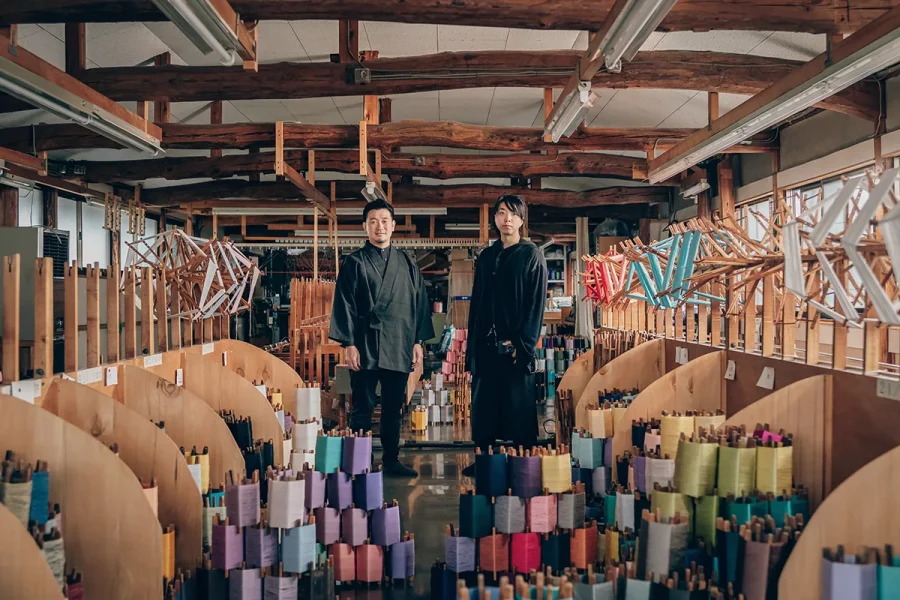
A tea room made of benibana-dyed Oitama Tsumugi symbolises the resonance of null philosophy, digital nature, and traditional craftsmanship. This tea room has no pillars due to its tensegrity structure and is connected at the top and bottom by natural wood placed in the centre and safflower-dyed strings in the four corners. This mobile tea room centres on the principles of 'Somoku-to' and 'AII sentient beings possess Buddha-nature,' aiming to create a space that symboilses the spirit of the land, history, and DIY culture. It embodies the universal truth of classic Japanese philosophy that all life has Buddha-nature, making it a place that feels the breath of computational life.
A tea room made of benibana-dyed Oitama Tsumugi symbolises the resonance of null philosophy, digital nature, and traditional craftsmanship. This tea room has no pillars due to its tensegrity structure and is connected at the top and bottom by natural wood placed in the centre and safflower-dyed strings in the four corners. This mobile tea room centres on the principles of 'Somoku-to' and 'AII sentient beings possess Buddha-nature,' aiming to create a space that symboilses the spirit of the land, history, and DIY culture. It embodies the universal truth of classic Japanese philosophy that all life has Buddha-nature, making it a place that feels the breath of computational life.


03
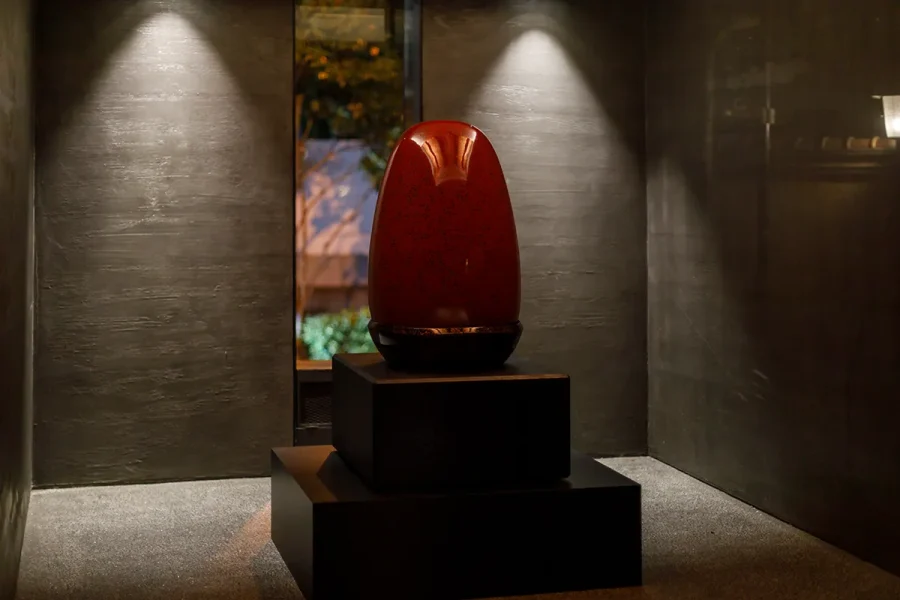
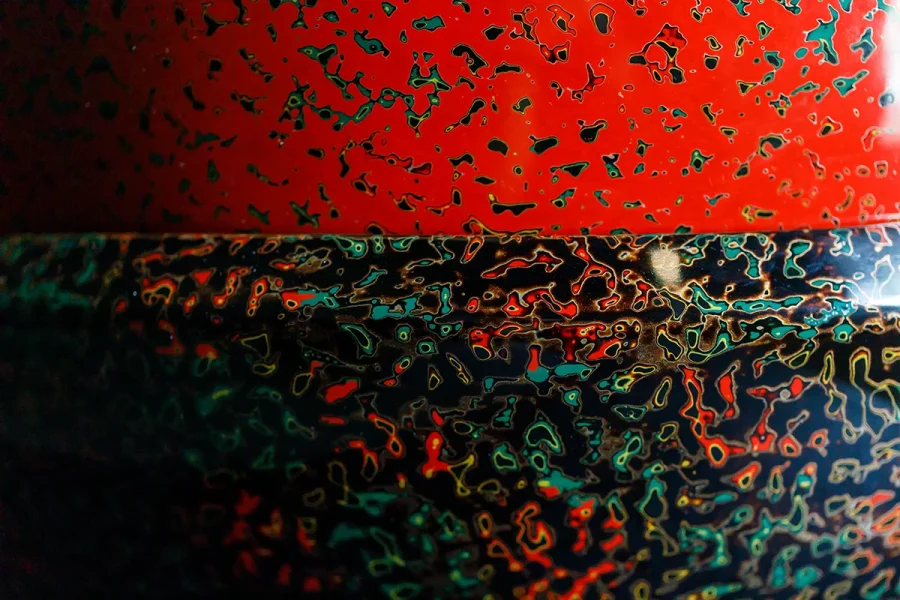
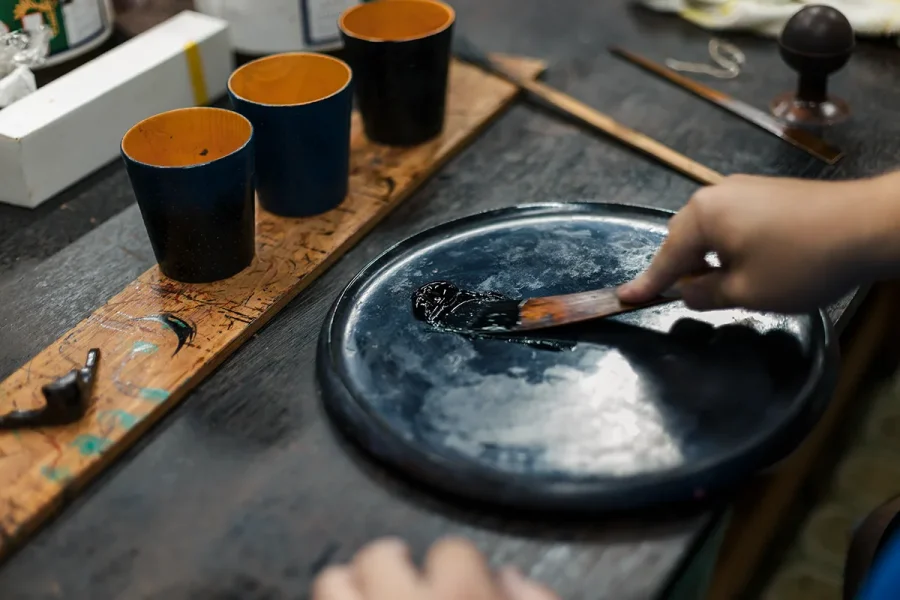
The world's “oldest sound emitting organic technology created using ancient alien techniques handed down to the people of Aomori commissioned by a high priest on behalf of the children of the diaspora”, as confirmed by the author. The egg-shaped sculpture, adorned with Tsugaru lacquer techniques, Kara-nuri and Monsha-nuri, houses the sound emitting device's antenna, and a specially designed modular synthesiser is controlled by the movements of the viewer's hands, producing unique electronic sounds. Traditionally not associated with sculptural forms, the synthesiser, with its Tsugaru lacquer body, transforms into a completely new experiential device.
The world's “oldest sound emitting organic technology created using ancient alien techniques handed down to the people of Aomori commissioned by a high priest on behalf of the children of the diaspora”, as confirmed by the author. The egg-shaped sculpture, adorned with Tsugaru lacquer techniques, Kara-nuri and Monsha-nuri, houses the sound emitting device's antenna, and a specially designed modular synthesiser is controlled by the movements of the viewer's hands, producing unique electronic sounds. Traditionally not associated with sculptural forms, the synthesiser, with its Tsugaru lacquer body, transforms into a completely new experiential device.
02
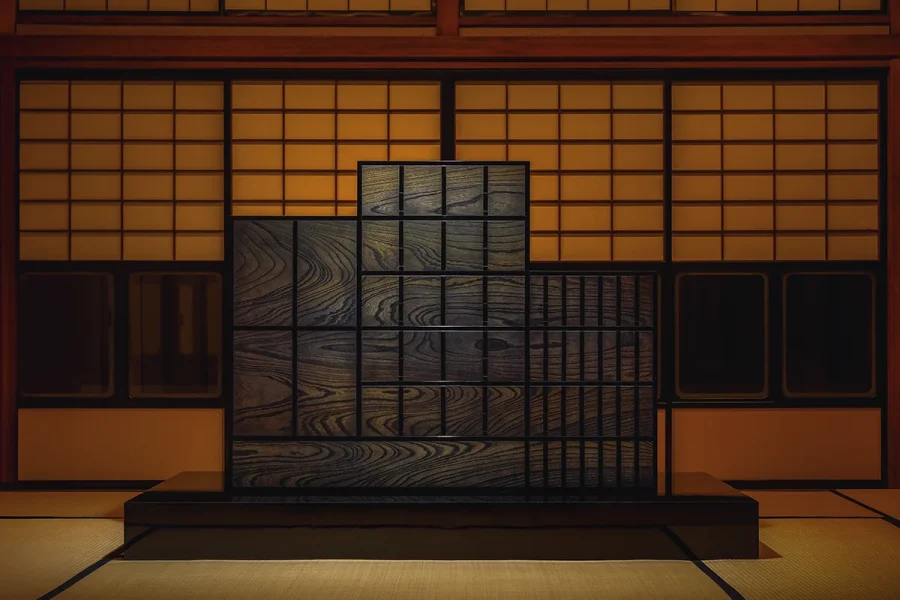
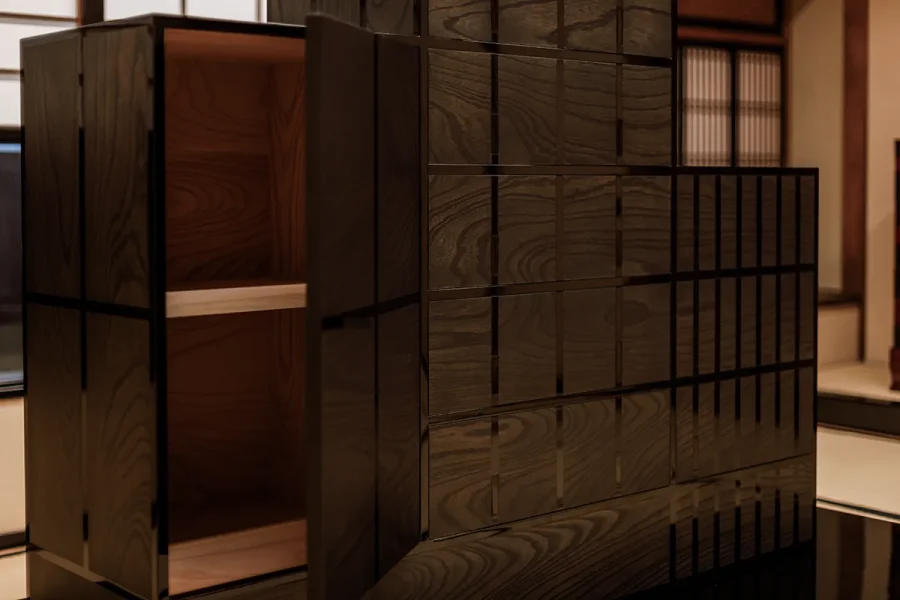
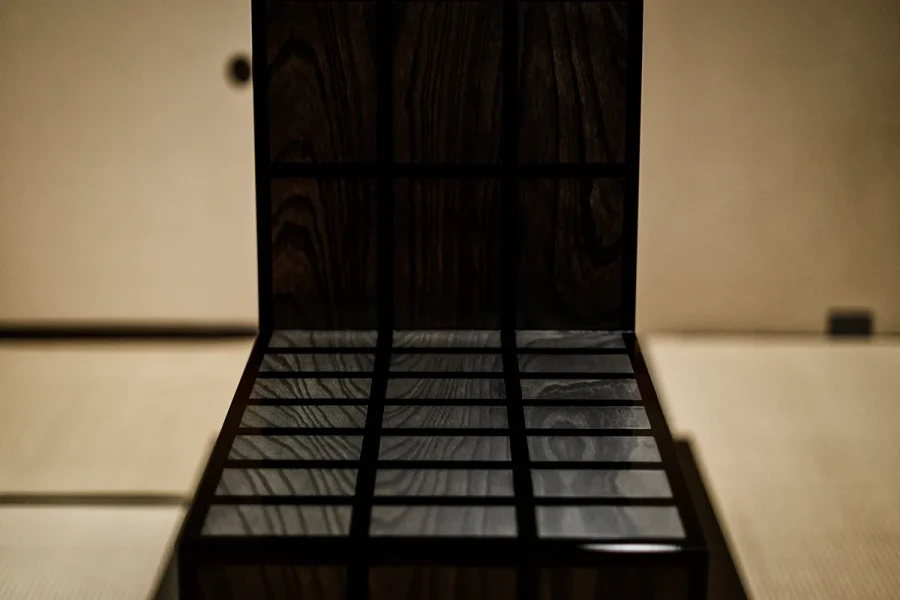
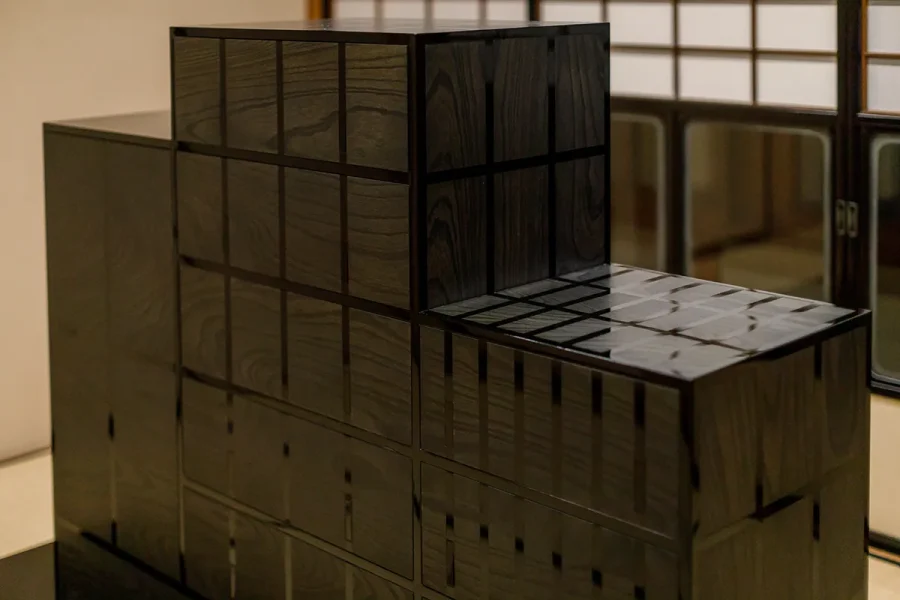
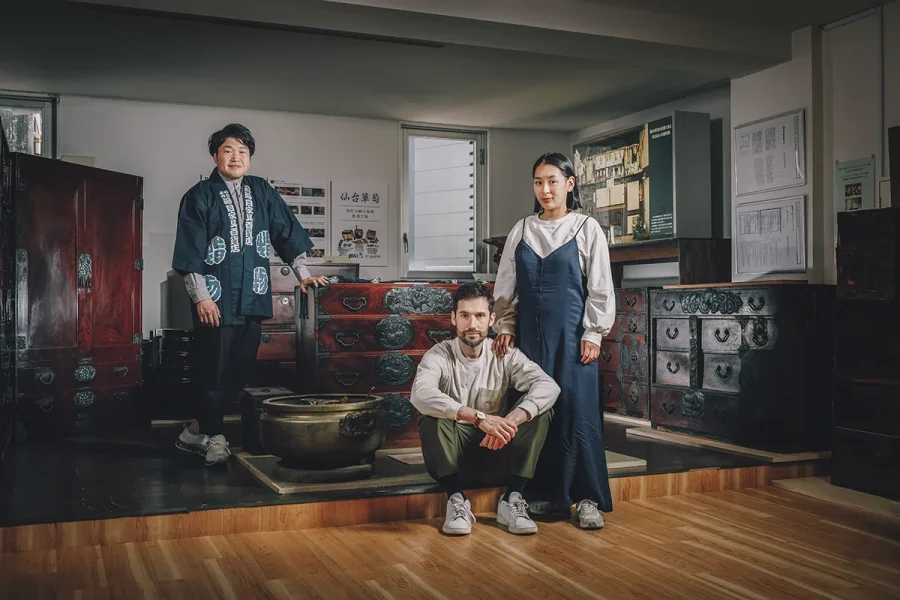
The traditional and stately Sendai Tansu, originally crafted as a samurai or merchant chest, has acquired a completely new interpretation. It combines a graphical, flat pattern inspired by Ukiyo-e prints. Inspired by the dynamic graphic geometry and flatness of Japanese woodblock prints and 1960's Metabolism, this new Tansu design playfully combines the traditional crafts and the radical architectural movements of Japan in a systematic 'functional decoration’.
The traditional and stately Sendai Tansu, originally crafted as a samurai or merchant chest, has acquired a completely new interpretation. It combines a graphical, flat pattern inspired by Ukiyo-e prints. Inspired by the dynamic graphic geometry and flatness of Japanese woodblock prints and 1960's Metabolism, this new Tansu design playfully combines the traditional crafts and the radical architectural movements of Japan in a systematic 'functional decoration’.


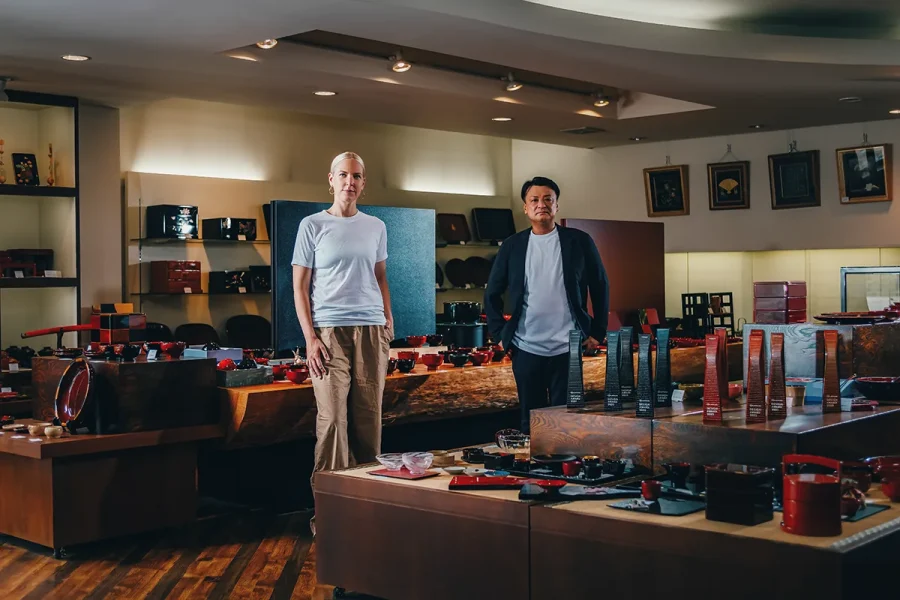
01
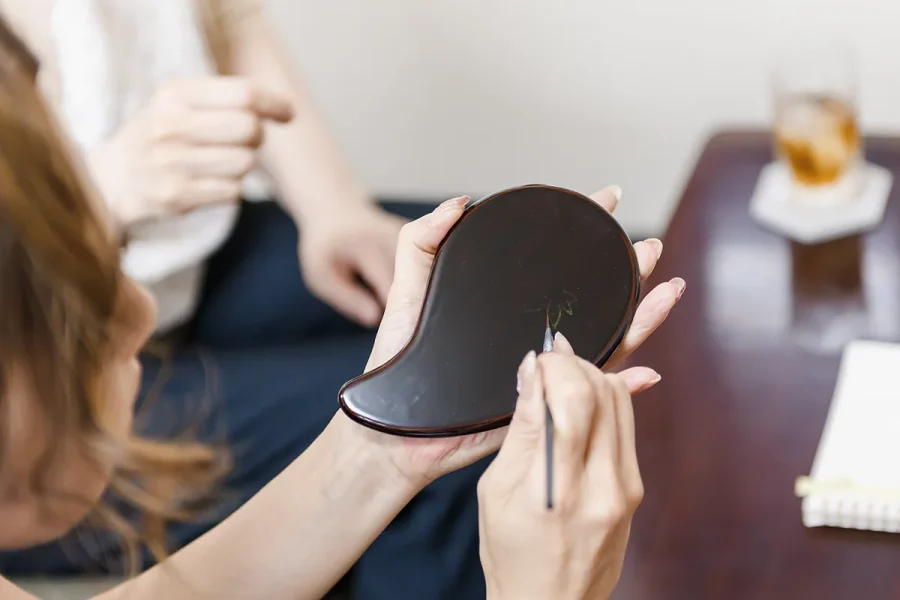
A series of two tables with a voluminous design and a wall-mounted piece, all lacquered in Kawatsura Shikki's style. Inspired by the interplay of light and materiality, the three distinct objects were crafted, each intersected with a singular gesture that manipulates the light captured on its surface, inviting viewers to explore from every angle. Stripped down to the essentials and punctuated with a single twist or inverted slice, attention is solely drawn to the lacquerware itself.
A series of two tables with a voluminous design and a wall-mounted piece, all lacquered in Kawatsura Shikki's style. Inspired by the interplay of light and materiality, the three distinct objects were crafted, each intersected with a singular gesture that manipulates the light captured on its surface, inviting viewers to explore from every angle. Stripped down to the essentials and punctuated with a single twist or inverted slice, attention is solely drawn to the lacquerware itself.
(Tokai)