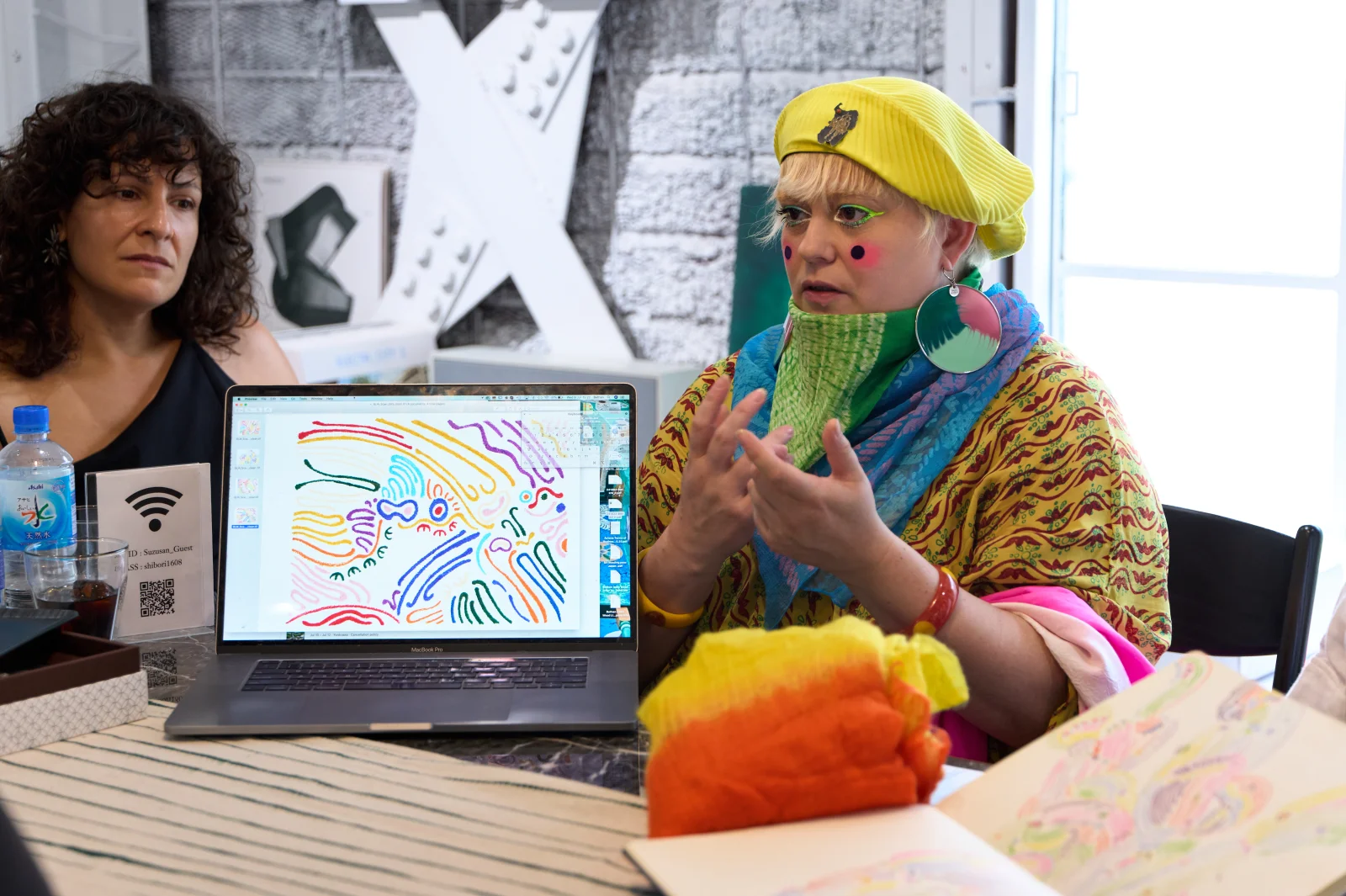
- Arimatsu Narumi Shibori is full of texture, complex patterns, and subtle shifts. What immediately clicked with your own sensibilities when you first encountered it?
I was struck by all the different ways in which the tying and binding can create complex patterns, its magic to watch the chairman at work and to discover the ways in which different shapes are formed. I was also intrigued by the woodblock technique that is used more predominantly in their contemporary pieces, the conversation between the final pattern and garment when the folding and block placement is done to a finished piece rather than as a bolt of fabric which is dyed before.
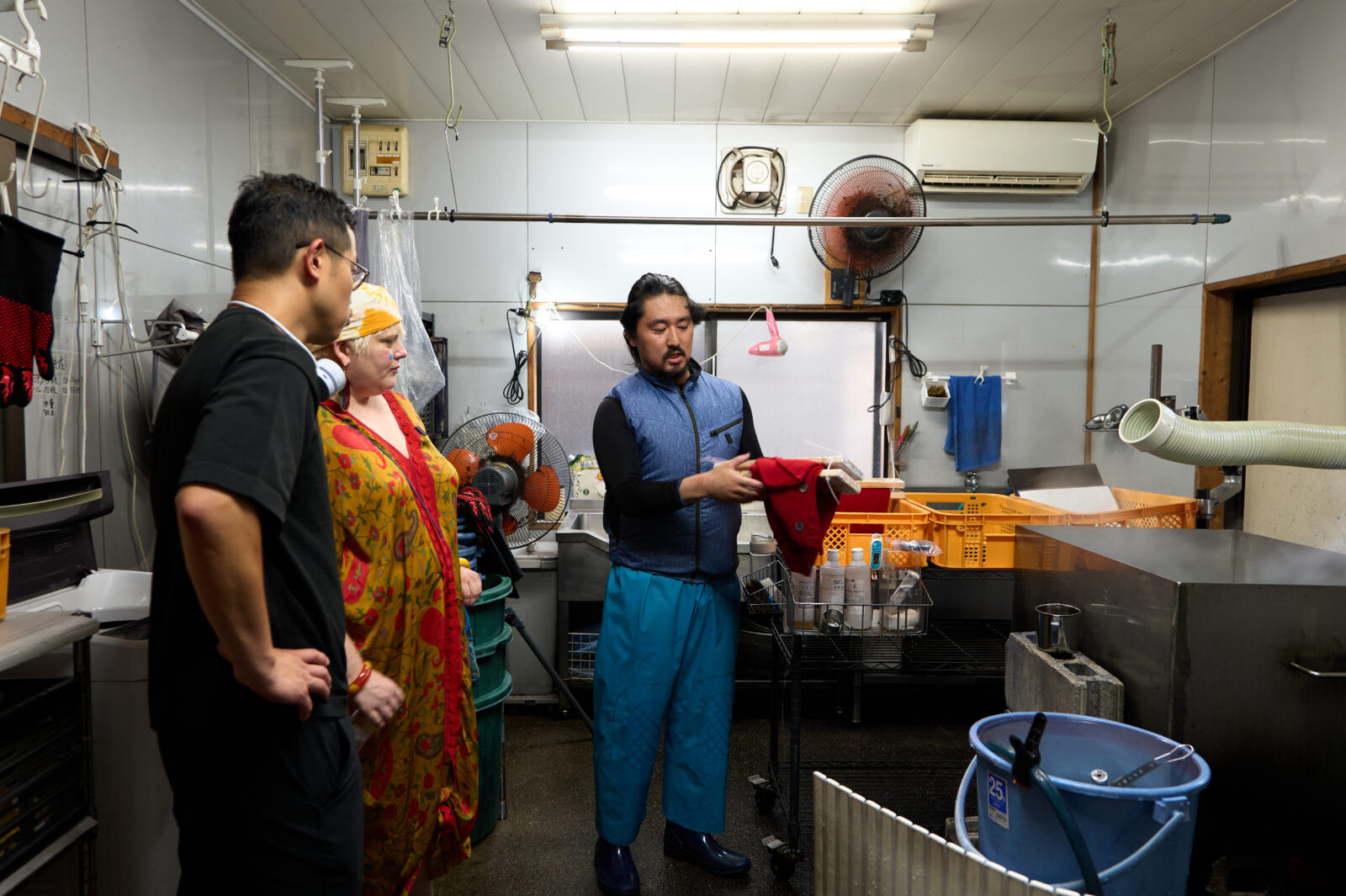
- Shibori’s patterns almost feel alive. How did you respond to that energy while shaping your concept?
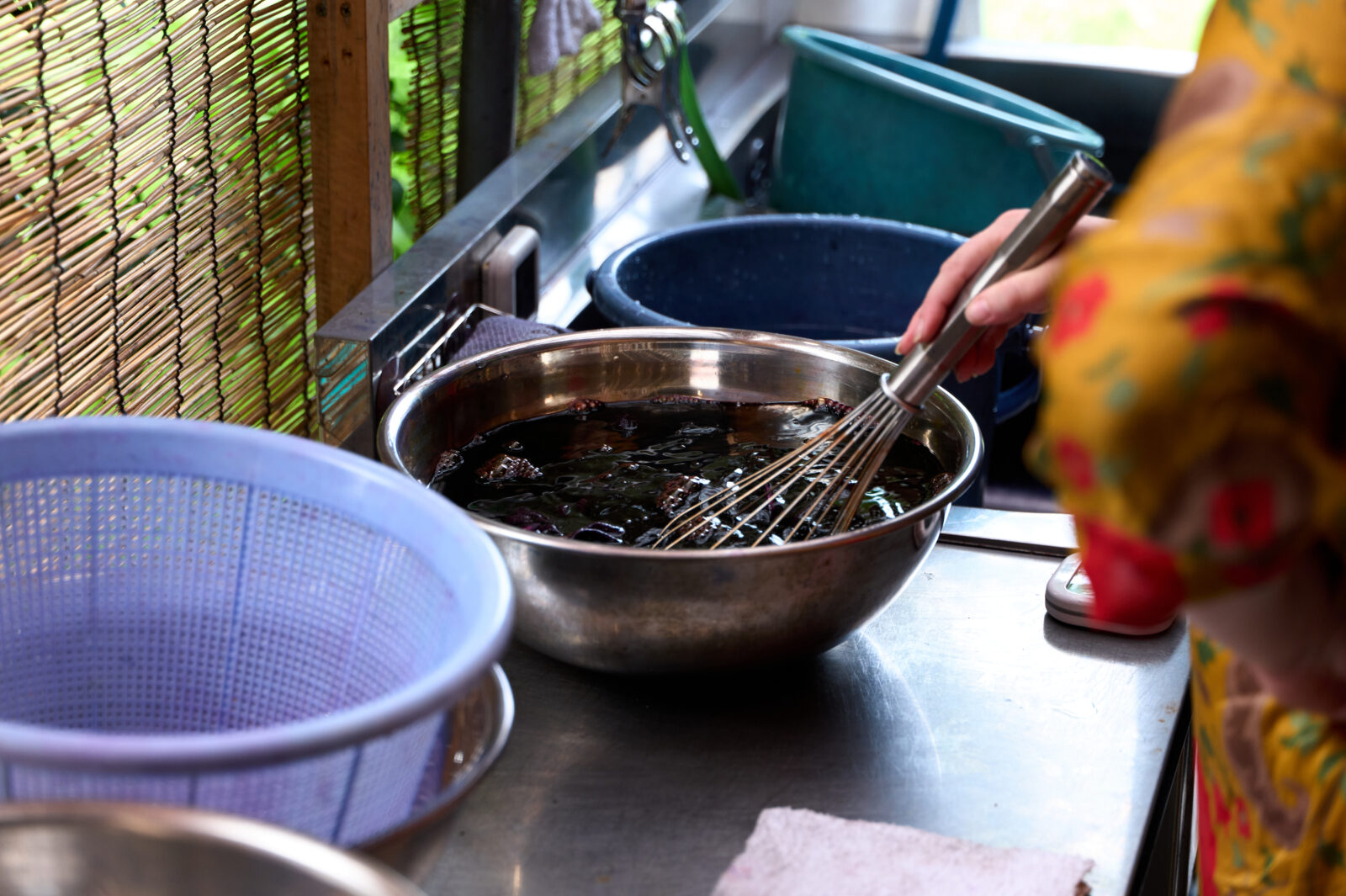
It was a very difficult decision to choose which route to go down: to concentrate on making a more traditional, complex pattern on flat panels, or to work with the more graphical contemporary language that is part of their story now, connecting the 3D form with the dye outcome. I knew I wanted to work with a vibrant mix of two colours in conversation and to highlight this bleach-like blur that comes from the reaction between the two dyes, which cannot be overly controlled. This captures the “living” quality of the dye—being active, moving, and reacting to the physical placement and folding of the fabric.
- Working with Hiroyuki Murase, who likes to move between Japanese tradition and European design, what common ground did you find?
I loved learning about the stories behind the different styles of patterns and how some changed and developed in response to Japan’s changing conversations with other cultures and back to its own, when patterns heavily associated in one period of time get new meanings when rediscovered by a younger audience.
I think this fits well with how Hiroyuki is working to open conversations between the traditional details and skills and a modern audience both inside and outside Japan.
I connected with his passion for his craft and found many ways to interpenetrate Shibori, whilst keeping a strong identity to what makes it Suzusan! I also liked that he is not afraid to find different uses for the fabric, not just garments for the body but garments for the home. This led me to look to work on lighting pieces.
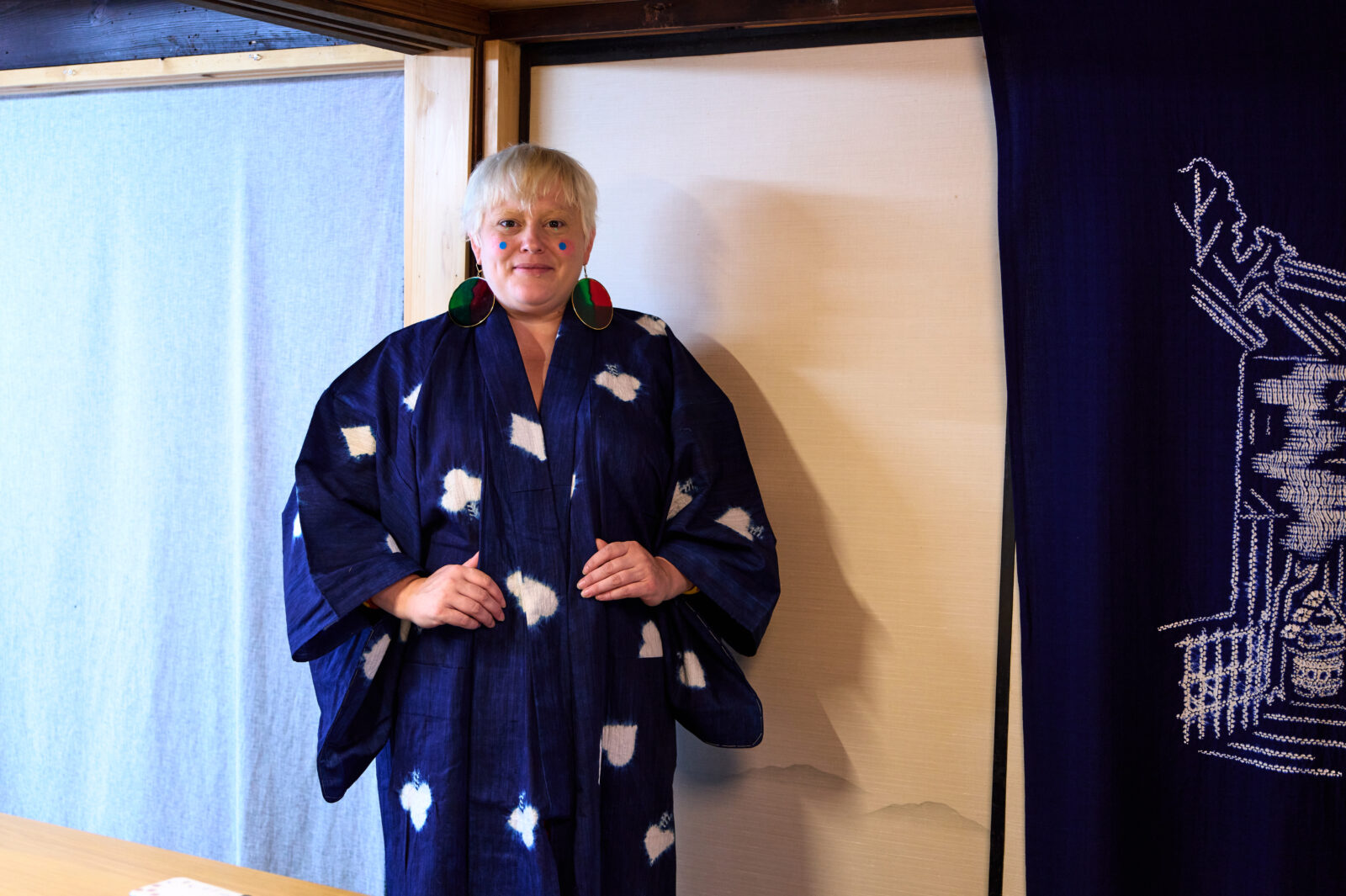
- Did the slowness of the shibori process influence how you approached colour or pattern in this project?
It was important to respect and understand the time different types of wrapping and folding took, and to keep this in mind while designing. That meant I needed to be clever about dyeing a single colour per piece to create my designs. I also wanted to find a way to keep some of the folding/stitching in the final pieces, rather than having it all removed as is more commonly done in traditional dyeing, so I could highlight all stages of the process by intentionally incorporating details that are normally removed.
- What new directions in textiles does this collaboration make you curious about?
I would love to continue working with Suzasan to explore more types of Shibori. I feel like I have just touched the surface of things I can do with this technique.
Bethan Laura Wood (@bethanlaurawood.com)
[Questions by Maria Cristina Didero]