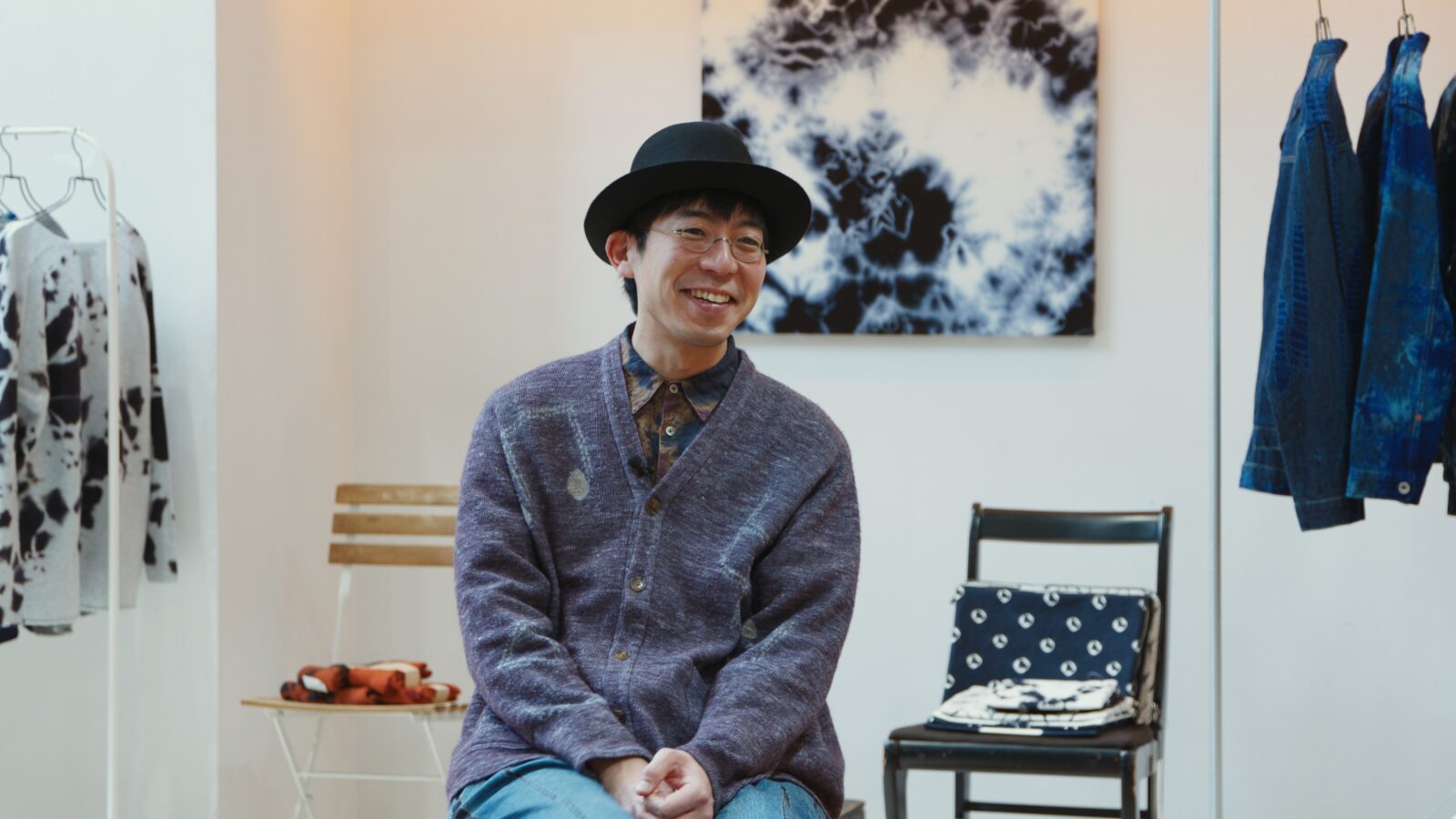
- Bethan brings such a bold and playful approach to materials. How did that blend with the discipline of shibori?
The moment I saw Bethan, dressed in vibrant pinks and oranges, walking through our traditional craft townscape of over 400 years, with its brown wooden buildings and black tiled roofs, I instinctively felt that something new would be born from this project. As we spoke, I was struck not only by her deep insight as a designer, but also by her personal warmth and presence. We were able to connect beyond culture and language, and throughout the process there was always a shared passion to make something good together, along with constant mutual respect.
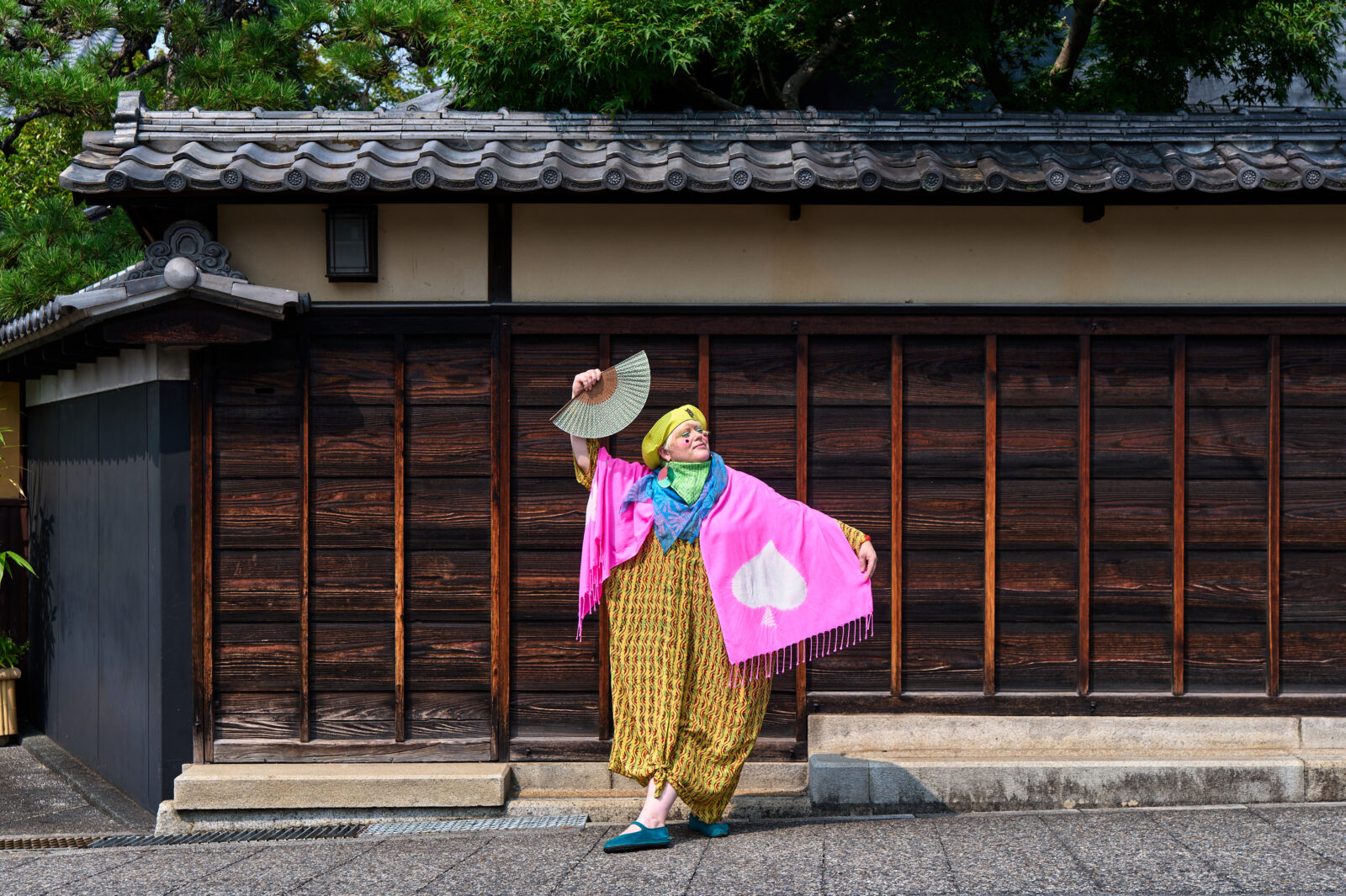
- Did any of the traditional techniques need to be adapted, or reimagined, to bring her ideas to life?
Aligning with her vision to achieve the dyeing expression she was aiming for took time, but it also became a valuable opportunity for us as makers to engage with forms of expression we had never attempted before. Because her ideas, grounded in her experience in Arimatsu, were designed in such concrete terms, even down to how light would pass through and how the work would be seen in space, I felt it was easier for us to share a clear direction. While respecting traditional techniques, we gradually expanded how we interpret them, and it felt like a first step toward new possibilities.

- What was the most enjoyable or challenging part of translating her visual world through shibori?
Because of the nature of shibori dyeing, there were many moments when it was difficult to achieve the exact same result as the samples, since slight differences in temperature, humidity, or even small variations in the process can change the outcome. That meant we needed time for trial and error. At the same time, through that process, we found that combining different techniques could bring us closer to the desired result, and we could really feel our range of expression expanding. In the end, achieving a finish that went beyond the initial image yet came together as a harmonious whole was an extremely rewarding experience.

- How do you see collaborations like this helping shibori grow in new directions and possibly wider applications?
I believe beauty has a kind of universality. Just as the light at dusk or a star-filled sky can move people across time and cultures, I think human-made things can hold that same power as well. We can see this in how works like Van Gogh’s paintings or Hiroshige’s Ukiyo-e are embraced with empathy even in different cultural contexts. In the same way, I feel Arimatsu Narumi Shibori, through repeated collaborations like this, has the potential to expand globally as a form of expression that is rooted in its region yet carries a universal resonance. In this project, we also had interns from overseas involved in the production, and seeing meaningful experiences emerge through cross-border collaboration, especially for the next generation, was a moment that made me truly feel the reach and potential of this initiative.
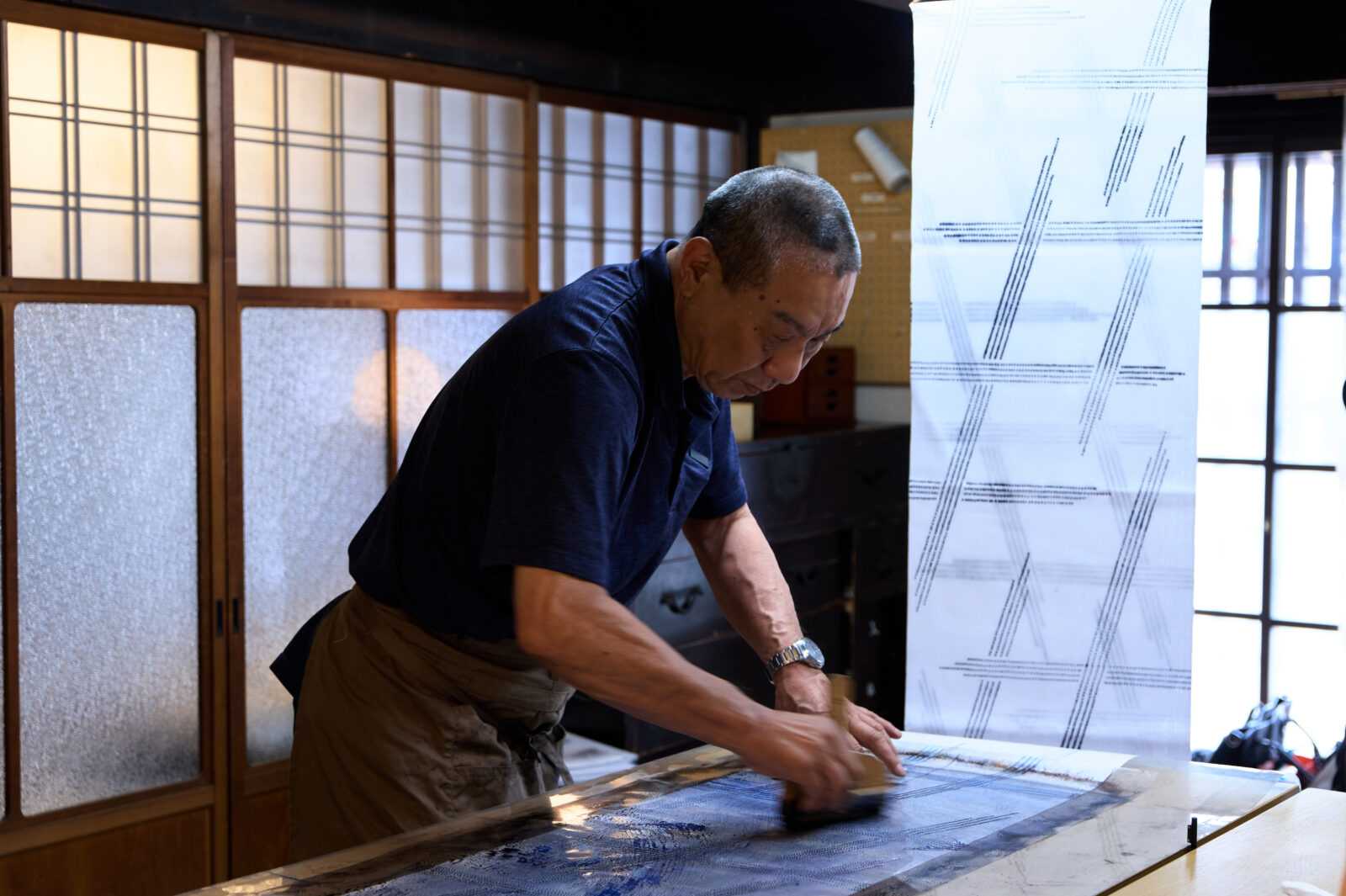
- Did working with Bethan reveal anything new about the expressive potential of the craft?
One of the strengths of shibori, as a dyeing technique, is that it allows for countless combinations of color. However, looking back at its history, Arimatsu shibori has long been recognized, and continued, through the image of deep indigo dyed onto white cotton as its defining character.
The color combinations Bethan proposed this time were something that would never have emerged from our usual work or from everyday life in Japan. The application as lighting, and even the form itself, were also entirely new, beyond anything I had imagined. But these weren’t simply outrageous ideas meant to surprise. They were the result of dense notes in her notebook, refined again and again, and thought through with great care. It felt like encountering the sincerity of a designer, someone whose role is to enrich people’s lives and, in turn, make society happier.
Shibori has existed since before the Common Era and has remained essentially unchanged for thousands of years, and the tools we use are still very simple. Yet through this encounter and project, I felt anew that when shibori connects with fresh ideas and sensibilities, it has the power to generate the future.
Hiroyuki Murase, Suzusan (@suzusan-shibori.com)
[Questions by Maria Cristina Didero]