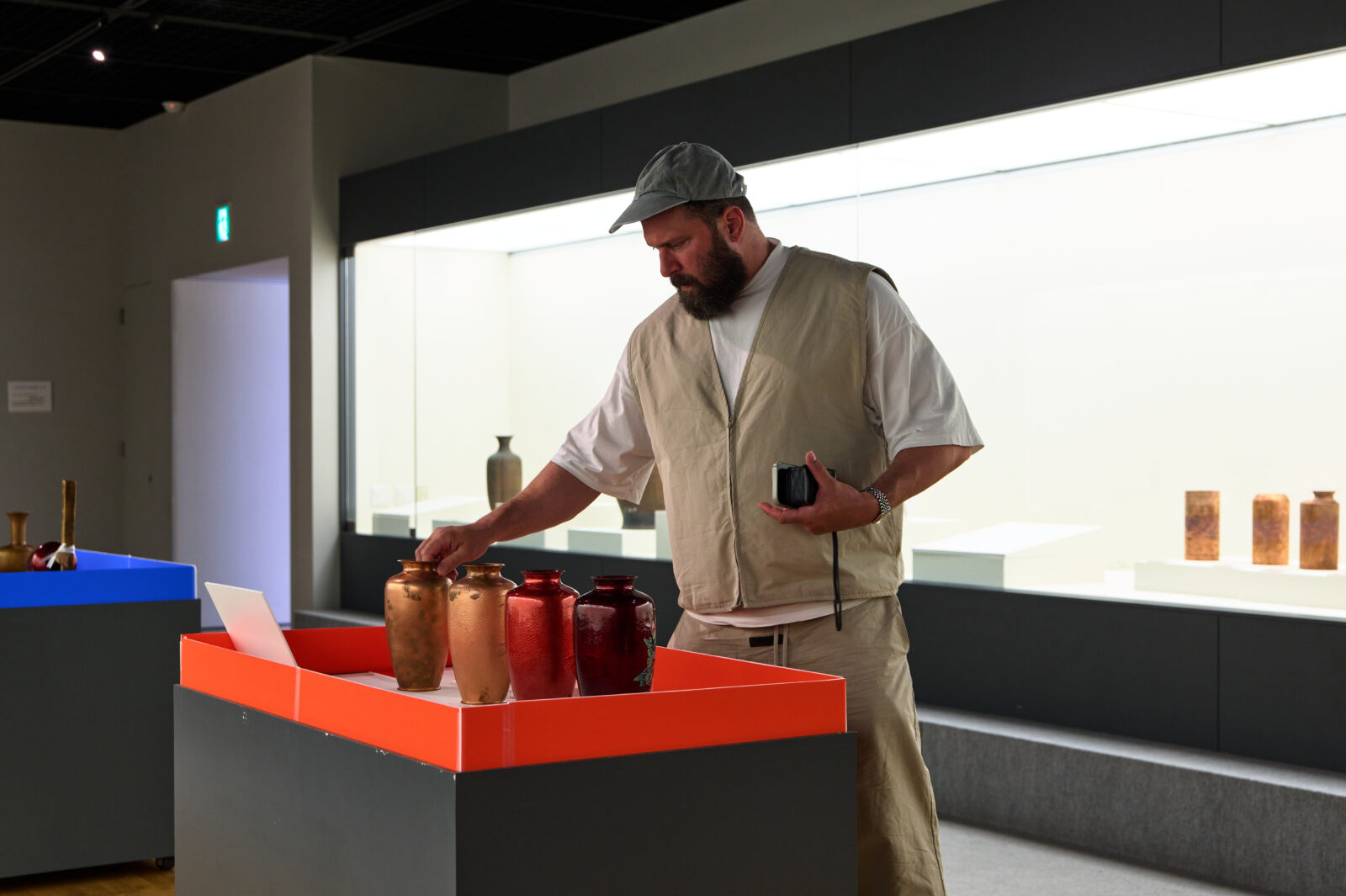
- What was the first thing that captivated you about Owari Shippo?
What immediately struck me was the precision and depth of the surface. From a distance it feels perfectly smooth and controlled, but up close it’s incredibly alive — the colour has real optical depth and the line work is almost impossibly delicate. It feels both industrial and deeply handmade at the same time, which is something I’m always drawn to. There’s a quiet intensity to it.
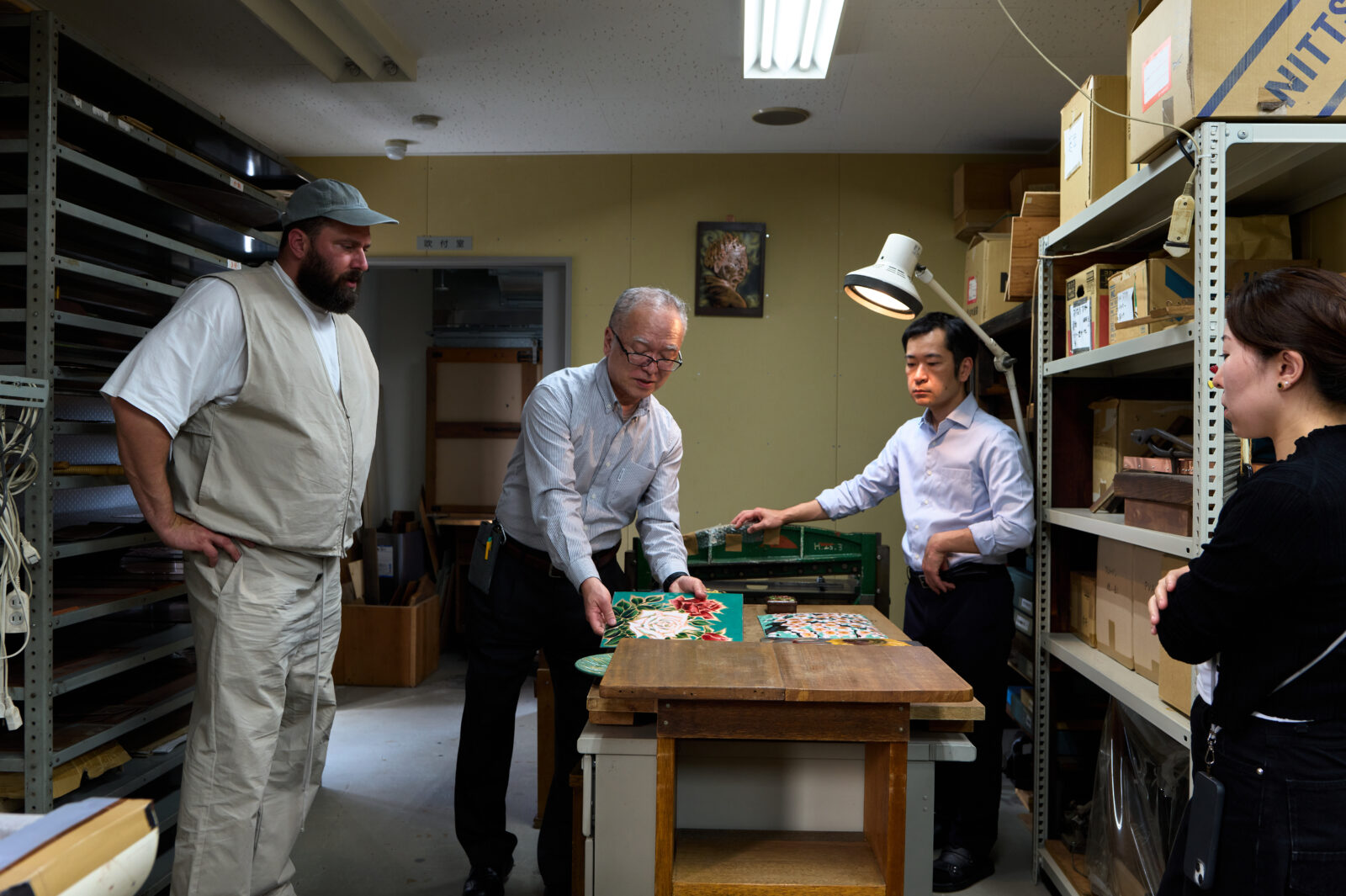
- Enamel is such a particular material – strong and unpredictable. How did it influence or even redirect your design instincts?
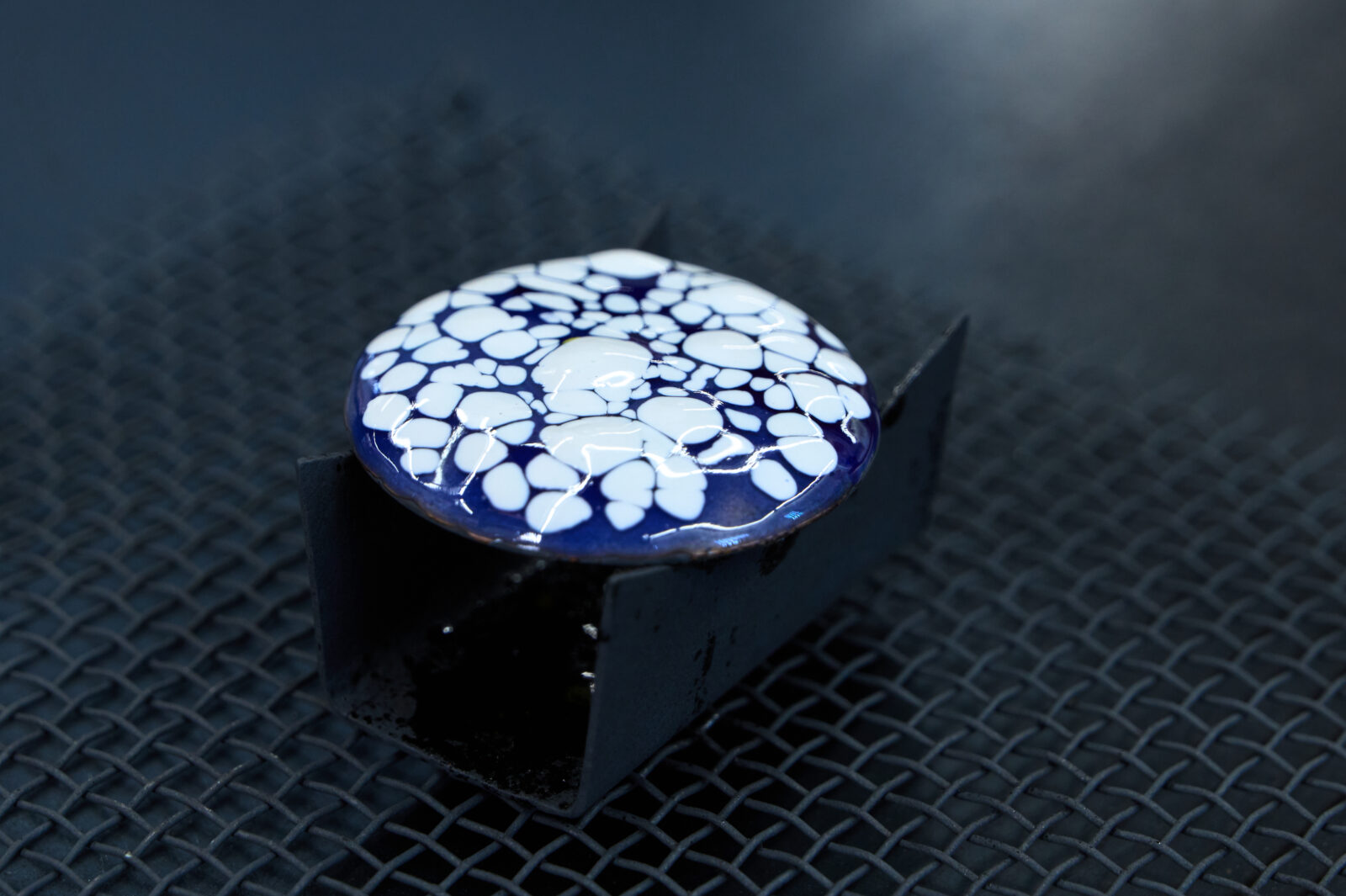
Enamel is an incredible material indeed. I was particularly drawn to enamel on copper because I had never worked with this method of manufacturing before. For me, the great appeal of new projects is extending my knowledge. Because I knew very little about the technique, visiting their headquarters was extremely important — it directly informed and redirected my design process.
Rather than trying to challenge their manufacturing methods, I was interested in respecting them, and simply offering a different, more contemporary perspective. At the same time, the firing process inevitably introduces a degree of unpredictability. That tension between precision and uncertainty pushed me to design in a more open way, allowing for variation rather than trying to eliminate it.
I also greatly admired that the entire process relies on copper and mineral-based enamel, all derived from natural raw materials. This was of real importance to me and aligns closely with how I like to think about making.
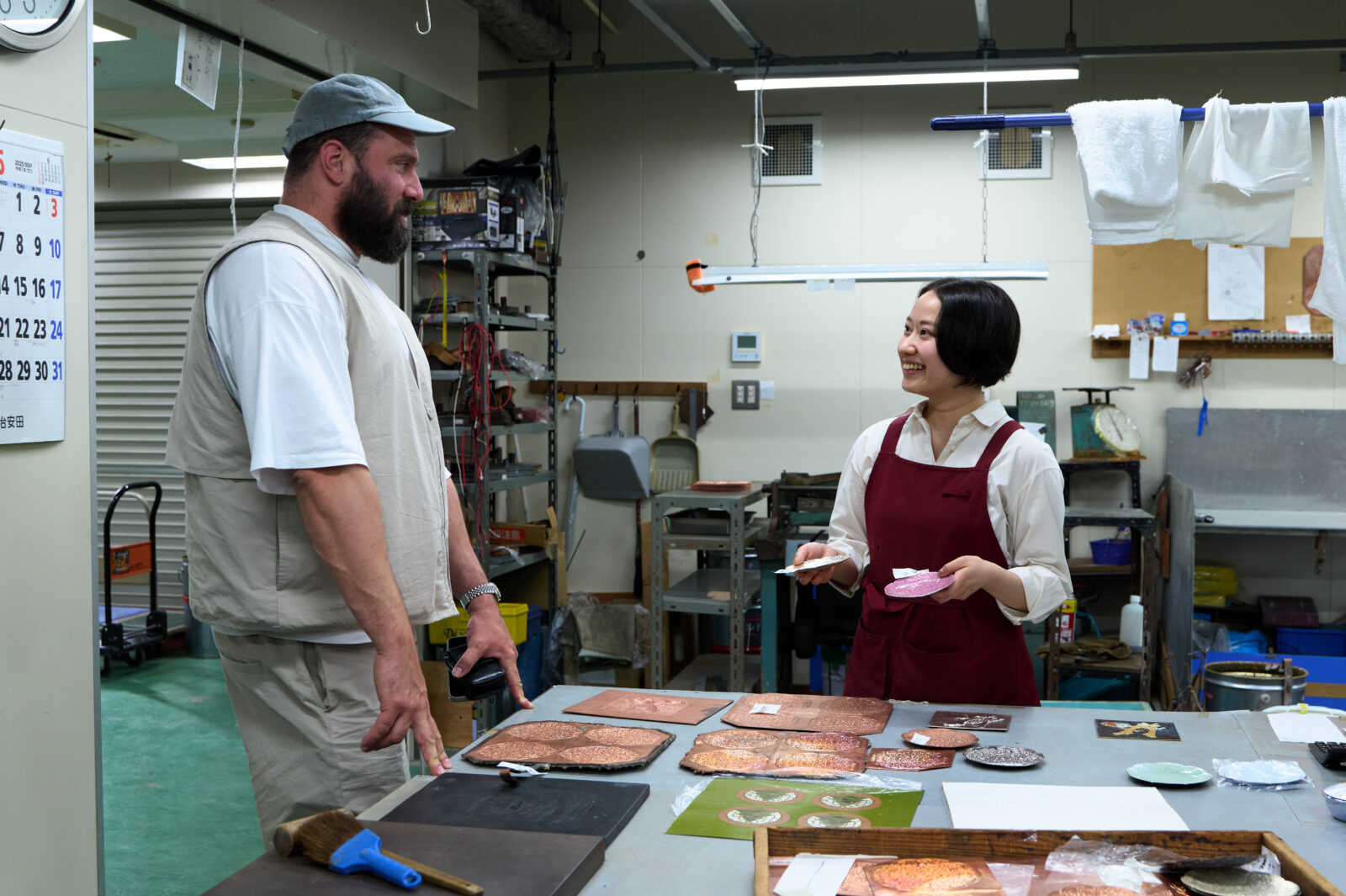
- Did working with Shigeyuki Ando and the Ando Shippo team open up new thoughts about colour, surface, or ornament for you? I know ‘ornament’ is a difficult word for you…
Ornament is still a difficult word for me, but in this project I had to engage with it in a very direct way — because Shippo is, at its core, deeply connected to decoration and surface. Rather than approaching it through traditional pattern-making, I worked in a very instinctive way that simply felt right to me. I drew a completely random pattern with a felt marker and applied it freely over a paper skin that wrapped the forms I had designed.
It didn’t feel ornamental at that stage — it felt more like a gesture, or a trace of the hand. What I found fascinating is that once this was translated through the Shippo process, that casual, almost incidental gesture became something incredibly precise and loaded with craft. From a distance, you might read it as simple black felt traces, but on closer inspection you realise it’s inlaid silver wire filled with black enamel, executed with extreme intricacy in both crafting and manufacturing.
That ambiguity — between something that looks improvised and something that is actually extremely controlled — really shifted how I think about surface, and perhaps even about ornament itself.
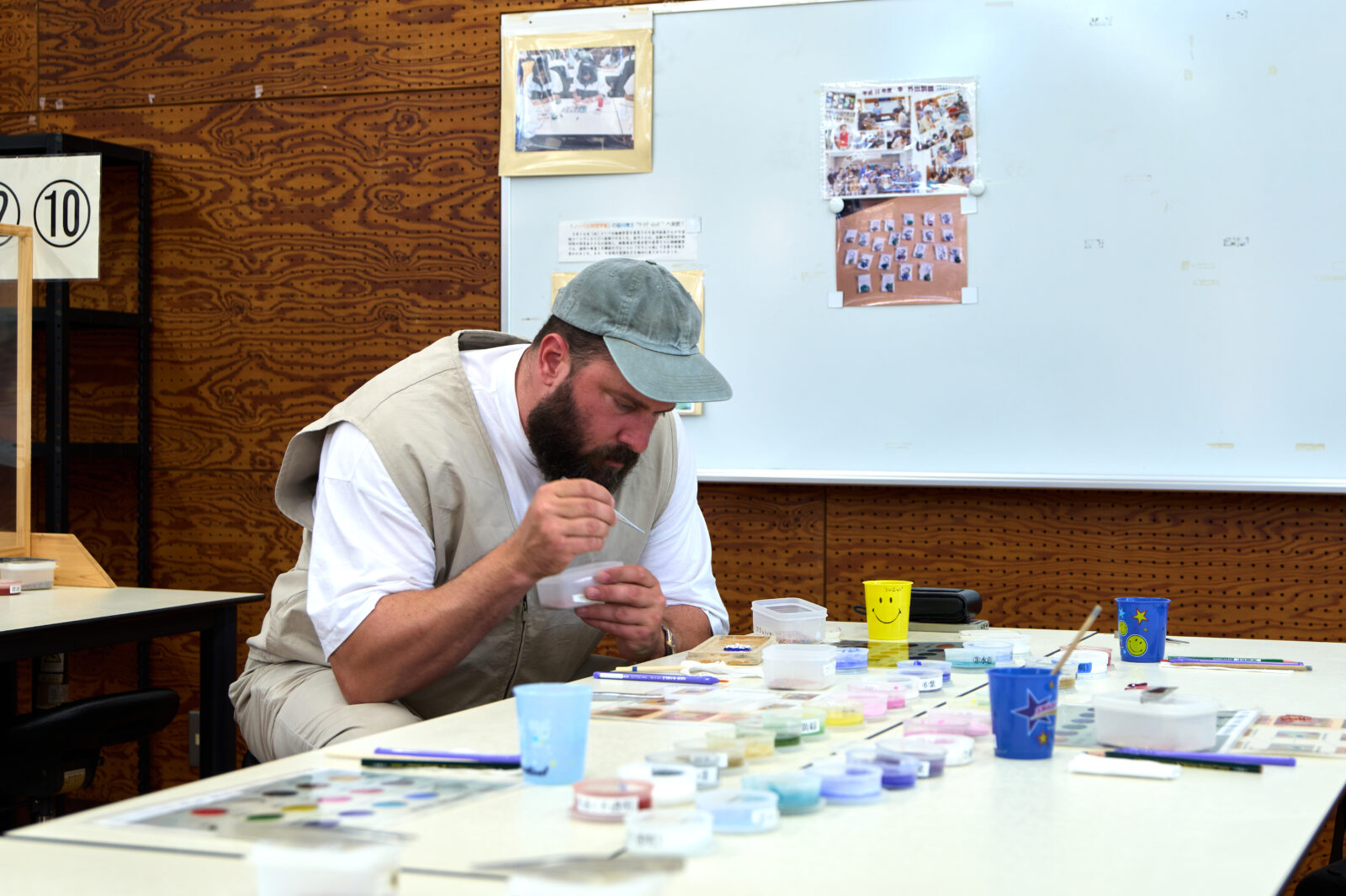
- Was there a moment when the material pushed back and forced you to rethink something?
For me, this question is closely tied to what being an industrial designer actually means. My role is to study a client’s manufacturing methods and then offer solutions that are true to their production realities. From the beginning, I tried to understand and respect Ando Shippo’s processes as deeply as possible, and to design something that was genuinely manufacturable within their existing know-how.
One very concrete constraint was kiln size. I originally wanted to work at a slightly larger scale, but their maximum firing dimensions made that impossible. Rather than seeing this as a limitation, it became the driving force behind the concept. This is how Kasane emerged — a project composed of individual stacking boxes that can be assembled and reconfigured freely.
So instead of forcing scale through a single object, the scale comes from composition. Working with that restriction didn’t reduce the ambition of the project — it defined it. In that sense, the material and the manufacturing process didn’t “push back” so much as they shaped the idea itself.
- How do you imagine this experience feeding into your work moving forward?
What matters to me now is understanding how things are made, and working with that knowledge in a respectful and intelligent way. This project reinforced how important it is for me to honour the traditions, skills, and wishes of a client, while still offering something new, unexpected, and desirable.
It has also made me more comfortable engaging with things like ornament when it’s an essential part of a client’s culture and expertise. Working within those restrictions — rather than against them — has strengthened my desire to keep learning about making, and to let that knowledge guide where the work goes next.
Philippe Malouin (@philippemalouin.com)
[Questions by Maria Cristina Didero]