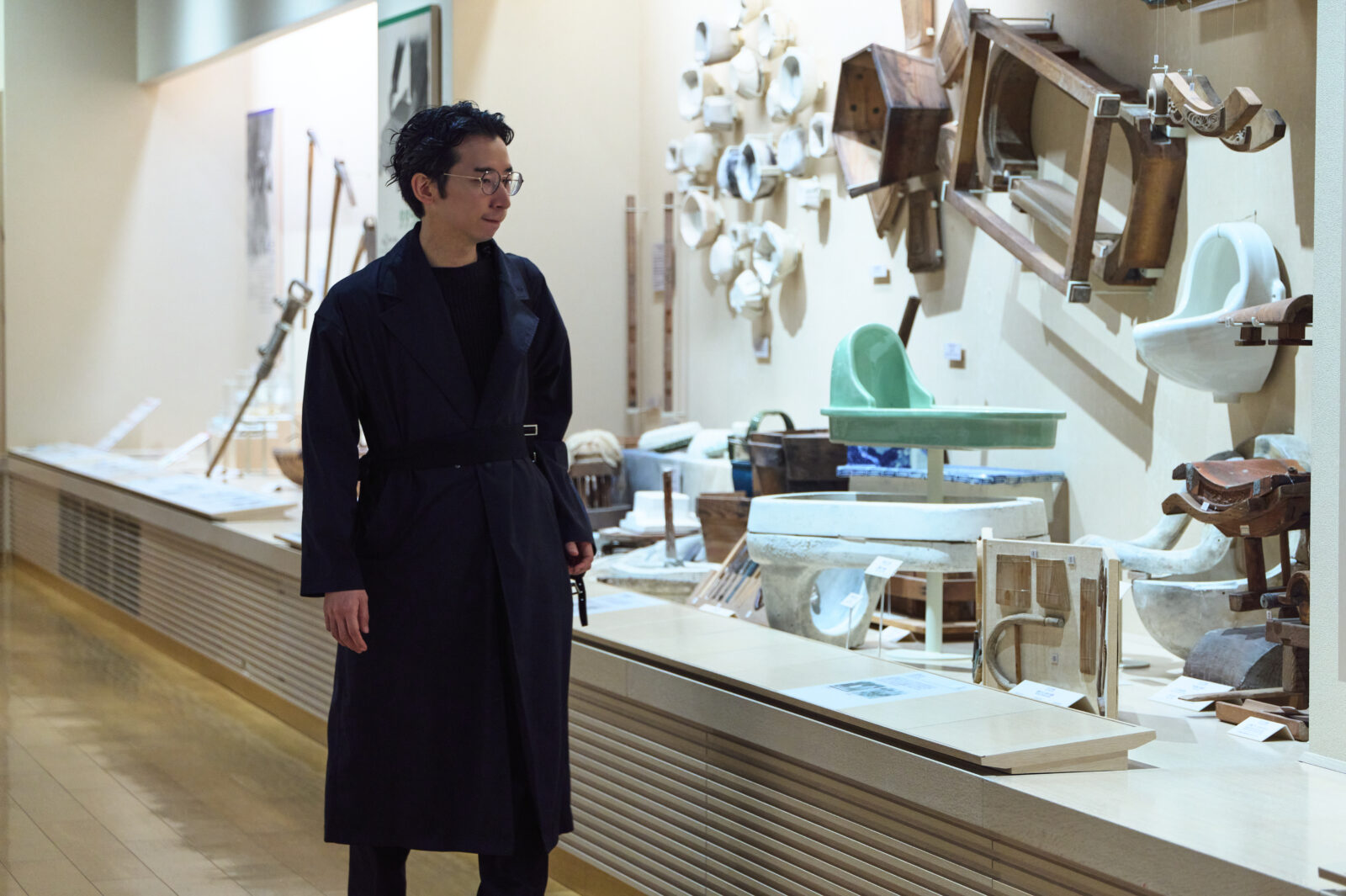
- What drew you to this craft?
If I had to sum it up in one word, it would be “suppleness.” I feel it is precisely because Seto Sometsuke Yaki can shift into many different forms and expressions that it has continued for so long.
There are vessels, tiles, soaking techniques, the hand-applied indigo “dami” technique, and delicate imagery painted in “gosu (zaffer)” on a white ground—each of these alone already contains a wide range of nuance and variation. As I visited Seto this time, I felt that rather than trying to force these elements into a single unified expression, the work should allow many of them to be seen at the same time.
As a result, my thinking moved away from aiming for a sculptural, “artwork-like” form, and instead toward combining what feels everyday to me with what feels everyday to Shingama. (I think that shift is what led me to draw on Mayuki san’s tea ware, as well as a wooden chair I keep in my own studio.)
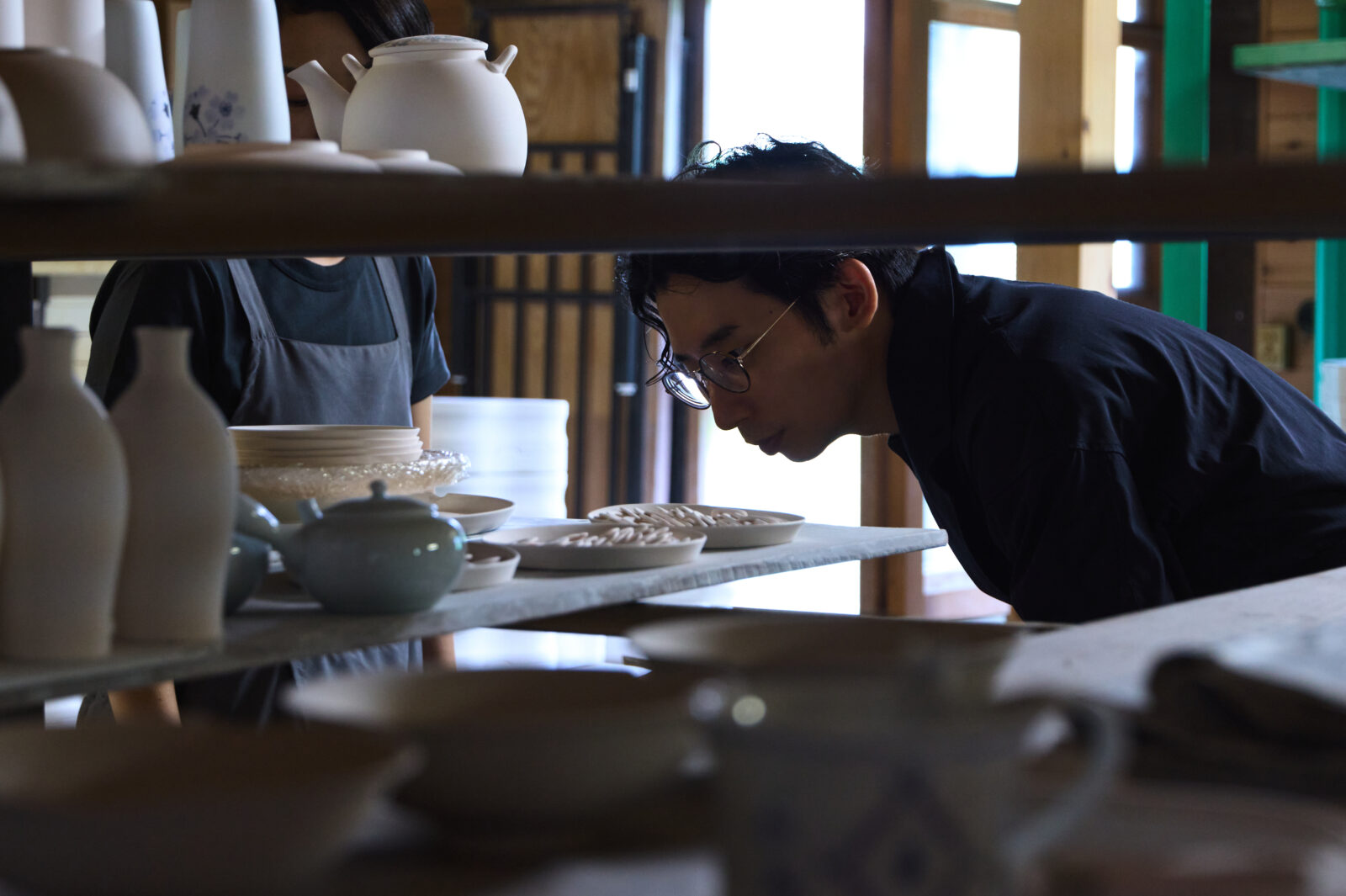
- How did it feel to channel your ideas into something as intimate as this craft?
What I found most compelling was the richness of the processes and techniques behind Seto Sometsuke Yaki. One of the central aims for me was to draw that richness out, and to create a state in which its appeal could reach more people. Typically, what we see in museums or shops are unified, finished pieces.
In this project, trying to make it possible to feel the richness behind the finished surface—its suppleness, in other words—at the same time, felt like a fresh and new approach.
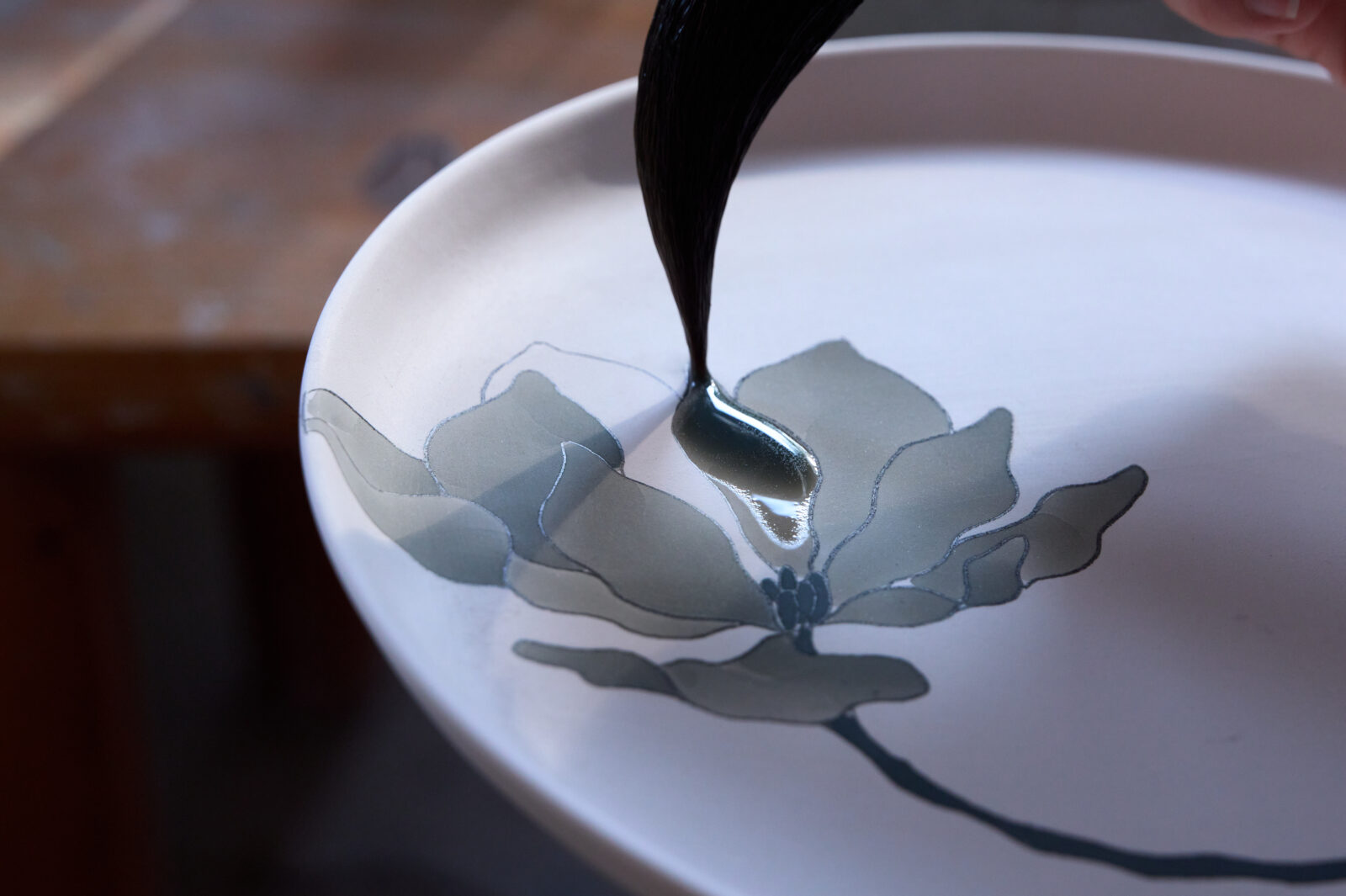
- Which aspects of the techniques – the brushwork, the indigo, the firing – shaped and fascinated your thinking the most?
What struck me most was how everything is intertwined. The clay and water that can only be found in that place, the gosu (zaffer), and even the wood that was necessary for firing—each element is connected.
The environment itself supports the technique, the forms, and the people, all at once. And on top of those geological layers, people discovered what was possible, and Mayuki san and her parents have continued to make it through their hands. The fact that all of these things seemed to connect as one was what I found most compelling.
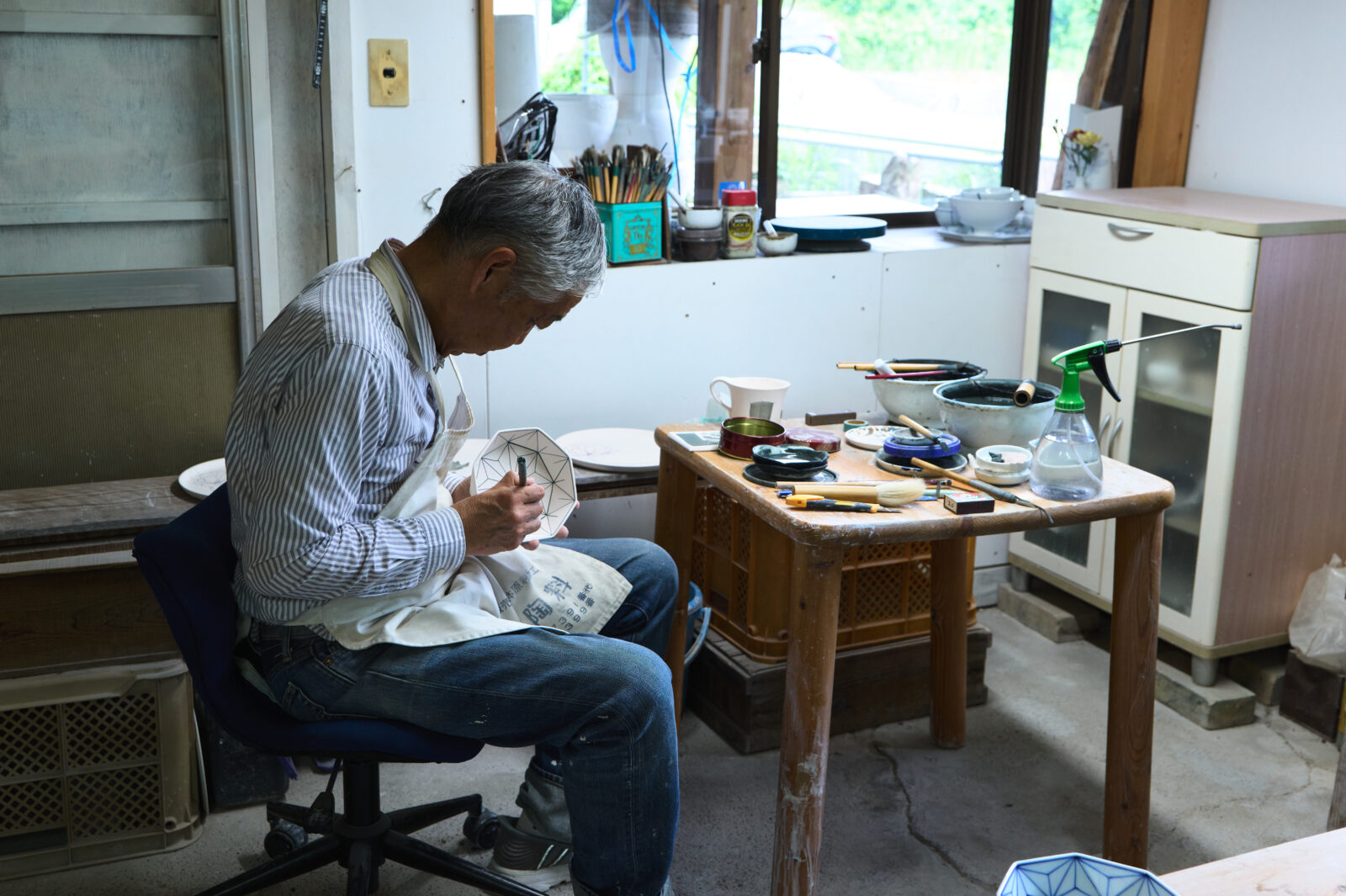
- Did collaborating with Mayuki Kato open new ways for you to think about scale or repetition?
It made me feel that having “suppleness” means gaining room to expand—and that this very expansiveness is what allows something to continue over time. That was the sense I came away with.
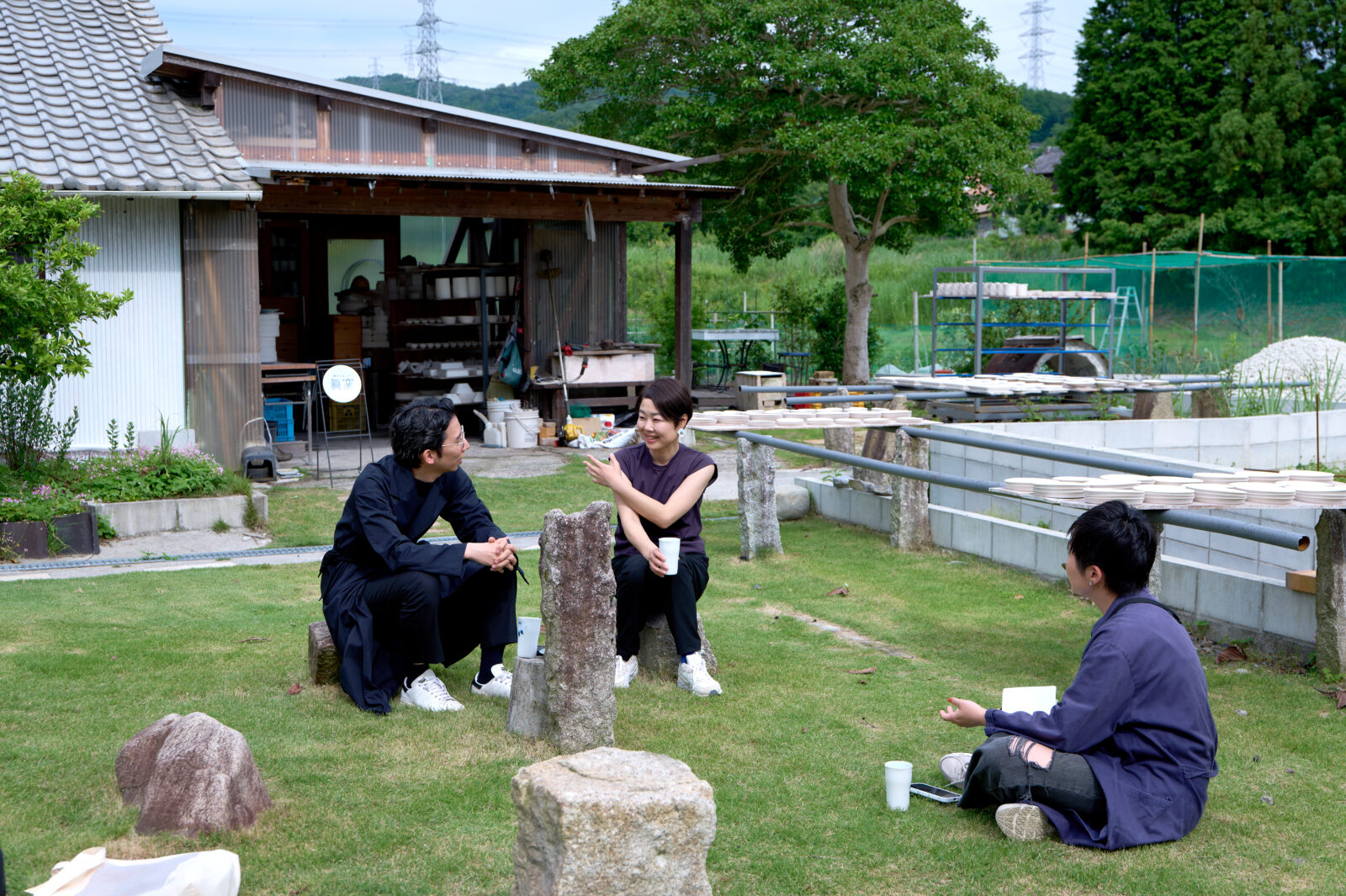
- How do you see this project expanding your dialogue with traditional craft in the future and with your own art?
What I find most compelling is how deeply this craft lives within everyday life. From the outset, rather than trying to turn it into an art piece, I hoped the work could communicate the latent potential of the technique itself.
Through many conversations—and with the tremendous efforts of everyone at Shingama—I was also able to catch glimpses of fragments of new methods and possibilities. I feel that if this kind of dialogue can continue over a long period of time, it would be ideal.
Eugene Kangawa / EUGENE STUDIO (@the-eugene-studio.com)
[Questions by Maria Cristina Didero]