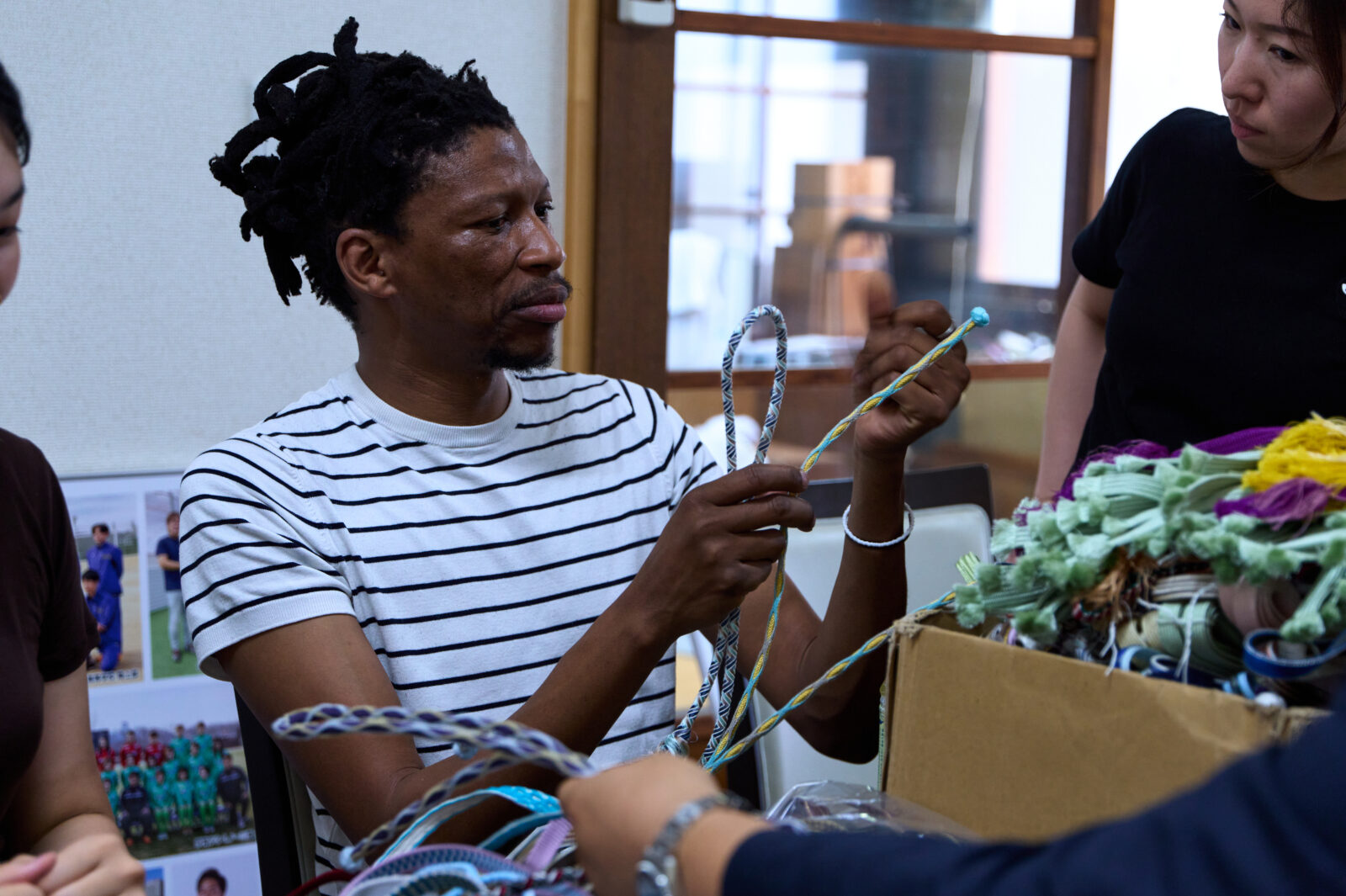
- Iga Kumihimo has such a rhythmic, almost meditative structure. What connection did you feel between its logic and your own work?
What immediately resonated with me in Kumihimo is its rhythm. Many of my works are driven by rhythmic textures, repeating gestures, and a sense of movement—qualities I recognised instinctively in Iga Kumihimo.
In my own practice, whether working with wood, grass weaving, or other hand-based techniques, the making process produces a meditative cadence through repetitive hand movements. These gestures shape biomorphic forms over time. Grass weaving, in particular, mirrors Kumihimo’s warp-and-weft logic: rhythm generates pattern, and pattern accumulates into form.
At a structural level, the logic is identical—discipline, repetition, and time producing complexity.
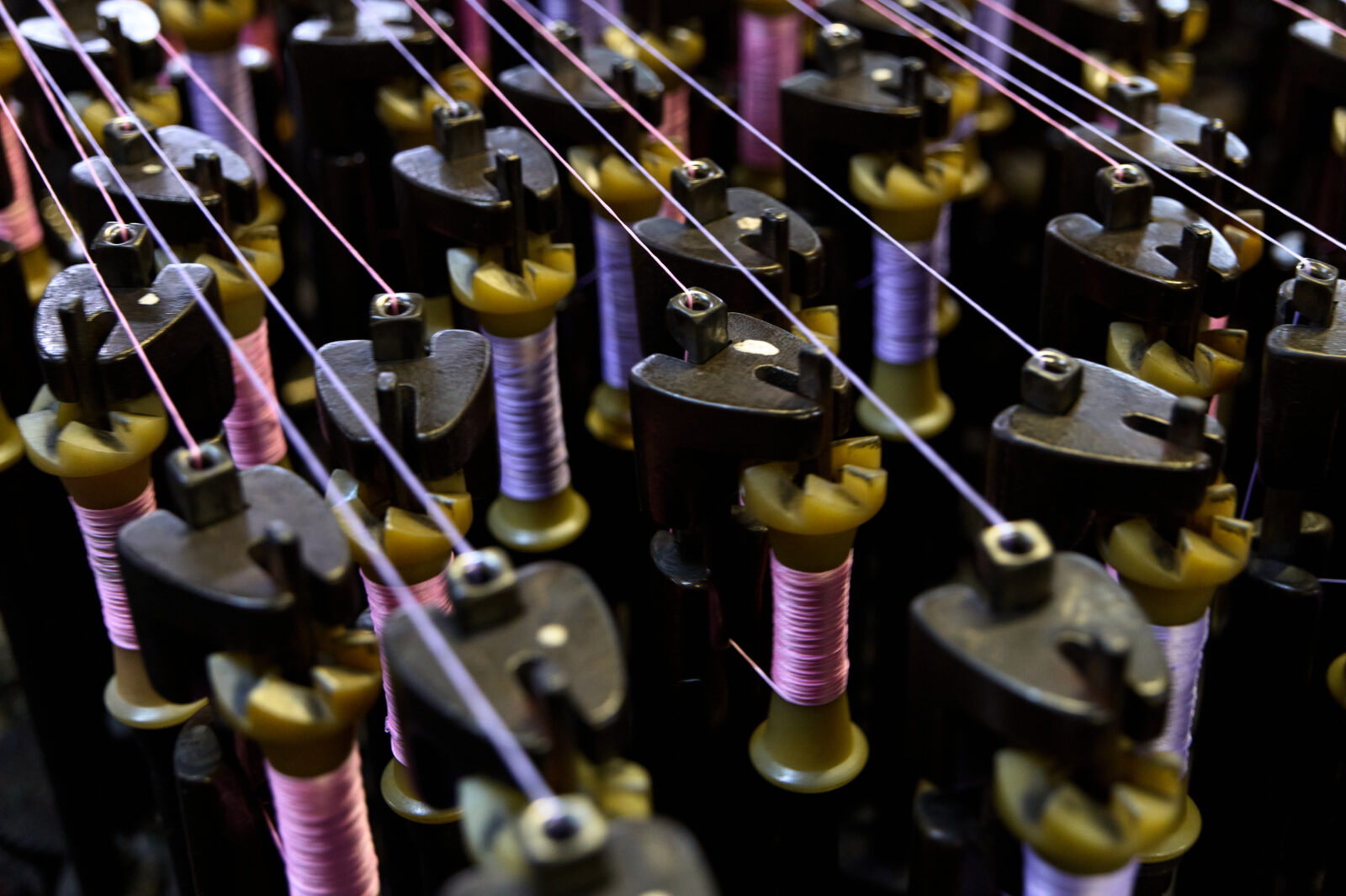
- This craft has travelled from Buddhist rituals to samurai armour to modern design. How did that long history shape your approach?
Respect is the primary position I bring to any skilful craft that has been transmitted through generations. In my own culture, this same ethic allows me to work closely with elders across different mediums, particularly in rural contexts where reverence for knowledge often outweighs monetary value.
By engaging traditional methods and materials directly, the work gains a grounded foundation from which it can evolve. Innovation becomes an extension rather than a disruption. Acknowledging origins while advancing technique allows the work to meet the contemporary world with integrity. This continuity creates a lineage—one that honours the past, functions in the present, and remains meaningful for future audiences.
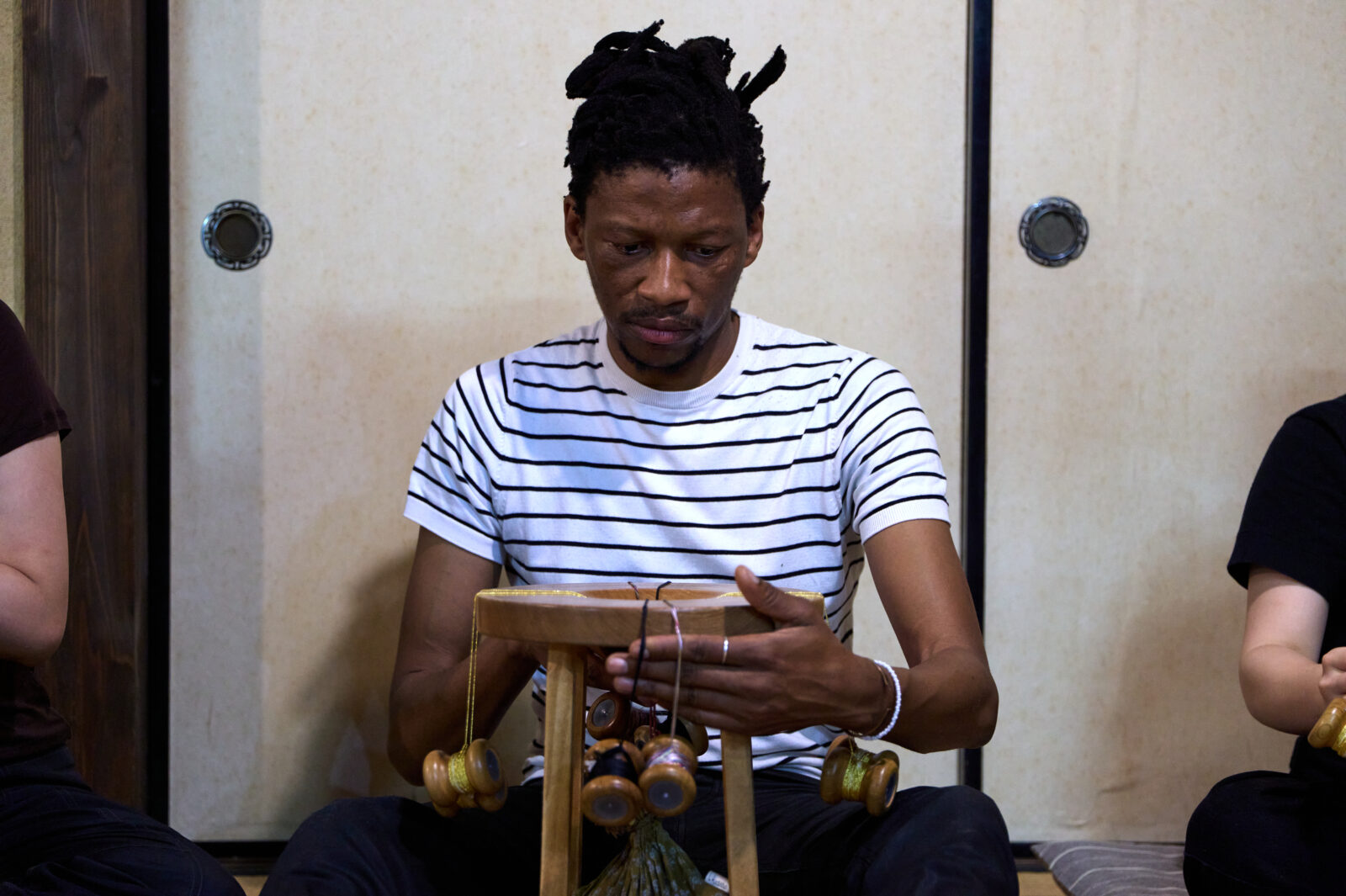
- Working with Tomoyuki Matsuda, who’s pushing Iga Kumihimo into brand-new fields, what sparked your curiosity most?
My curiosity lies in Matsuda-san’s depth of knowledge and his ability to reimagine a medium that can take virtually any form. When I encounter a new material, my thinking immediately expands: I isolate fragments of form, imagine them multiplied, study the traditional application, then project new uses, scales, and contexts. I push ideas until their possibilities are exhausted.
What also interested me deeply is how Matsuda-san has inherited generations of craft knowledge and infused it with his own vision—one shaped by contemporary Japan, where handmade traditions like Kumihimo are increasingly marginalised. His role is not preservation alone, but evolution. As a designer and artist, I am compelled by that responsibility. Being part of this lineage—and helping extend it through my own skills and perspective—is what drew me into the collaboration.
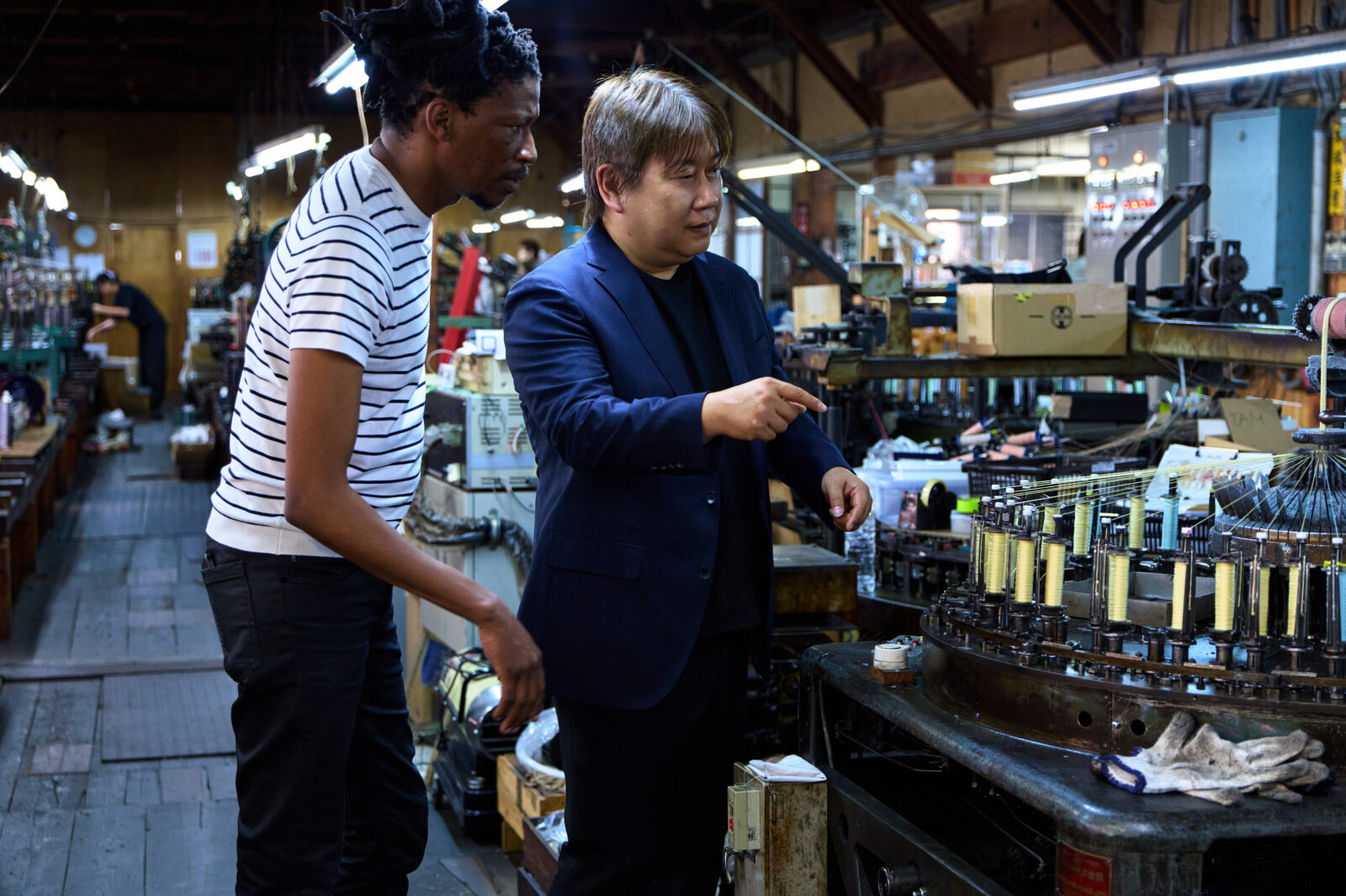
- Did any material discoveries — colour, texture, tension — surprise you along the way?
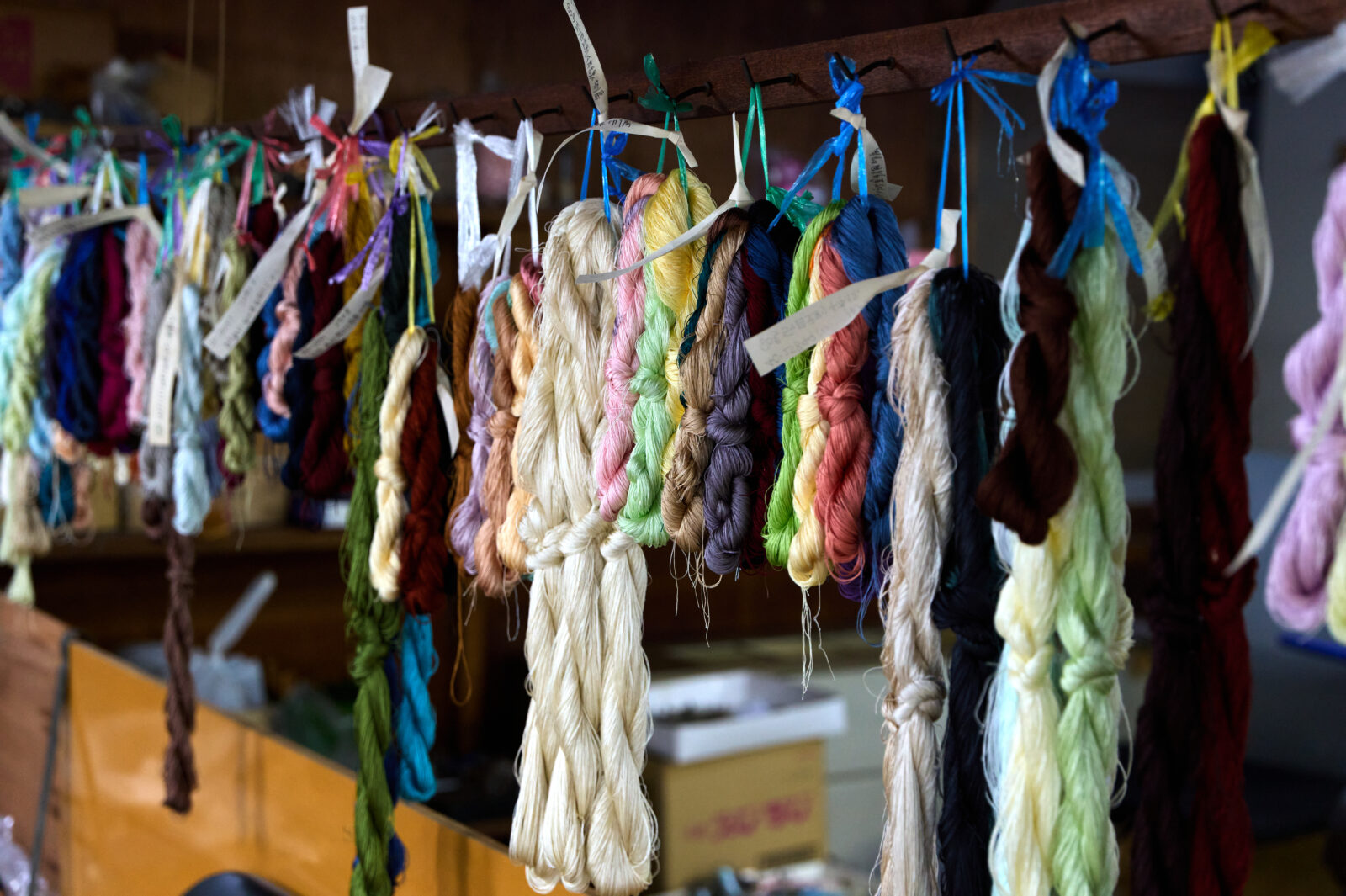
Having worked extensively with garments, I am familiar with a wide range of textiles and threads. What surprised me was not the material itself, but its applications, longevity, and structural performance. Silk, despite its delicacy, is exceptionally strong relative to its scale. Historically, it functioned as soft armour, which explains its use in samurai protection. When woven in specific patterns, it becomes remarkably resilient.
I was also struck by its sensitivity to light—exposure gradually shifts its tonal gradients over time. Even after passing through multiple machines that pulled and stretched the material, the internal tension remained intact. That balance between strength, adaptability, and subtle transformation was unexpected and compelling.
- According to your experience, what future possibilities do you now see for Iga Kumihimo within contemporary art and design?
The future applications of Iga Kumihimo are effectively limitless. Depending on fibre choice and construction, it can be soft or coarse, elastic or rigid, reflective, insulating, or absorbent. As an interlacing medium, it can exist independently or integrate with other structures to form complex systems without being constrained by weight, shape, or scale.
Its properties grant it an unusual freedom. It is a foundational material with extraordinary expressive potential. From architecture to sculpture, from functional objects to experimental design, its adaptability invites continuous exploration. For me, it is not a material to be used once, but one to return to repeatedly—each time discovering new possibilities.
Atang Tshikare (@atangtshikare.com)
[Questions by Maria Cristina Didero]