
- David comes from a world of clean lines and technical refinement. How did his way of seeing influence the way you approached your own craft?
In the world of ceramics, it’s generally understood that achieving the same level of precision as industrial products is technically difficult. David fully understood this, yet still proposed a design that required a certain degree of accuracy. In order to meet his expectations and respond to his vision for the work, we tried a range of approaches we had never considered before and took on the challenge of refining the precision as much as possible. Being able to carry out that kind of ambitious effort feels, to me, like a direct result of how strongly we were influenced by his design philosophy.

- Were there parts of the process – forming, glazing, firing – that you had to adapt or rethink to realise the final idea?
Because the design stacks linear modules, a certain level of precision and structural strength was required. To achieve this, we made adjustments that differ from our usual production, setting aside workflow and efficiency, such as refining the shape of the plaster molds used to produce the modules, reconsidering how we release the pieces from the molds, modifying the drying process after forming, and implementing measures to prevent warping during firing. In addition, pursuing higher precision and strength made the modules heavier due to their own weight, which meant we needed further countermeasures.

- What part of David’s approach felt the most refreshing or challenging for you as a maker?
While David’s work typically calls for a high level of technical precision, what felt especially refreshing was how he integrated craft-like qualities into that approach, requesting a certain degree of accuracy, while elevating traditional craft into something modern and forward-looking. I was also impressed by his attitude throughout the process – rather than insisting on his own viewpoint, he took our feedback on board as much as possible and responded quickly with practical solutions.
- How do you think collaborations like this can help open the next chapter of Mino Yaki?
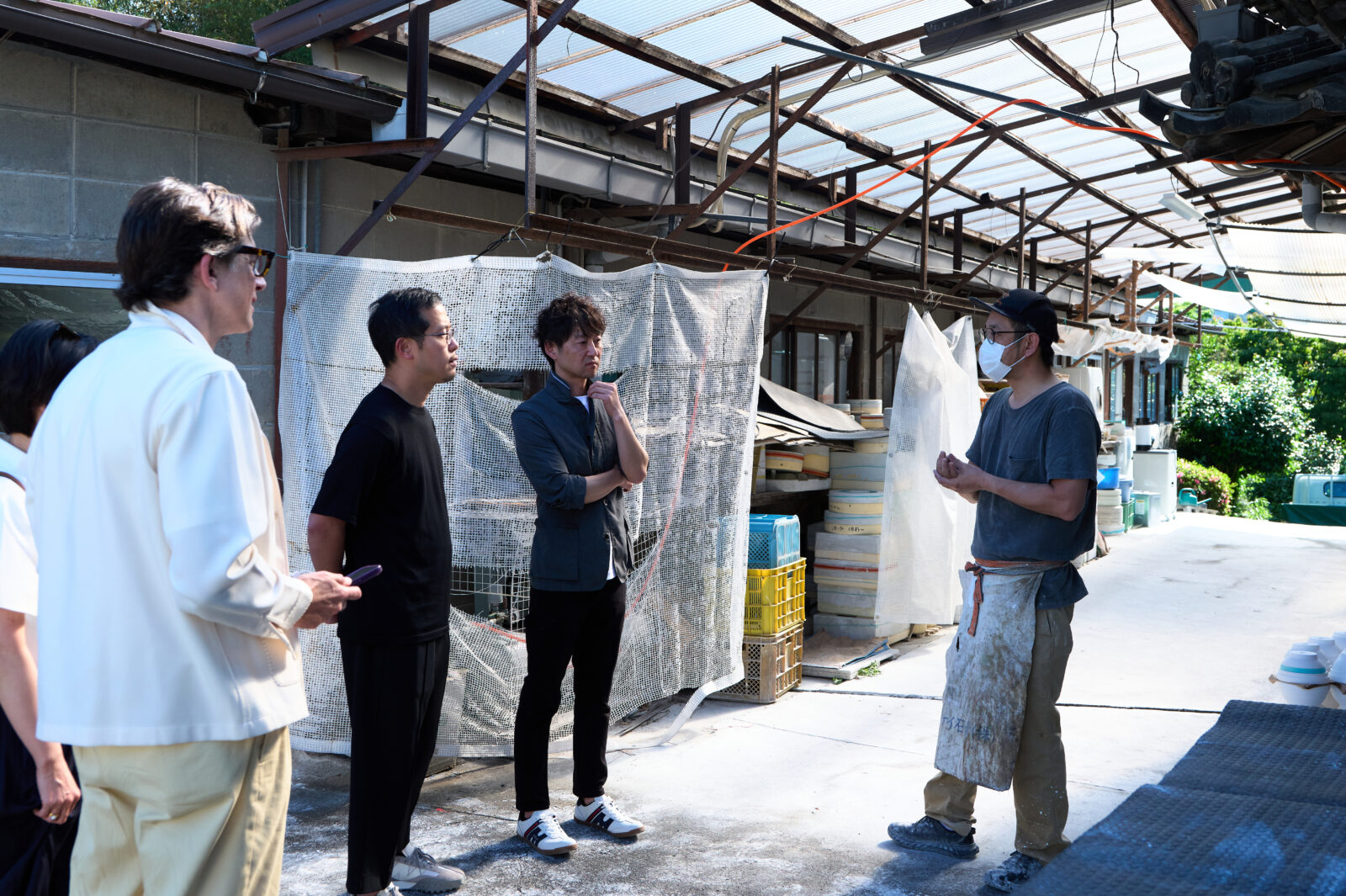
Rather than a challenge within the usual framework, this collaboration became a catalyst for developing production methods and approaches we had never considered before. It also highlighted the potential to shape a new vision for Mino Yaki, not only as “vessels,” but as design products in their own right.
- Did this project reveal something new to you about the possibilities of your own craft?
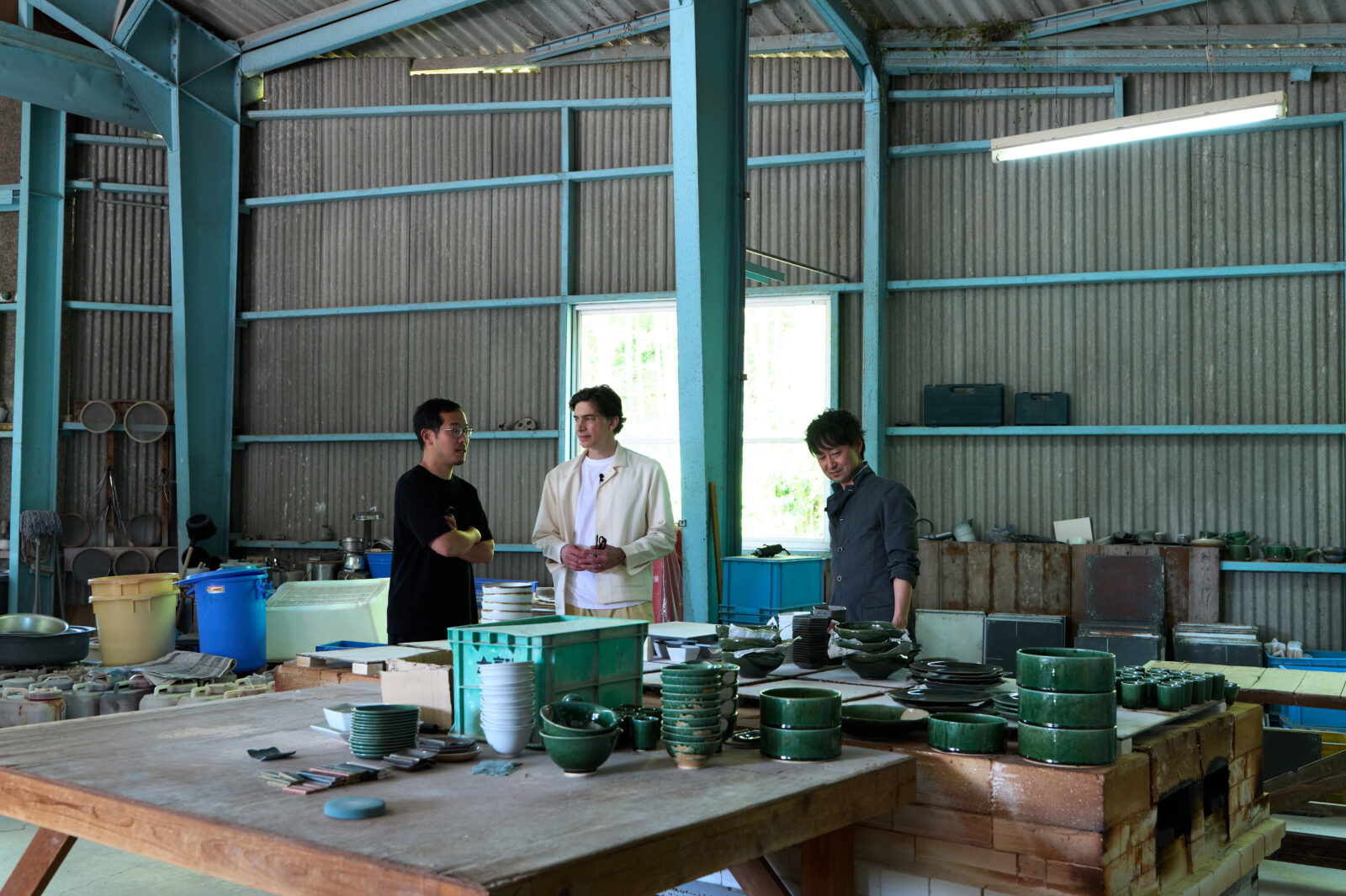
I came to realize that I had been too constrained by the idea of “tradition” and by what it means to make “craft,” and also too focused on practicality and efficiency. As a result, my thinking stayed within a certain framework, and in a sense, I was limiting my own possibilities. A collaboration like this, one that brings in a completely different perspective, became an opportunity to discover new values and possibilities, especially because I had been unconsciously bound by the idea of making “vessels.”
Yohei Ito, Fudogama (@fudogama.com)
[Questions by Maria Cristina Didero]