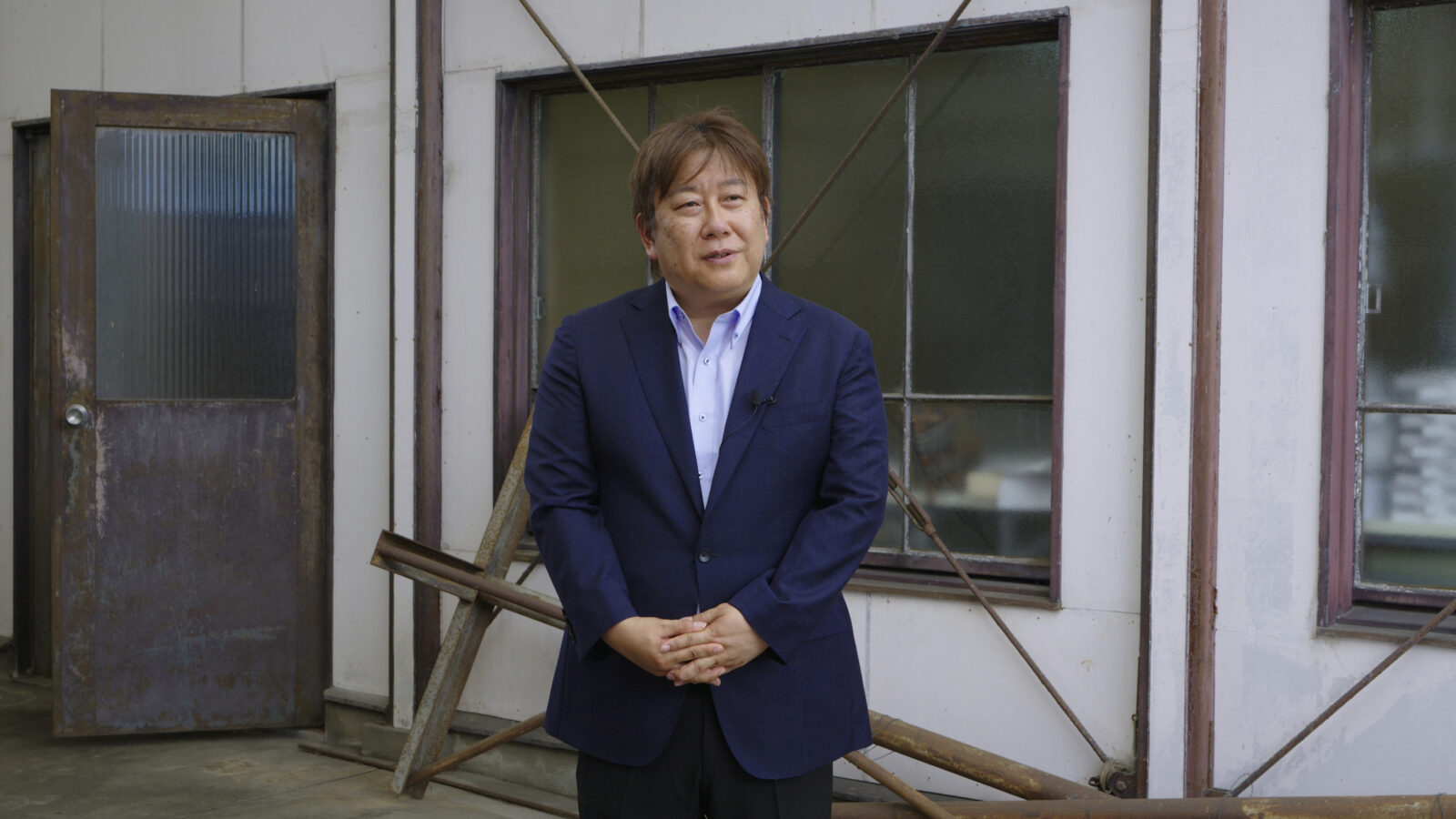
- Atang brings such a narrative and sculptural approach to making. How did that influence the kinds of cords or forms you explored together?
When Atang came to Iga, what inspired him most was Iga’s traditional Tenjin Festival, which is also registered as a UNESCO Intangible Cultural Heritage. With his interpretation of the festival in mind, we discussed what kind of Kumihimo pattern would suit the work, what color palette would be appropriate, and what material would be best, and proposed Kumihimo options accordingly.
All of the Kumihimo used in this collaboration were made using classical, traditional braiding methods. What was particularly interesting is that every Kumihimo Atang selected was derived from marugumi (round braids), and he did not choose hiragumi (flat braids), which are more commonly used in contemporary Kumihimo. Many of these were braids we typically would not use outside of formal Kimono, and they were not choices we would have made based on our usual assumptions, so it was genuinely exciting to imagine what kind of design would emerge.

- Did this collaboration lead you to test new braiding techniques or unexpected applications of them within contemporary art/design?
In this collaboration, we did not attempt new braiding techniques; we purely used Itogo’s traditional patterns. However, the biggest challenge was producing Kumihimo at widths and thicknesses that go far beyond its conventional standards.
In addition, while Kumihimo is typically made from silk, we chose a polyester from a manufacturer we had never used for Kumihimo before, considering the exhibition environment, as well as the conditions after purchase, and the fact that the work is intended to live with the owner for many years as an artwork. Using this material was extremely challenging in terms of controlling stiffness and width.

- What was the most interesting challenge in interpreting Atang’s visual language through Iga Kumihimo?
As we translated Atang’s thinking into Kumihimo, one of the most challenging, and exciting aspects was producing Kumihimo in lengths that do not follow conventional “common-sense” standards: very short pieces where even we wondered, “What would this be used for?” (and questioned whether it would truly take form as a design), as well as those with tassels at lengths we had never made before. Even after many years in this field, there were many discoveries for us, and the process was full of excitement.
In particular, Kumihimo with tassels three times the usual length required more than three times the work, but I believe they added a mysterious essence to the final piece.
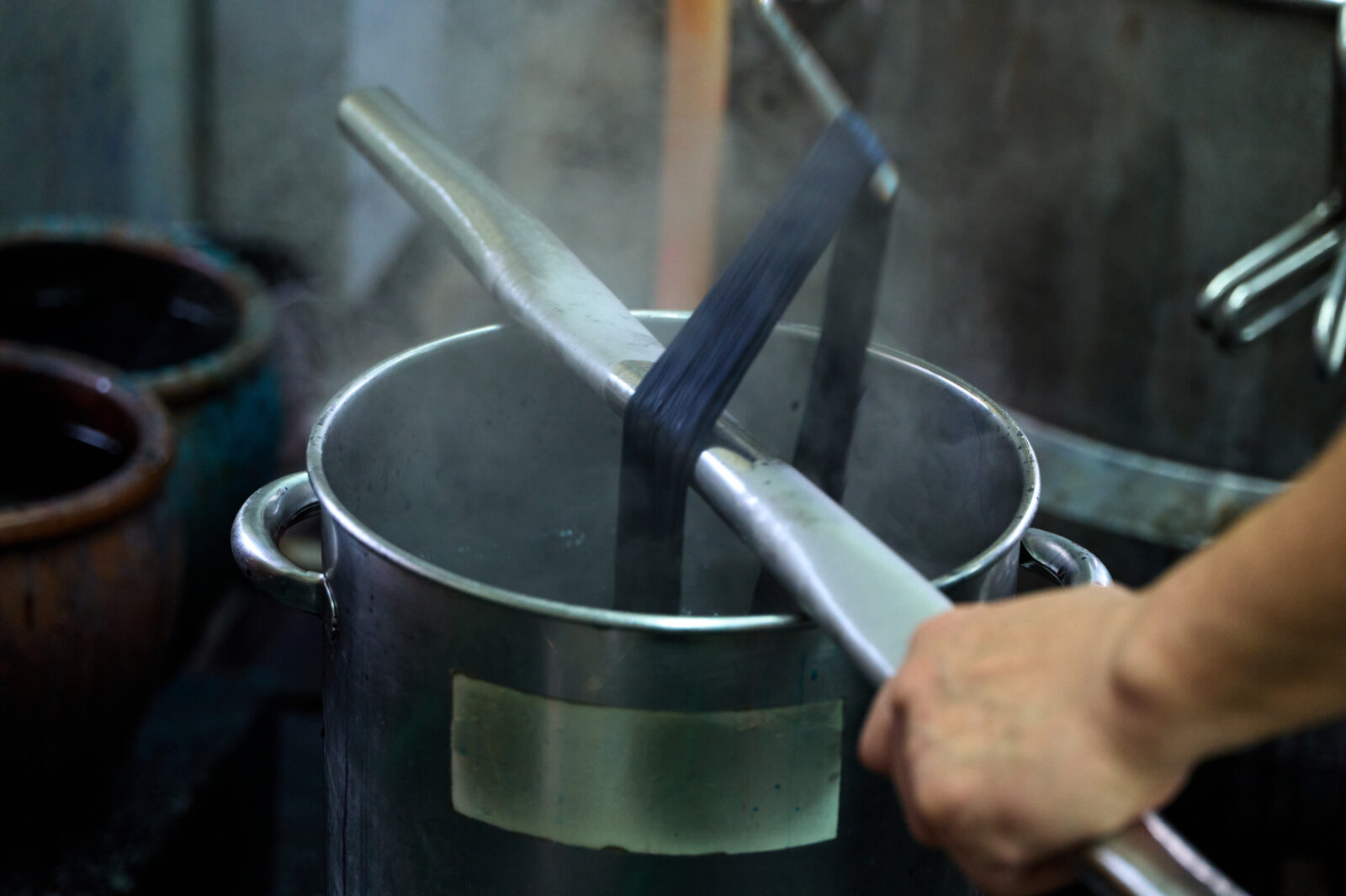
- Given your commitment to expanding Iga Kumihimo beyond traditional uses, how do you see this project contributing to that evolution?
Through this project with Atang, I feel we were able to propose a freer way of using Kumihimo, detaching it from fixed purposes such as kimono cords or shoelaces, and freeing it from constraints of form. This collaboration pushed the possibilities further: applications for more high-end contexts; Kumihimo not as a “cord,” but as art; potential as spatial design and architectural material; and a major expansion of interpretation through African sculptural techniques and new expressions using light and shadow—opening up possibilities for furniture and decorative objects as well.
In terms of how Itogo has been exploring uses beyond Kimono obijime (belt sashes), this project leapt far beyond practical accessories like shoelaces and straps. It may have demonstrated that no matter how far the application expands, the concept and technique of Kumihimo can still hold and remain true.
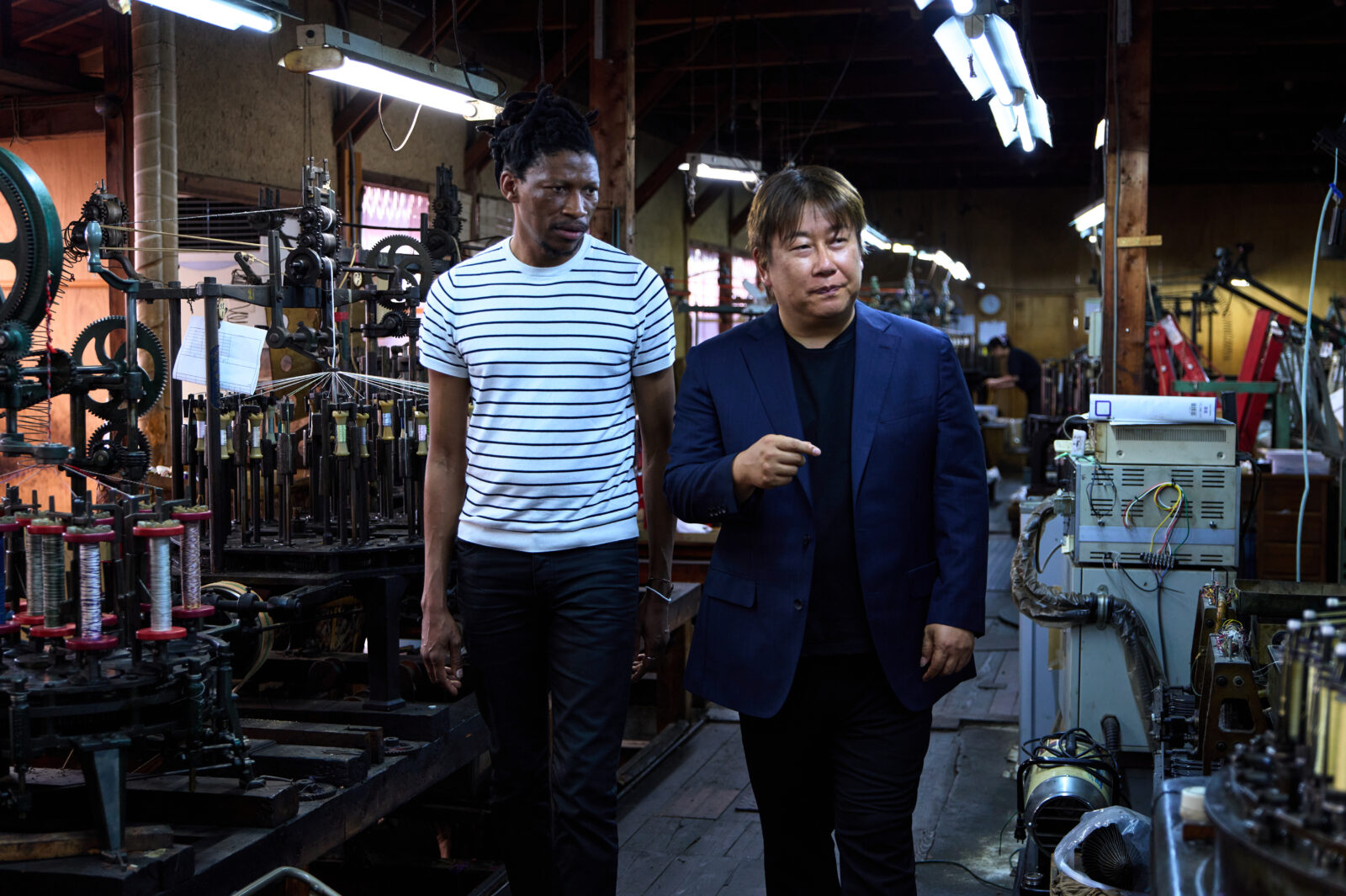
- Did this collaboration show you new directions for your craft – technically or creatively?
In our usual work, we have pursued a worldview focused on how beautifully and accurately we can produce Kumihimo, with the correct pitch and firmness. Through this project, what stayed on my mind every day was: how will people feel it, what will they imagine, and what will they form from it? Creating an artwork, rather than a traditional craft product, where interpretation changes depending on the viewer, is a significant pressure.
At the same time, the fact that Kumihimo could become an artwork that invites each viewer’s imagination, something that does not happen in our everyday production, felt transformative. I’m grateful that this experience has allowed Itogo’s Kumihimo to move into a new phase at once, opening new approaches to making obijime, and expanding possibilities in color choices and material selection.
Tomoyuki Matsuda, Itogo (@itogo.co.jp)
[Questions by Maria Cristina Didero]