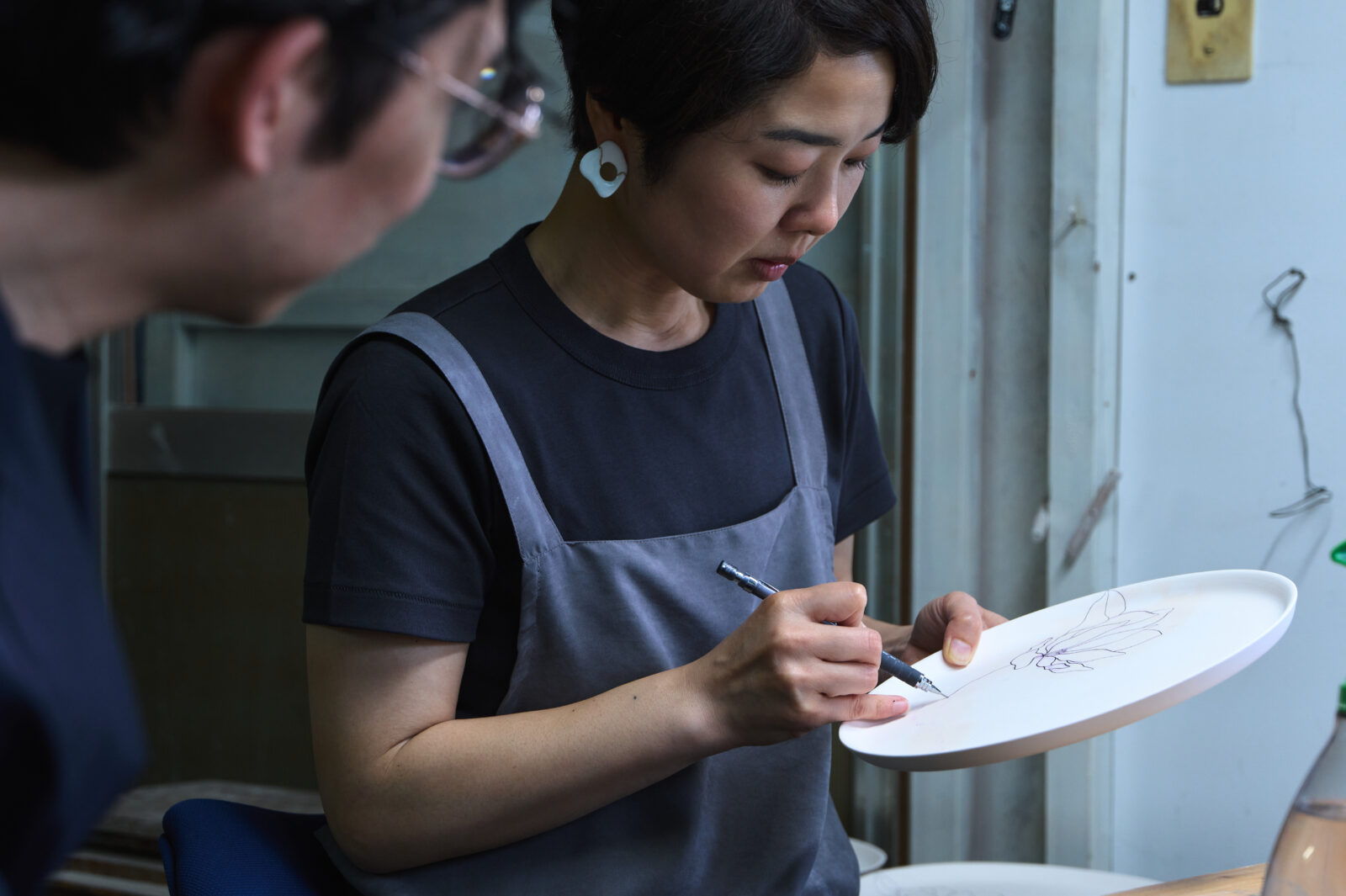
- How did Eugene Studio’s approach blend with the precision required for Seto Sometsuke Yaki?
The artwork which was produced together with Eugene Studio, uses tile pieces to form a chair, we needed to paint very fine designs onto small individual tile parts. It required a higher level of precision than usual, but in doing so, I feel the strengths of Seto Sometsuke Yaki were brought out, and our studio’s expression integrated naturally without strain.
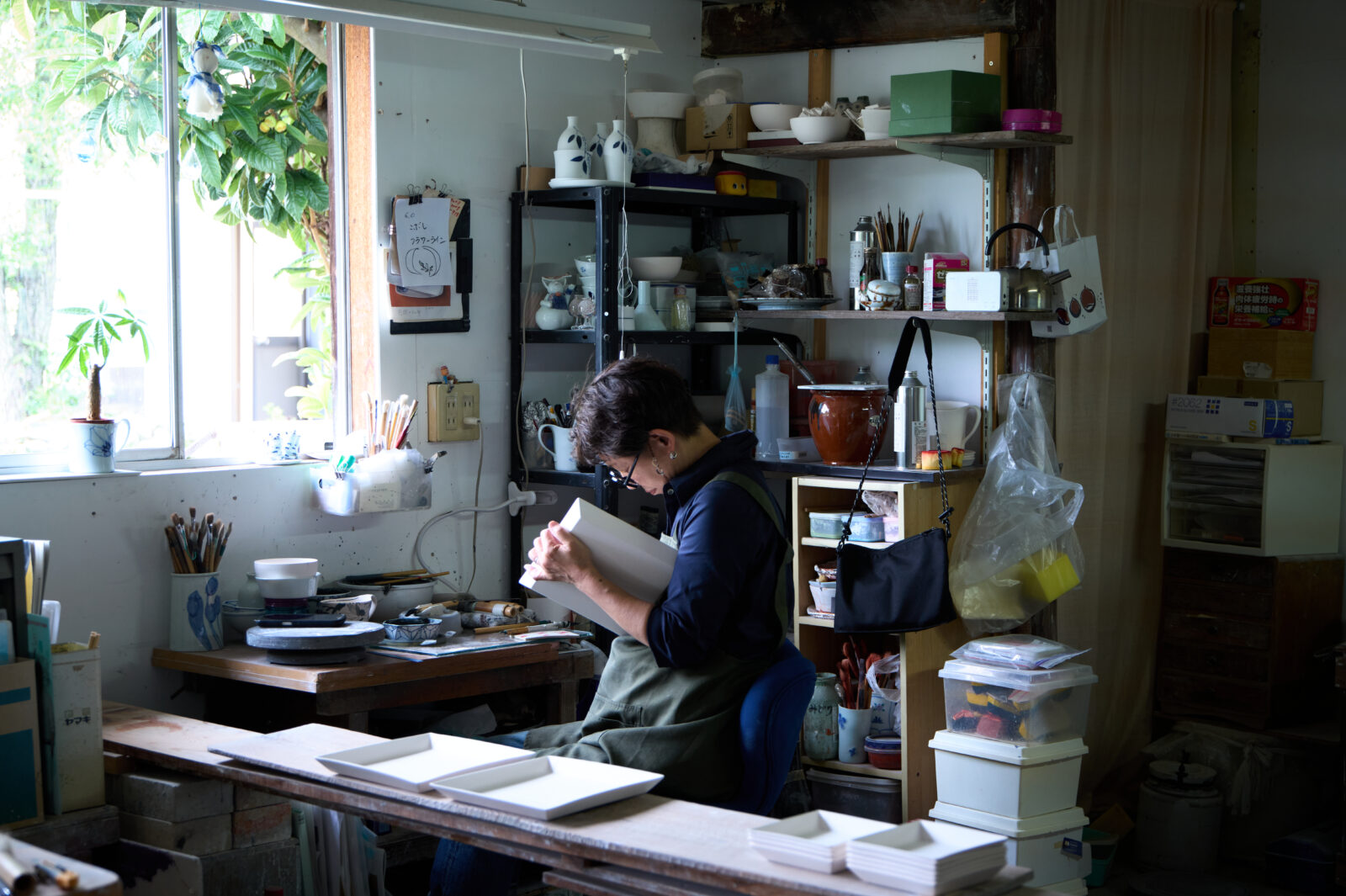
- Were there particular techniques you had to tweak to suit his vision?
In creating the tile parts for the smaller chair artwork, even slight differences in light and shade can change the overall impression, so we worked carefully to achieve a balanced gradation across the whole. For the tile parts applied to the larger chair artwork, the density of the “gosu” (indigo) pigment strongly affects the final finish, so we needed to make adjustments in order to control the “dami” (painting) application.
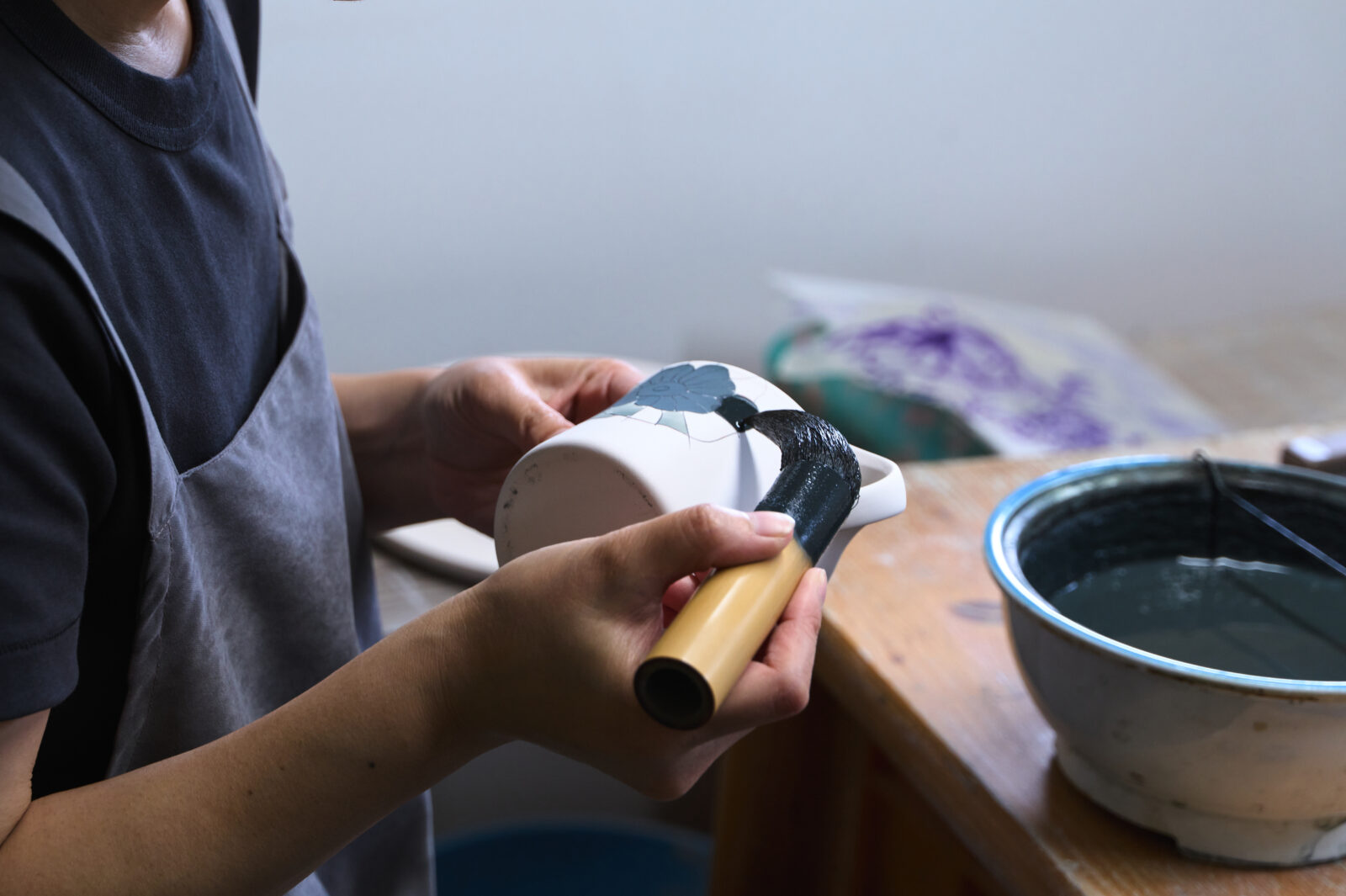
- What did you find most challenging – interpreting abstract ideas, working with new motifs, adjusting the brushwork?
The most challenging part was the difference in our approaches to making. Our studio usually works by imagining the drawings and the final form, and then moving toward that goal through technical and design-based trial and error. With Eugene Studio, however, it felt like they advanced by repeatedly prototyping while exploring the material’s potential, and then using those results to move into the next phase.
In that process, it was difficult to judge when, and in what way, we should propose specific techniques and technical approaches. That difference in approach was challenging, but at the same time, it was also very interesting.
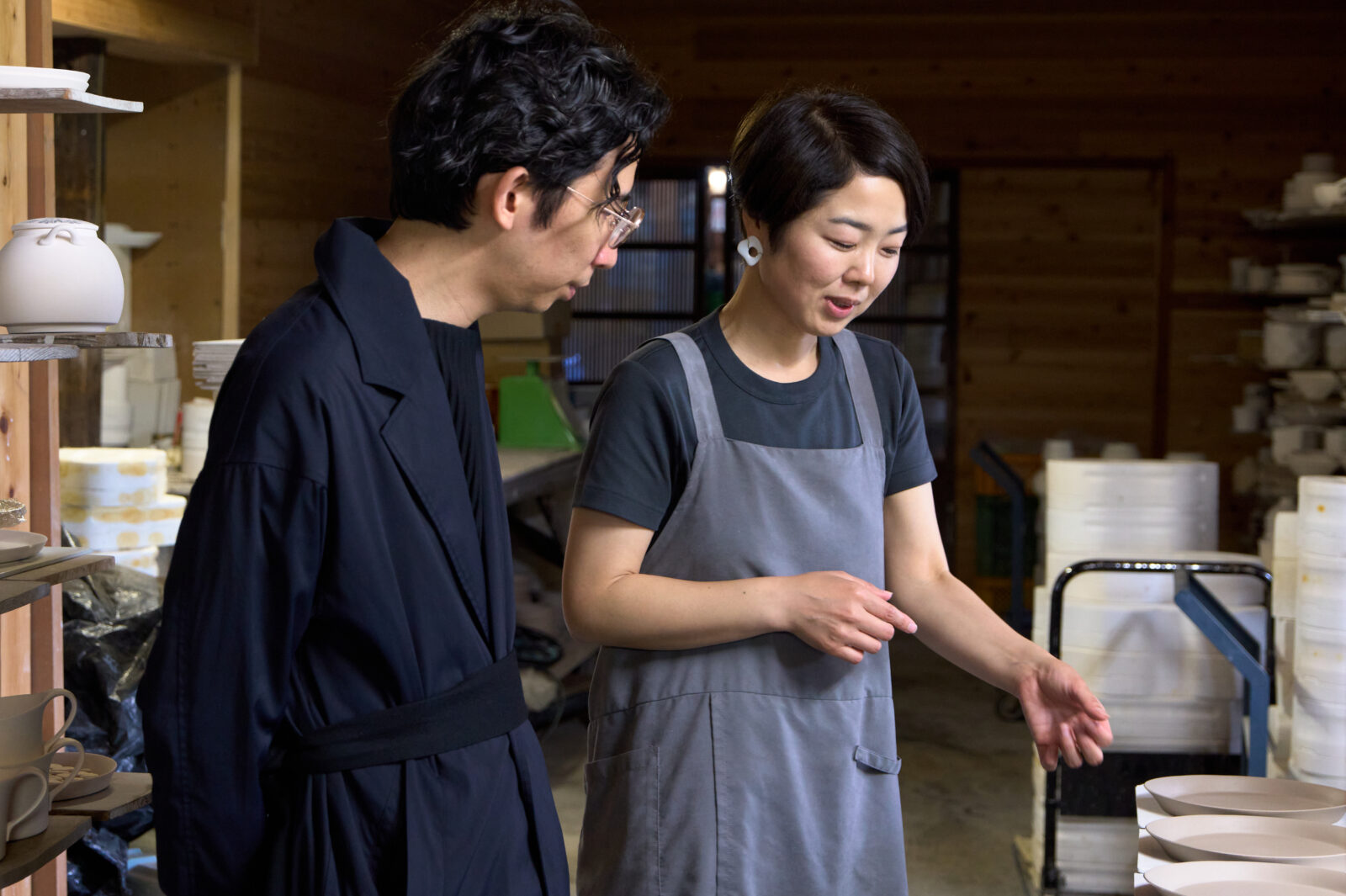
- How might this collaboration open new directions for Sometsuke painting?
Through this collaboration, I felt that the expression through Sometsuke painting can be applied in fields and approaches beyond what we have explored before. Rather than only working toward a predetermined final form, I think that expanding ideas through the material’s potential and the prototyping process itself may lead to new forms of expression.
- Did it help you see your craft from a new, different, fresh perspective?
My biggest realization through this project was, once again, the difference in our approaches to making. Until now, we’ve tended to treat porcelain and Sometsuke as “things we already know,” and to focus on how to express within that familiar framework. Eugene Studio, on the other hand, began by getting to know the material itself, discovering what is interesting about it and letting their ideas expand from there.
Experiencing this difference made me want to reexamine porcelain and Sometsuke, materials we have long approached as something to “control.” Some prototypes did not reach completion due to time and technical constraints, but I feel the process itself will lead to future development.
We create our work on top of the research and accumulated efforts of those who came before us, and this project reminded me that even Tamikichi Kato and the early pioneers of porcelain must have advanced in the same way, through repeated prototyping, building the expressions that continue to this day.
Mayuki Kato, Shingama (@singama.jp)
[Questions by Maria Cristina Didero]